 27 citations
,
March 2019 in “PLoS ONE”
27 citations
,
March 2019 in “PLoS ONE” Thyroxine (T4) may help heal skin wounds by promoting new skin and blood vessel growth.
28 citations
,
November 2012 in “Experimental dermatology” A protein complex called mTORC1 likely affects when hair growth starts in mice.
 October 2022 in “The American journal of gastroenterology”
 Thymoma-associated multiorgan autoimmunity can cause liver damage and affects multiple organs, with limited treatment options and a generally poor prognosis.
June 2020 in “Zenodo (CERN European Organization for Nuclear Research)” The DNMT3B -579G>T polymorphism may increase the risk of colorectal cancer.
23 citations
,
November 2007 in “Actas Dermo-Sifiliográficas” Thyroid hormone (T3) may reverse gray hair by stimulating hair growth.
17 citations
,
March 2012 in “Journal of biological chemistry/The Journal of biological chemistry” Hairless protein affects hair follicle structure by regulating the Dlx3 gene.
 23 citations
,
December 2017 in “Scientific Reports”
23 citations
,
December 2017 in “Scientific Reports” ARL15 is important for fat cell development and the release of the hormone adiponectin.
 20 citations
,
March 2017 in “Journal of cutaneous pathology”
20 citations
,
March 2017 in “Journal of cutaneous pathology” Shrinking of oil glands in the skin is a key sign of hair loss linked to TNF inhibitor drugs and may improve if the treatment is stopped.
222 citations
,
August 2014 in “Cell Metabolism” Mitochondrial Complex I reduces inflammation and increases bone breakdown by affecting certain immune cells.
 June 2025 in “Biomolecules”
 RORA affects hair follicle stem cells' structure and movement, potentially helping treat hair loss.
 1 citations
,
April 2012 in “Informa Healthcare eBooks”
1 citations
,
April 2012 in “Informa Healthcare eBooks” Some medications for inflammation can cause a condition with scalp rashes and hair loss, often linked to Crohn's disease, and may require treatment changes to prevent permanent hair loss.
February 2026 in “Biomedicine & Pharmacotherapy” MLPH helps hair grow by activating IGF-1 signaling in hair cells.
IL-1 signaling is crucial for hair follicle stem cell growth and wound healing.
39 citations
,
December 1998 in “Journal of Cell Science” The LEF-1 binding site enhances gene expression in hair follicles, with other proteins aiding specific regulation.
1 citations
,
August 2024 in “British Journal of Dermatology” Ritlecitinib effectively promotes hair regrowth in alopecia areata patients, even with extensive hair loss.
 April 2023 in “The journal of investigative dermatology/Journal of investigative dermatology”
 HPV8 causes hair follicle stem cells to grow, leading to skin lesions.
 April 2026 in “International Journal of Clinical Case Reports and Reviews”
 A new non-invasive laser system improves chronic disease management and metabolic health.
July 2025 in “Journal of Investigative Dermatology” Resident memory T cells and necroptosis may drive fibrosis in eosinophilic fasciitis and morphea.
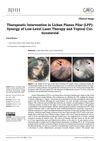 January 2024 in “Brazilian Journal of Hair Health”
 Combining low-level laser therapy with topical corticosteroids effectively improved Lichen Planopilaris symptoms.
1 citations
,
February 2025 in “Journal of the Neurological Sciences” Beta-trace protein may help diagnose and predict treatment response in certain nerve disorders.
23 citations
,
July 2022 in “Nature Cell Biology” Targeting THY1 can improve skin repair and healing.
32 citations
,
July 2018 in “FEBS letters” A specific protein complex increases the activity of a plant enzyme, but this action is not required for plant root hair growth.
July 2023 in “SKIN The Journal of Cutaneous Medicine” Continued ritlecitinib treatment can improve hair regrowth in some alopecia areata patients who initially don't respond.
 April 2017 in “Journal of Investigative Dermatology”
 Sirolimus and propranolol may reduce abnormal cell growth and improve lymphatic malformations in children.
227 citations
,
April 2023 in “The Lancet” Ritlecitinib effectively treats alopecia areata and is well-tolerated.
2 citations
,
February 2023 in “International journal of molecular sciences” Tetrathiomolybdate reduces hair growth marker in skin cells by boosting harmful oxygen molecules, but effects can be reversed.
73 citations
,
November 2000 in “Proceedings of the National Academy of Sciences of the United States of America” There are two ways to start hair growth: one needs Stat3 and the other does not, but both need PI3K activation.
4 citations
,
April 2022 in “Evidence-based Complementary and Alternative Medicine” Dracorhodin perchlorate helps heal wounds in diabetic rats by reducing inflammation.
 3 citations
,
January 2018 in “Postępy Dermatologii i Alergologii”
3 citations
,
January 2018 in “Postępy Dermatologii i Alergologii” Longer TA repeats in the SRD5A2 gene may increase acne risk in Chinese people.
216 citations
,
June 2015 in “PLANT PHYSIOLOGY” OsPHR3 can help breed rice that efficiently uses phosphate without growth issues.