 September 2023 in “Biology of reproduction”
 New testosterone analogs show promise for male contraception with better activity and potentially fewer side effects.
February 2024 in “Cancers” New treatments targeting androgen receptors show promise for drug-resistant prostate cancer.
 2 citations
,
February 2021 in “Brain Research”
2 citations
,
February 2021 in “Brain Research” Testosterone affects blood pressure control and inflammation in male rats with endotoxic shock, and blocking certain hormones may help treat it.
69 citations
,
October 2013 in “Journal of Clinical Psychopharmacology” Naltrexone did not significantly reduce hair pulling but improved cognitive flexibility.
 4 citations
,
March 2017 in “Al-Mi’galaẗ al-sa'udiyaẗ lī-ulum al-ḥayaẗ”
4 citations
,
March 2017 in “Al-Mi’galaẗ al-sa'udiyaẗ lī-ulum al-ḥayaẗ” Leonuri Herba alkaloids may help treat hormone-induced enlarged prostate in rats.
April 2017 in “The Journal of urology/The journal of urology” 5-alpha reductase inhibitors slightly reduce urinary symptoms and may lower surgery and acute retention risks in men.
![Verification of the Major Metabolic Oxidation Path for the Naphthoyl Group in Chemoattractant Receptor-Homologous Molecule Expressed on Th2 Cells (CRTh2) Antagonist 2-(2-(1-Naphthoyl)-8-fluoro-3,4-dihydro-1H-pyrido[4,3-b]indol-5(2H)-yl)acetic Acid (Setipiprant/ACT-129968)](/images/assets/d743d32f-3115-48ff-9697-2f2d56130701/small/14175.jpg) 6 citations
,
September 2015 in “Journal of Medicinal Chemistry”
6 citations
,
September 2015 in “Journal of Medicinal Chemistry” The document confirms the structures of major metabolites of the CRTh2 antagonist Setipiprant and identifies minor metabolites.
July 2023 in “Journal of the ASEAN Federation of Endocrine Societies” GnRH agonist effectively diagnoses and treats postmenopausal hyperandrogenism from ovarian sources.
22 citations
,
May 2003 in “Planta Medica” Torilin from Torilis japonica can inhibit testosterone 5α-reductase but is less effective than finasteride.
2 citations
,
March 2010 in “Acta Biochimica Polonica” Raltitrexed conjugates are less potent than the free drug but more effective at high concentrations.
 148 citations
,
April 2009 in “Molecular Pharmaceutics”
148 citations
,
April 2009 in “Molecular Pharmaceutics” Researchers developed promising agents for prostate cancer imaging, with the best one showing high potential for clinical use.
 August 2008 in “European Neuropsychopharmacology”
 RY-023, a specific drug, can improve early stage memory learning without affecting general activity in rats, but it's less effective for later learning stages and doesn't impact memory recall.
 January 2022 in “Current Enzyme Inhibition”
 New nonsteroidal molecules can potentially increase dihydrotestosterone in neurons by blocking certain enzymes, without affecting prostate and seminal vesicle weight.
April 2026 in “Future Medicinal Chemistry” PROTACs have become a breakthrough in medicine by effectively targeting and degrading specific proteins to treat diseases.
40 citations
,
July 2023 in “Clinical Pharmacology & Therapeutics” Targeted protein degraders show promise in treating cancer but need to target more diverse proteins.
May 2018 in “KU ScholarWorks (The University of Kansas)” Targeting 5α-reductase type 1 may help manage Tourette-like symptoms.

TLR2 helps control hair growth and regeneration, and its reduction with age or obesity can impair hair growth.
44 citations
,
May 2023 in “MedComm” PROTAC technology shows promise for cancer treatment but needs more effective E3 ligase recruiters.
 December 2025 in “Naunyn-Schmiedeberg s Archives of Pharmacology”
 Agomelatine may help reduce benign prostatic hyperplasia by blocking certain inflammatory pathways.
 3 citations
,
May 2025 in “Cell Death and Disease”
3 citations
,
May 2025 in “Cell Death and Disease” Targeting METTL1 may help slow papillary thyroid cancer growth and spread.
 April 2015 in “Plastic and Reconstructive Surgery”
 TLR3 activation helps improve skin and hair follicle healing in mice.
 December 2022 in “KSBB Journal”
 Activating TLR3 boosts autophagy gene expression in skin cells.
 5 citations
,
September 2011 in “Bioorganic & Medicinal Chemistry Letters”
5 citations
,
September 2011 in “Bioorganic & Medicinal Chemistry Letters” Pfizer found that pantolactam-based compounds can reduce sebum (skin oil) production when applied topically.
36 citations
,
July 2022 in “Journal of Medicinal Chemistry” Therapies targeting the androgen receptor are being developed to treat prostate cancer and improve bone and muscle health.
May 2026 in “Journal of Medicinal Chemistry” dAR-6–1 is a promising new treatment for hair loss that works better than minoxidil.
 7 citations
,
June 2010 in “Journal of The American Academy of Dermatology”
7 citations
,
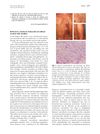
June 2010 in “Journal of The American Academy of Dermatology” Tranilast successfully treated a man's skin sarcoidosis when other treatments failed.
 61 citations
,
April 2014 in “Radiation Research”
61 citations
,
April 2014 in “Radiation Research” RTA 408 cream protects mice from radiation skin damage.
May 2005 in “Molecular Carcinogenesis” mrp/plf-mRNA can indicate tumor-promoting effects in skin.
 February 2024 in “Health Sciences”
 Botulinum neurotoxin A is effective and safe for treating various conditions, but more clinical trials are needed to fully assess its benefits and risks.
31 citations
,
March 2010 in “Molecular Endocrinology” Androgens like testosterone increase colon muscle contractions by affecting calcium pathways.