 June 2023 in “Current Issues in Molecular Biology”
 DN106212, an extract from a plant, is better at promoting hair growth than other tested substances by affecting hair growth factors and follicle development.
 June 2023 in “Fundamental & clinical pharmacology”
 JAK inhibitors help treat some diseases but may increase risks of blood clots and cancer in certain patients.
 June 2023 in “British journal of dermatology/British journal of dermatology, Supplement”
 Patients with alopecia areata face challenges accessing Janus kinase inhibitors, but some see positive results.
 April 2023 in “Journal of Investigative Dermatology”
 The research developed methods to test drugs that could protect and restore hair follicle protection in a hair loss condition.
April 2023 in “Journal of Dermatological Treatment” Tofacitinib helped regrow hair in a teen with a unique pattern of alopecia areata.
 April 2023 in “Revista colombiana de reumatología”
 JAK inhibitors like tofacitinib can effectively treat severe alopecia areata.
 January 2023 in “The Egyptian Journal of Hospital Medicine”
 New treatments for sudden hair loss include oral medications and a special laser, both showing promise in hair regrowth.
 November 2022 in “The journal of investigative dermatology/Journal of investigative dermatology”
 TYK2 inhibition may help treat alopecia areata by promoting hair growth and reducing immune response.
 November 2022 in “Bioengineering”
 The method can test hair growth products using a lab-made hair-like structure that responds to known treatments.
 September 2022 in “Journal of the American Academy of Dermatology”
 The registry showed that tofacitinib is promising for treating hair loss in children with alopecia areata, but more research is needed.
 September 2022 in “Hair transplant forum international”
 JAK inhibitors like baricitinib are a new FDA-approved treatment for alopecia areata, but safety data is incomplete.
 August 2022 in “Revista de la Universidad Industrial de Santander/Salud UIS”
 Stress-related hair loss was reversed with a special medication.
January 2022 in “Clinical Cases in Dermatology” A woman has a permanent hair loss condition treated with steroids and new medicines, but hair might not regrow.
 August 2021 in “Revista Colombiana de Reumatología/Revista Colombiana de Reumatologia”
 Janus kinase inhibitors may effectively treat severe alopecia areata unresponsive to other treatments.
June 2021 in “DOAJ (DOAJ: Directory of Open Access Journals)” JAK inhibitors show promise for treating alopecia areata but their effectiveness and safety are still debated.
Alopecia Areata has no cure, treatments are limited, and the condition often recurs, but new therapies like JAK inhibitors show promise.
January 2021 in “Research Portal Denmark” Tofacitinib helped a man with alopecia totalis regrow all his hair.
 November 2020 in “Dubai medical journal”
 Tofacitinib may effectively regrow hair in alopecia totalis patients.
June 2020 in “Dermatologic therapy” Using Janus kinase inhibitors (JAKi) in COVID-19 treatment requires careful consideration due to their immunosuppressive effects.
New treatments show promise for hair loss, especially JAK inhibitors for alopecia areata.
 April 2019 in “The journal of investigative dermatology/Journal of investigative dermatology”
 Machine learning can predict how well patients with alopecia areata will respond to certain treatments.
 April 2019 in “The journal of investigative dermatology/Journal of investigative dermatology”
 High potency topical steroids are the most effective treatment for pediatric alopecia areata.
January 2019 in “프로그램북(구 초록집)” Both tofacitinib and ruxolitinib are effective and tolerable for treating alopecia areata.
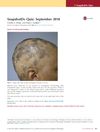 August 2018 in “Journal of Investigative Dermatology”
 Tofacitinib may help regrow hair in alopecia areata patients.
January 2018 in “Figshare” Ruxolitinib and tofacitinib are effective and safe for treating severe alopecia areata.
April 2017 in “The journal of investigative dermatology/Journal of investigative dermatology” Researchers found three different ways drugs work to treat hair loss from alopecia areata and identified key factors for personalized treatment.
April 2017 in “Leukemia research” Tofacitinib helped most teenagers in the study regrow hair with mild side effects.
March 2017 in “Current dermatology reports” Topical JAK inhibitors can effectively treat alopecia areata and vitiligo by modulating immune responses.
April 2016 in “The journal of investigative dermatology/Journal of investigative dermatology” The ALADIN score can predict how well patients with alopecia areata will respond to JAK inhibitor treatments.
 February 2016 in “The journal of investigative dermatology/Journal of investigative dermatology”
 JAK inhibitors may help treat alopecia areata by reversing hair loss.