Early diagnosis and treatment of frontal fibrosing alopecia are crucial to prevent permanent hair loss.

Topical finasteride accumulates in the skin with minimal absorption into the bloodstream.
 January 2018 in “Surgical and Cosmetic Dermatology”
 Finasteride and dutasteride are effective for male hair loss and enlarged prostate but may cause reversible sexual side effects.
 August 2017 in “DOAJ (DOAJ: Directory of Open Access Journals)”
 New treatments for common hair loss might be safer and more effective than current options.
 April 2017 in “Australasian Journal of Dermatology”
 The session covered updates on skin treatments, including radiotherapy, imiquimod, acitretin, JAK inhibitors, and strategies for managing rosacea and preventing surgical infections.
 January 2017 in “Journal of Investigative Dermatology Symposium Proceedings”
 The 2015 Hair Research Congress concluded that stem cells, maraviroc, and simvastatin could potentially treat Alopecia Areata, topical minoxidil, finasteride, and steroids could treat Frontal Fibrosing Alopecia, and PTGDR2 antagonists could also treat alopecia. They also found that low-level light therapy could help with hair loss, a robotic device could assist in hair extraction, and nutrition could aid hair growth. They suggested that Alopecia Areata is an inflammatory disorder, not a single disease, indicating a need for personalized treatments.
 January 2017 in “Clinical approaches and procedures in cosmetic dermatology”
 Men are increasingly seeking quick-result cosmetic treatments for their thicker, oilier skin and hair loss issues.
 April 2016 in “Journal of The American Academy of Dermatology”
 Dutasteride is more effective than finasteride for hair growth with similar side effects.
 January 2016 in “Springer eBooks”
 Hyperandrogenism, often causing excessive hair growth and acne, can be treated with methods like weight reduction, hair removal, various medications, and in the case of acne, topical treatments.
January 2016 in “Portuguese National Funding Agency for Science, Research and Technology (RCAAP Project by FCT)” Topical finasteride formulations can treat hair loss effectively with fewer side effects.
 December 2015 in “Actas Dermo-Sifiliográficas”
 Hair transplantation for Frontal Fibrosing Alopecia may work if the disease is inactive for 2 years and with ongoing treatment to maintain results.
 May 2015 in “Journal of The American Academy of Dermatology”
 The research shows a potential way to regenerate hair using adult cells that have been grown and guided to produce new hair fibers.
 January 2015 in “Indian Journal of Dermatology, Venereology and Leprology”
 The document concludes that various skin conditions have specific characteristics and treatments, and highlights the importance of vitamin D in managing these dermatological issues.
 November 2014 in “British Journal of Dermatology”
 Male hair loss is mainly due to thinner hair, not less hair.
 March 2014 in “Journal of The American Academy of Dermatology”
 The new topical product combined with finasteride significantly increased hair thickness without side effects.
 January 2014 in “Cosmoderma”
 The document concludes that personalized treatment plans for hair loss in Asian men are necessary and more research is needed to develop effective guidelines.
 January 2014 in “Anales Médicos de la Asociación Médica del Centro Médico ABC”
 The treatment effectively promoted hair growth with minimal side effects.
 May 2013 in “Trends in Urology & Men's Health”
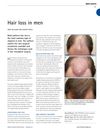
 Male-pattern hair loss is normal, often involves hormone effects on hair follicles, and can be treated with medication or surgery, but new treatments are being researched.
 January 2013 in “Hair transplant forum international”
 Minoxidil and finasteride are effective for male hair loss; minoxidil also helps female hair loss, with some treatments needing more research.

The document concludes that hair loss in women can be treated with topical treatments or hormone therapy depending on the cause.
 July 2011 in “Springer eBooks”
 The document concluded that FDA-approved treatments like minoxidil and finasteride are effective for hair loss, while the effectiveness of natural remedies and other non-approved treatments is not well-supported by evidence.
January 2011 in “Journal of the American Academy of Dermatology” Finasteride may cause pseudoporphyria, a blistering skin condition.
 August 2010 in “The Journal of Dermatology”
 The document concludes that low-dose acne treatment is most suitable for moderate acne, with high patient satisfaction and low relapse rates.
September 2004 in “Dépôt institutionnel de l'Université libre de Bruxelles (Université Libre de Bruxelles)” Early diagnosis and treatment can help manage hair loss effectively.
 May 2003 in “Journal of Investigative Dermatology”
 The meeting covered advances in understanding hair growth, causes of hair loss, and potential treatments.
 March 2003 in “Dermatologic Surgery”
 Dr. Dominic A. Brandy shared methods to fix aesthetic problems from old hair restoration techniques, using methods like follicular unit grafting and scalp removal, which helped patients look more natural after surgery. He also suggested using oral finasteride and topical minoxidil to control hair loss in most men with baldness, especially those who had flap surgery.
 January 2003 in “Elsevier eBooks”
 Androgens and other hormones affect hair growth and skin conditions like acne.
 January 1998 in “Current Therapeutics”
 Different causes of hair loss require specific treatments, and most men and women will experience some form of hair thinning as they age.
September 1997 in “JEADV. Journal of the European Academy of Dermatology and Venereology/Journal of the European Academy of Dermatology and Venereology” Common hair loss can be diagnosed with a physical exam and sometimes a hair test or skin biopsy, and treated with medication or surgery, with ongoing treatment needed to keep results.
 June 1997 in “Australasian Journal of Dermatology”
 Researchers found new hair and nail genes, how hair reacts to UV, differences in white and pigmented hair growth, nerve changes in alopecia, treatments for baldness and alopecia, a toenail condition linked to a genetic disorder, and that nail fungus is more common in people with psoriasis.