 January 2022 in “Dermatology Review”
 Higher IL-31 levels are linked to worse itching in chronic kidney disease patients.
Alopecia Areata has no cure, treatments are limited, and the condition often recurs, but new therapies like JAK inhibitors show promise.
 October 2020 in “Veterinary Dermatology”
 New treatments and diagnostic methods for various animal skin conditions showed promising results.
Pimpinella anisum L. extract significantly boosts hair growth in mice.
 January 2019 in “Springer eBooks”
 Acne is linked to inflammation and insulin resistance, and is associated with various syndromes that require different treatments.
 October 2018 in “InTech eBooks”
 The gene Foxn1 is important for hair growth, and understanding it may lead to new alopecia treatments.
 May 2018 in “White Rose eTheses Online (University of Leeds, The University of Sheffield, University of York)”
 Alopecia areata may be treated by using EGCG to balance immune cells and reduce inflammation.
 January 2018 in “Stem cells in clinical applications”
 Exosomes show promise for tissue repair and regeneration with advantages over traditional cell therapies.

Glycyrrhizic acid and licorice extract can significantly reduce unwanted hair growth.
Tissue from dog stem cells helped grow hair in mice.
 January 2016 in “Research Explorer (The University of Manchester)”
 Activating the Eda/Edar pathway improves wound healing by enhancing hair follicle growth.
Melatonin can improve treatment and extend remission for certain skin conditions.
 April 2015 in “Andrology”
 HNG may help prevent the negative effects of chemotherapy on sperm production and white blood cell counts.
 March 2015 in “Plastic and reconstructive surgery”
 Human skin has multiple layers and functions, with key roles in protection, temperature control, and appearance.

Alopecia areata is an autoimmune disease affecting hair follicles and may harm heart health.
Lupus is a complex disease that requires personalized treatment because it varies greatly between individuals.
 January 2015 in “Journal of clinical & experimental dermatology research”
 A protein combining parathyroid hormone and collagen helped hair regrow in mice with a hair loss condition.

Chemicals and stem cells combined have advanced regenerative medicine with few safety concerns, focusing on improving techniques and treatment effectiveness.
 January 2014 in “Journal of Investigative Dermatology”
 Proteins like aPKC and PDGF-AA, substances like adenosine and ATP, and adipose-derived stem cells all play important roles in hair growth and health, and could potentially be used to treat hair loss and skin conditions.
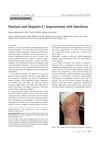 January 2011 in “Annals of dermatology/Annals of Dermatology”
 A woman's psoriasis improved after hepatitis C treatment with interferon, despite interferon's risk of worsening skin conditions.
 April 2008 in “Expert review of dermatology”
 Mutations in the P2RY5 gene cause hereditary woolly hair.
 September 2006 in “Plastic and Reconstructive Surgery”
 Hair transplant surgeries can be improved by preserving follicles in a special solution, and surgeries done at outpatient facilities are more profitable than those at hospitals.
 September 2006 in “Plastic and Reconstructive Surgery”
 Outpatient aesthetic and reconstructive surgeries are about equally profitable in Academic Health Centers and Ambulatory Surgery Centers when time is considered, but dedicated surgery centers are generally more profitable.
 September 2006 in “Plastic and Reconstructive Surgery”
 The SGAP flap effectively treats large sacral pressure sores with good results and minimal complications.
 July 2004 in “British Journal of Dermatology”
 The document concludes that accurate diagnosis and treatment are crucial in dermatology, and it presents various findings on skin conditions and treatments.
 January 1989 in “Side effects of drugs annual”
 Some cancer and immune system drugs can cause serious side effects, including heart, lung, nerve, and organ damage, which need careful monitoring and management.
 855 citations
,
June 2009 in “The Journal of Clinical Endocrinology & Metabolism”
855 citations
,
June 2009 in “The Journal of Clinical Endocrinology & Metabolism” The guideline recommends mental health involvement in diagnosing gender identity disorder and outlines hormone and surgical treatment protocols, emphasizing safety, informed consent, and long-term monitoring.
 658 citations
,
June 2003 in “Endocrine reviews”
658 citations
,
June 2003 in “Endocrine reviews” Male hormones may play a role in the development of heart disease, and more research is needed to understand their effects.
 555 citations
,
July 2001 in “Genes & Development”
555 citations
,
July 2001 in “Genes & Development” Tcf3 and Lef1 are key in deciding skin stem cell roles.
 441 citations
,
May 2008 in “British Journal of Pharmacology”
441 citations
,
May 2008 in “British Journal of Pharmacology” Anabolic steroids can build muscle and strength but have risks and need more research on their clinical benefits and side effects.