 June 2023 in “JAAD Case Reports”
 A man had a rare skin cancer that looked like a bald spot.
 June 2023 in “British journal of dermatology/British journal of dermatology, Supplement”
 Congenital alopecia areata may have genetic links and topical corticosteroids are an effective treatment.
 May 2023 in “Surgical Case Reports”
 A woman's hair loss improved after removing a tumor in her thymus gland, suggesting hair loss can be linked to such tumors even without a specific muscle weakness condition.
 April 2023 in “Clinical and experimental dermatology”
 A new treatment using hydroxychloroquine, hyaluronidase, and steroids may improve hair loss from dermal filler complications.
 September 2022 in “The American journal of dermatopathology/American journal of dermatopathology”
 A patient with a thick scalp and hair loss was correctly diagnosed with alopecia areata and a thick scalp fat layer, not lipedematous alopecia, and regrew hair after treatment.
 September 2022 in “Polish Hyperbaric Research”
 Some treatments for hair loss, like finasteride, biotin, and minoxidil, can be effective, but their success varies by individual case.
 August 2022 in “IntechOpen eBooks”
 The best treatment for Frontal Fibrosing Alopecia and Lichen Planopilaris combines oral and topical medications to reduce symptoms and stop hair loss.
 July 2022 in “Singapore Medical Journal”
 Most children with alopecia areata improved with treatment, but those with more hair loss had worse outcomes.
January 2022 in “Clinical dermatology review” A girl with a rare skin condition called Keratosis Follicularis Spinulosa Decalvans showed no significant improvement with treatment.
 April 2021 in “International Journal of Research in Dermatology”
 A child with a rare scalp condition regrew hair after treatment.
 April 2021 in “Sohag Medical Journal”
 Superficial cryotherapy is effective and safe for treating alopecia areata, especially eyebrow hair loss.
Trichoscopic examination is crucial for diagnosing congenital triangular alopecia.
November 2019 in “Harper's Textbook of Pediatric Dermatology” Netherton syndrome is a genetic skin disorder causing severe skin issues and requires careful treatment to protect the skin barrier.
July 2019 in “Medical Science and Discovery” Early diagnosis and treatment can prevent or delay frontal fibrosing alopecia progression in postmenopausal women.
 May 2019 in “Australasian Journal of Dermatology”
 The conclusion is that managing hair loss conditions like FFA and melanoma requires individualized approaches, considering new findings and balancing treatment benefits with potential risks.
A 2-year-old boy with a rare type of lupus causing hair loss improved with oral steroids.
 April 2019 in “The journal of investigative dermatology/Journal of investigative dermatology”
 High potency topical steroids are the most effective treatment for pediatric alopecia areata.
 March 2019 in “Applied sciences”
 Laser therapy might help regrow hair in alopecia totalis better than steroids alone.
Antimalarial agents are effective for LPP, and intralesional steroids are effective for FFA.
 August 2018 in “Journal of The American Academy of Dermatology”
 A 16-year-old girl's skin rash was likely caused by an infection and improved with topical steroids.
 July 2018 in “Elsevier eBooks”
 Lichen Planopilaris is a hair loss condition best treated early with various medications, including hydroxychloroquine, to prevent permanent baldness.
 June 2018 in “Reactions Weekly”
 A 65-year-old man developed a serious skin cancer linked to a drug he was taking for a fungal infection after a bone marrow transplant.
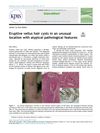 January 2018 in “The Kaohsiung journal of medical sciences”
 A young man had a rare case of hair cysts on his elbows, which was hard to diagnose and treat.
 April 2017 in “InTech eBooks”
 Many people with hair loss experience scalp pain known as trichodynia, but the causes are unclear and treatments vary.
 December 2016 in “John Wiley & Sons, Ltd eBooks”
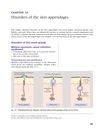
 The document concludes that proper recognition and treatment of skin appendage disorders are important for management.
 October 2016 in “Elsevier eBooks”
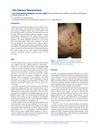
 Common noncancerous skin diseases have various treatments, including topical applications, light therapy, surgery, and medications, with psychological support being important.
September 2016 in “European Journal of Pediatric Dermatology/PD. European journal of pediatric dermatology” Ulerythema ophryogenes causes hair thinning and inflammation, with limited treatment options.
 February 2016 in “Acta Medica Marisiensis”
 A woman with chronic hepatitis C had a rare skin condition linked to her illness.
 January 2016 in “Journal of The Korean Medical Association”
 The document says how to diagnose and treat hair loss from alopecia areata, but there's no cure and treatments vary.
January 2016 in “Indian dermatology online journal” Frontal fibrosing alopecia causes hair loss at the front hairline, and no effective treatment exists.