 January 2015 in “Indian Dermatology Online Journal”
 The patient's hair loss is most likely due to diffuse alopecia areata.

Most patients with hair loss used alternative treatments, especially topical applications and health food supplements, based on recommendations from others.
January 2009 in “Beijing Medical Journal” Combined therapy effectively improved severe alopecia areata in all patients after 6 months.
 December 2004 in “Medicine”
 Pregnancy can cause skin changes and may affect pre-existing skin conditions, with some treatments not safe for use during pregnancy.
December 2025 in “Pharmaceutics” Araliadiol may help reduce skin aging and inflammation without killing cells.
March 2023 in “Journal of Cosmetic Dermatology” Low-dose oral minoxidil improved hair growth when topical treatments failed.
November 2022 in “Journal of Education, Health and Sport” Combination therapy for hair loss can improve results and reduce side effects.
March 2021 in “Berkala Ilmu Kesehatan Kulit dan Kelamin” The best treatment for male pattern baldness is a combination of topical minoxidil and oral finasteride.
 April 2016 in “Journal of The American Academy of Dermatology”
 People with hair loss have low zinc levels; zinc supplements and laser therapy may help.
 September 2015 in “Korean Journal of Clinical Pharmacy”
 Dutasteride is highly effective for hair loss treatment in Korea, with more side effects than finasteride.

AGA causes permanent hair loss; women use 2% minoxidil, men use 1 mg finasteride daily.
 40 citations
,
August 2010 in “Archives of dermatology”
40 citations
,
August 2010 in “Archives of dermatology” A 5-year-old boy's skin condition improved with systemic valganciclovir after a cardiac transplant and immunosuppressive therapy.
 10 citations
,
May 2015 in “International Journal of Women's Dermatology”
10 citations
,
May 2015 in “International Journal of Women's Dermatology” New treatments for skin and hair disorders in women of color address unique biological differences and include specific acne medications, sunscreens, skin lighteners, and hair care adjustments.
2 citations
,
September 2025 in “Cosmetics” Hormonal therapies can improve skin issues by adjusting hormone levels, with future advancements promising better results.
 September 2022 in “Polish Hyperbaric Research”
 Some treatments for hair loss, like finasteride, biotin, and minoxidil, can be effective, but their success varies by individual case.
 September 1997 in “JEADV. Journal of the European Academy of Dermatology and Venereology/Journal of the European Academy of Dermatology and Venereology”
 The document concludes that treatments like oral anti-androgens, minoxidil, and topical spironolactone can be effective for hair loss in men and women.
 77 citations
,
July 2013 in “Best Practice & Research in Clinical Obstetrics & Gynaecology”
77 citations
,
July 2013 in “Best Practice & Research in Clinical Obstetrics & Gynaecology” Menopause reduces skin collagen and elasticity, and while estrogen therapy can help, its risks require careful consideration.
 67 citations
,
January 2007 in “Climacteric”
67 citations
,
January 2007 in “Climacteric” Estrogens and SERMs can help with skin aging, but their safety and effectiveness need more research.
28 citations
,
January 1999 in “Dermatology” Fluconazole is the preferred treatment for deep skin infections in immunocompromised patients.
 26 citations
,
July 2019 in “Dermatology and Therapy”
26 citations
,
July 2019 in “Dermatology and Therapy” The conclusion is that genetic testing is important for diagnosing and treating various genetic hair disorders.
 14 citations
,
July 1987 in “Dermatologic Clinics”
14 citations
,
July 1987 in “Dermatologic Clinics” The document concludes that treating female hair loss should target reducing excess androgen and blocking its effects on hair follicles, with the best treatments being hormonal therapy, adrenal suppression, and topical minoxidil.
7 citations
,
July 2013 in “InTech eBooks” Oral lichen planus is a chronic disease causing mouth discomfort and sometimes needs immunosuppressive treatment.
 2 citations
,
October 2019 in “Current sports medicine reports”
2 citations
,
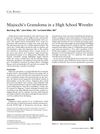
October 2019 in “Current sports medicine reports” A high school wrestler's skin rash was cured with antifungal medication after a misdiagnosis and incorrect treatment led to a fungal infection.
 July 2025 in “Current Treatment Options in Oncology”
 Scalp cooling helps prevent hair loss during chemotherapy, and minoxidil aids regrowth.
 January 2024 in “JCPSP. Journal of the College of Physicians & Surgeons Pakistan”
 PRP therapy is more effective than minoxidil for treating hair loss from androgenetic alopecia.
 January 2022 in “Revista del Centro Dermatológico Pascua”
 PRP therapy is a promising treatment for male hair loss on the vertex.
 April 2021 in “Sohag Medical Journal”
 Superficial cryotherapy is effective and safe for treating alopecia areata, especially eyebrow hair loss.
 April 2010 in “Reactions Weekly”
 A woman's hair loss was likely caused by a cream used for skin treatment and improved after she stopped using it.
 January 1988 in “Inpharma (Balgowlah)”
 New retinoids are effective for various skin conditions and are being developed to have fewer side effects.
 February 2016 in “Faculty Opinions – Post-Publication Peer Review of the Biomedical Literature”
 A hair test can accurately predict if a person with hair loss will respond to minoxidil treatment.