September 2019 in “Journal of Investigative Dermatology” CCCA in women of African ancestry may be caused by PADI3 gene mutations and intense hair grooming.
 November 2016 in “대한피부과학회지”
 The document's conclusion cannot be summarized as it is not provided in a language I can understand.
35 citations
,
June 2011 in “British Journal of Dermatology” The DQB1*03 allele is linked to higher alopecia areata risk in Italians.
59 citations
,
March 1984 in “Journal of Investigative Dermatology” August 2025 in “Journal of Polymer Science” AcD scaffolds improve tissue repair and regeneration by combining stem cells with a supportive matrix.
 2 citations
,
May 2022 in “Journal of the American Academy of Dermatology”
2 citations
,
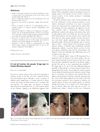
May 2022 in “Journal of the American Academy of Dermatology” The study concludes that Traction Alopecia is often overlooked in women and children of color, and better recognition and follow-up care are needed.
 39 citations
,
July 2015 in “British Journal of Dermatology”
39 citations
,
July 2015 in “British Journal of Dermatology” The pseudo 'fringe sign' can also appear in frontal fibrosing alopecia, not just in traction alopecia, showing that this condition may be more common than thought.
 November 2025 in “DOAJ (DOAJ: Directory of Open Access Journals)”
 CD25+ CD4+ Tregs and certain plasma proteins are linked to hair loss.

Proper niche formation in Drosophila requires Slit-Robo signaling for cell migration.
12 citations
,
January 2019 in “International Journal of Trichology” Trichoscopy is useful for detecting and monitoring androgenetic alopecia.
17 citations
,
September 2009 in “British Journal of Dermatology” Fragile hair in children is rarely linked to trichothiodystrophy (TTD).
 19 citations
,
May 2004 in “The American Journal of Dermatopathology”
19 citations
,
May 2004 in “The American Journal of Dermatopathology” The research found that a specific gene mutation causes fewer hair follicles and disrupted hair growth cycles, leading to thin and short hair in people with Hypotrichosis with Juvenile Macular Dystrophy.
Combining online and in-person dermatology care can improve quality and access.
56 citations
,
September 2010 in “Veterinary pathology” Certain mouse strains develop a skin condition similar to a human hair loss disease due to genetic defects.
 17 citations
,
June 2018 in “Frontiers in Physiology”
17 citations
,
June 2018 in “Frontiers in Physiology” ADM scaffolds help skin heal by promoting a healing-type immune response.
 4 citations
,
December 2012 in “Human Biology”
4 citations
,
December 2012 in “Human Biology” The most different genetic segment between Africans and East Asians is the EDA2R/AR region, with two main types influenced by population changes and natural selection, and linked to baldness.
7 citations
,
May 2021 in “Clinical Case Reports” Alopecic and aseptic nodules of the scalp are rare, treatable, and often resolve with doxycycline or on their own.
3 citations
,
February 2001 in “British journal of ophthalmology” An Australian with rare hair loss and eye conditions had a gene linked to both, not seen together before.
 2 citations
,
July 2011 in “AFRICAN JOURNAL OF BIOTECHNOLOGY”
2 citations
,
July 2011 in “AFRICAN JOURNAL OF BIOTECHNOLOGY” Seven genetic variations in sheep's DSG4 gene are linked and affect wool traits.
35 citations
,
September 2003 in “Archives of dermatology” Tiger tail bands in hair are caused by wavy hair fibers with melanin, unlike straight fibers in normal hair.
 October 2025 in “Dermatology and Therapy”
 Recognizing and treating related skin conditions can improve atopic dermatitis management.
1 citations
,
January 2020 in “bioRxiv (Cold Spring Harbor Laboratory)” Weak cell junctions disrupt hair follicle stem cell rest.
33 citations
,
May 2015 in “JAMA Dermatology” Early detection of specific skin lesions can help identify Birt-Hogg-Dube syndrome and prevent serious complications.
 25 citations
,
March 2013 in “British Journal of Dermatology”
25 citations
,
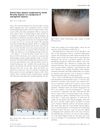
March 2013 in “British Journal of Dermatology” Woman has discoid lupus, frontal fibrosing, and androgenetic alopecia.
June 2023 in “Zenodo (CERN European Organization for Nuclear Research)”  34 citations
,
April 2016 in “International Journal of Dermatology”
34 citations
,
April 2016 in “International Journal of Dermatology” Trichoscopy is a useful method for identifying primary cicatricial alopecias and their specific types.
 1 citations
,
June 2022 in “Chinese medical journal/Chinese Medical Journal”
1 citations
,
June 2022 in “Chinese medical journal/Chinese Medical Journal” Two new mutations in the CDH3 gene cause hair loss and vision problems in a young girl.
 23 citations
,
January 2017 in “Current Rheumatology Reports”
23 citations
,
January 2017 in “Current Rheumatology Reports” Unique fat cells near fibrotic areas contribute to systemic sclerosis progression.
March 2023 in “Journal of Cosmetic Dermatology” Trichoscopy is effective for diagnosing scalp ACC in darker skin tones.
 November 2023 in “Journal of Investigative Dermatology”
 γδTregs can protect hair follicles from alopecia areata and may help regrow hair.