 January 2020 in “Clinical dermatology open access journal”
 Changing certain hairstyles can prevent worsening hair loss in Mexican women.
Trichotillometry can measure hair plucking force, aiding alopecia treatment evaluation.
6 citations
,
December 2017 in “International Journal of Dermatology” Traction alopecia is hair loss from pulling on hair too much.
12 citations
,
January 1934 in “Proceedings of the Royal Society of London Series B Containing Papers of a Biological Character” Stretched hair has a similar structure to natural silk, showing hair's elasticity involves reversible changes within its molecules.
8 citations
,
July 2019 in “The journal of investigative dermatology/Journal of investigative dermatology” Curly hair is mechanically different from straight hair and may need new testing methods.
March 2020 in “Faculty Opinions – Post-Publication Peer Review of the Biomedical Literature” The dermal sheath's contraction is crucial for hair follicle regression and stem cell relocation.
35 citations
,
July 2015 in “Journal of Theoretical Biology” Tooth germ shape changes due to cell growth differences and mechanical interactions.
 1 citations
,
July 2024 in “Cutis”
1 citations
,
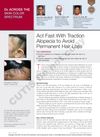
July 2024 in “Cutis” Act quickly to treat traction alopecia to prevent permanent hair loss.
Recognizing bamboo hair helps diagnose Netherton’s syndrome.
 4 citations
,
January 2015 in “Sen'i Gakkaishi”
4 citations
,
January 2015 in “Sen'i Gakkaishi” Hair and wool strength is affected by the number and type of bonds in their protein structures, with hair having more protein aggregates than wool.
58 citations
,
November 1969 in “British Journal of Dermatology” Netherton's disease causes multiple hair defects.
 2 citations
,
February 2018 in “Journal of dermatology & cosmetology”
2 citations
,
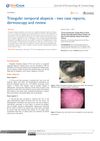
February 2018 in “Journal of dermatology & cosmetology” Triangular temporal alopecia is a benign hair loss pattern best diagnosed with dermoscopy, with limited treatment options like surgery and hair transplantation.
 January 2024 in “Wiadomości Lekarskie”
 Kinematic alignment in knee surgery often requires smaller femoral components than mechanical alignment.
1 citations
,
March 2022 in “bioRxiv (Cold Spring Harbor Laboratory)” Brillouin microscopy can detect mechanical changes in axolotl tissue during development and regeneration.

The treatment improved facial structure and corrected bite issues in patients.
 42 citations
,
April 2008 in “Acta materialia”
42 citations
,
April 2008 in “Acta materialia” Different ethnicities and treatments affect human hair strength and structure.
 January 2006 in “Seibutsu Butsuri”
 Curly and straight hair differ in how their internal fibers are arranged.
 5 citations
,
October 2018 in “Dermatologic therapy”
5 citations
,
October 2018 in “Dermatologic therapy” Recognizing congenital triangular alopecia is crucial to avoid unnecessary treatments.
33 citations
,
August 2013 in “Current Opinion in Ophthalmology” Frontalis suspension surgery using autologous fascia lata is effective for treating unilateral congenital ptosis with poor levator function.
January 2022 in “Clinical Cases in Dermatology” Early treatment of traction alopecia can reverse hair loss; prevention involves avoiding tight hairstyles.
July 2026 in “bioRxiv (Cold Spring Harbor Laboratory)” FAKΔe4 helps cells sense and respond to different stiffness levels in their environment.
16 citations
,
October 1992 in “Journal of cutaneous pathology” Bubble hair deformity may be caused by hair shaft trauma and can improve with gentle hair care.
 40 citations
,
May 2016 in “Proceedings of the National Academy of Sciences of the United States of America”
40 citations
,
May 2016 in “Proceedings of the National Academy of Sciences of the United States of America” Changes in keratin make hair follicles stiffer.
13 citations
,
January 2001 in “Pediatric dermatology” A dark-haired Chinese girl had hair that looked banded under certain light but was normal under a microscope.
 4 citations
,
April 2019 in “Cosmetics”
4 citations
,
April 2019 in “Cosmetics” Hair stiffness is higher when it has more para-like cortical cells.
18 citations
,
September 1994 in “Clinical and Experimental Dermatology” Localized trichorrhexis nodosa is a hair condition where hair becomes fragile and breaks easily due to damage.
January 2013 in “Wool textile journal”  1 citations
,
June 2023 in “Journal of applied crystallography”
1 citations
,
June 2023 in “Journal of applied crystallography” The technique showed that human hair has two main parts, with 68% being rigid and the rest flexible, and water swelling affects its structure.
June 2026 in “Skin Appendage Disorders” Pili annulati may be more common than thought, so recognizing its features is important for diagnosis.
15 citations
,
March 1996 in “PubMed” Anorexia nervosa may cause a hair defect called pili torti due to malnutrition and high vitamin A levels.