 July 2018 in “International journal of research - granthaalayah”
 Croton tiglium application significantly improved hair regrowth in alopecia areata patients.
 April 2018 in “bioRxiv (Cold Spring Harbor Laboratory)”
 A gene variant causes patched hair loss in mice, similar to alopecia areata in humans.
 February 2018 in “Journal of dermatology & cosmetology”
 Combining microdermabrasion with steroid injections improves hair regrowth in scalp alopecia areata.
 January 2018 in “Hair transplant forum international”
 PRP injections can effectively treat alopecia areata.
 August 2017 in “International journal of research in dermatology”
 0.05% betamethasone dipropionate is the most effective treatment for mild alopecia areata.
 June 2017 in “Journal of the American Academy of Dermatology”
 Tofacitinib is effective and safe for treating severe alopecia areata and related conditions.
 May 2017 in “IOSR journal of dental and medical sciences”
 Both Betasalic ointment and 5% minoxidil are effective and safe for treating Alopecia Areata.
 February 2017 in “Medicina cutánea ibero-latino-americana”
 An 8-year-old boy with hair loss had hair regrowth and responded well to clobetasol propionate treatment.
 January 2017 in “Nasza Dermatologia Online”
 Both treatments helped hair regrowth in alopecia areata, with isopropanol being better tolerated.
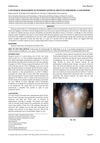 March 2016 in “Journal of evolution of medical and dental sciences”
 Combining OMP with cyclosporine can effectively treat severe alopecia areata in children.
 May 2015 in “Journal of The American Academy of Dermatology”
 Both treatments help with hair regrowth in alopecia areata, but azathioprine has milder side effects than betamethasone.
 May 2015 in “Journal of The American Academy of Dermatology”
 Combination therapy with cyclosporine and low-dose corticosteroid shows favorable long-term results for treating alopecia areata.

Alopecia areata is an autoimmune disease affecting hair follicles and may harm heart health.
 January 2015 in “Przegla̧d dermatologiczny”
 308 nm excimer light therapy may help hair regrowth in alopecia areata with delayed results and no serious side effects.
North American ginseng extract helped regrow hair in balding mice.
 January 2015 in “Przegla̧d dermatologiczny”
 Intralesional triamcinolone is the most effective treatment for alopecia areata, followed by excimer light therapy, and then topical minoxidil. The scalp responds better to treatment than the beard area.
 January 2015 in “Journal of clinical & experimental dermatology research”
 A protein combining parathyroid hormone and collagen helped hair regrow in mice with a hair loss condition.
 April 2014 in “Jurnal Biomedik : JBM”
 An 8-year-old girl had nail and hair issues that improved without specific treatment, but fungal nail infection was hard to cure.
 December 2013 in “The journal of investigative dermatology. Symposium proceedings/The Journal of investigative dermatology symposium proceedings”
 New research is helping develop better treatments for alopecia areata.
 January 2012 in “The Year book of dermatology”
 Many treatments for alopecia areata have inconsistent results; for under 10s, use minoxidil with a corticosteroid, and for over 10s, add ILC and consider diphenylcyclopropenone for widespread cases.
 January 2012 in “Yearbook of Dermatology and Dermatologic Surgery”
 The study concluded that a 'Swiss cheese' pattern in hair follicles is a useful sign for diagnosing alopecia areata.
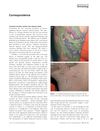 June 2011 in “International Journal of Dermatology”
 A man's red tattoo caused a skin reaction and hair loss in his beard, which improved after treatment.
 April 1969 in “Postgraduate medicine”
 Use corticosteroid cream and triamcinolone injections for treating alopecia areata, and consider wigs and tranquilizers for support.
 January 2018 in “Turkiye Klinikleri Journal of Medical Sciences”
 Alopecia areata treatment should consider life quality and mental health, not just clinical results.
 March 2005 in “Journal of The American Academy of Dermatology”
 Two lotions used day and night may be a good alternative to minoxidil for hair loss, with better cosmetic effects and tolerance.
 4 citations
,
July 2017 in “British Journal of Dermatology”
4 citations
,
July 2017 in “British Journal of Dermatology” The study identified the top 10 most important areas for future hair loss research.
 September 2022 in “Dermatology and therapy”
 Contact immunotherapy might help treat various skin conditions, but more research is needed to confirm its safety and effectiveness.
 January 2015 in “Springer eBooks”
 Some alternative treatments may help with hair loss, but more evidence is needed to confirm their effectiveness.
1 citations
,
September 2025 in “Frontiers in Immunology” Alopecia areata involves complex immune dysregulation, mainly driven by Th1 activity, suggesting broader treatment strategies.
14 citations
,
June 2016 in “PubMed” Regular lab tests and follow-ups are important for managing vitiligo, especially checking thyroid antibodies.