 5 citations
,
October 2015 in “The American journal of pathology”
5 citations
,
October 2015 in “The American journal of pathology” Mice with a mutated Dsg3 gene showed severe symptoms but not the typical blistering of pemphigus vulgaris.
23 citations
,
December 2013 in “Molecular cancer therapeutics” Breast cancer treatments work better with AR activation, improving results and reducing side effects.
 3 citations
,
January 2023 in “Science advances”
3 citations
,
January 2023 in “Science advances” The enzymes Tet2 and Tet3 are important for skin cell development and hair growth.
1 citations
,
July 2017 in “Cancer Research” Overexpressing NSD3 in mice causes breast cancer-like tumors and gland abnormalities.
 March 2022 in “Folia Medica Indonesiana”
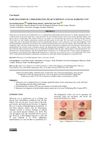
 The lump on a woman's scalp was a rare, potentially cancerous tumor from the hair follicle, not a common cyst.
57 citations
,
January 2019 in “Stem Cell Research & Therapy” OCT4 helps hair stem cells renew and fight aging, potentially aiding hair regrowth.
 1 citations
,
January 2024 in “Nature communications”
1 citations
,
January 2024 in “Nature communications” Activating TLR5 in the gut can extend lifespan and improve health in aged mice.
 56 citations
,
March 2015 in “Cell death and differentiation”
56 citations
,
March 2015 in “Cell death and differentiation” Older skin has higher cancer risk due to inflammation and stem cell issues.
2 citations
,
September 2016 in “Journal of Dermatological Science” Reduced TRPS1 leads to increased STAT3 and SOX9 in hair follicles, affecting hair growth.
July 1995 in “Journal of Dermatological Science”  April 2023 in “The journal of investigative dermatology/Journal of investigative dermatology”
 Tet2 and Tet3 enzymes are important for controlling hair growth and shape by affecting gene activity and DNA structure in hair follicles.
60 citations
,
December 1988 in “Journal of Biochemical Toxicology” TCDD reduces EGF receptors in the liver, affecting growth and development.
 61 citations
,
January 2008 in “Cold Spring Harbor Symposia on Quantitative Biology”
61 citations
,
January 2008 in “Cold Spring Harbor Symposia on Quantitative Biology” Beta-catenin is crucial for skin cell growth, development, and cancer formation.
2 citations
,
May 2007 in “Pediatrics in Review” Thorough history and examination are crucial for diagnosing genetic disorders like juvenile polyposis and hypomelanosis of Ito.
6 citations
,
June 2023 in “Experimental Dermatology” Targeting mitophagy may help treat alopecia areata by reducing inflammasome activation.
January 2008 in “中山醫學大學醫學研究所學位論文” Danthron from Rhubarb causes melanoma cells to stop growing and die.
 134 citations
,
January 2011 in “Development”
134 citations
,
January 2011 in “Development” Adam10 enzyme is crucial for healthy skin and proper Notch signaling.
1 citations
,
October 2023 in “PROTOPLASMA”  19 citations
,
August 2012 in “Cell death and differentiation”
19 citations
,
August 2012 in “Cell death and differentiation” Intu gene is crucial for hair follicle formation by helping keratinocytes differentiate through primary cilia.
421 citations
,
September 2003 in “Development” Stem cell behavior varies with stimuli, and lineage changes can happen without affecting stem cell division.
 245 citations
,
January 1998 in “Genes & Development”
245 citations
,
January 1998 in “Genes & Development” Hoxc13 gene is essential for hair, nail, and papilla development.
 2 citations
,
June 2001 in “American Journal of Pathology”
2 citations
,
June 2001 in “American Journal of Pathology” The document concludes that understanding how hair follicles naturally die and regenerate is important for insights into organ development and could impact health and disease treatment.
29 citations
,
July 2008 in “British Journal of Dermatology” The patient had paraneoplastic pemphigus without mucosal involvement.
17 citations
,
May 2013 in “Journal of Investigative Dermatology” Mutations in β1 integrins cause embryonic death but have milder effects on skin.
 August 2023 in “Journal of Dermatological Science”
 A specific RNA molecule blocks hair growth by affecting a protein related to hair loss conditions.
 April 2016 in “Journal of Investigative Dermatology”
 Decreasing MIG6 can increase the movement and invasiveness of MEK-inhibited mutant NRAS melanoma, particularly when stimulated by EGF.
344 citations
,
May 2018 in “EMBO journal” Phosphorylation controls TFEB's location in the cell, affecting cell metabolism and stress response.
 2 citations
,
May 2023 in “Al Mustansiriyah Journal of Pharmaceutical Sciences”
2 citations
,
May 2023 in “Al Mustansiriyah Journal of Pharmaceutical Sciences” Pterostilbene significantly reduces prostate enlargement and has strong antioxidant effects.
66 citations
,
October 2002 in “Human molecular genetics online/Human molecular genetics” A gene mutation in mice causes skin defects and early death.
143 citations
,
May 2002 in “PubMed” LGD1069 effectively prevents breast tumors in mice without toxicity.