 March 2026 in “Frontiers in Veterinary Science”
 All-trans retinoic acid slows cell growth and increases cell death in goat hair follicles through a specific pathway.
 April 2020 in “Trends in Immunotherapy”
 Combining triamcinolone acetonide and immunotherapy can help regrow hair in some alopecia totalis patients.
January 2024 in “Revista del Centro Dermatológico Pascua” Avoiding damage and using specific shampoo and supplements improved the hair condition.
 44 citations
,
October 2017 in “Scientific Reports”
44 citations
,
October 2017 in “Scientific Reports” Far-infrared radiation improves stem cell growth and movement, helping heart therapy.
24 citations
,
February 2022 in “Journal of Biological Chemistry” Carvacrol activates the TRPV3 channel, which may help design new skin treatments.
 March 2026 in “Folia Histochemica et Cytobiologica”
 LTBP1 is a key regulator in diseases and a potential target for new treatments.
 August 2025 in “Research Square (Research Square)”
 High TNF-α levels may increase hair loss risk after PRP therapy.
612 citations
,
February 2004 in “Nature” OXI1 kinase is essential for plant defense and root hair growth in Arabidopsis.
May 2025 in “Experimental Dermatology” A new genetic tool improves the study of hair growth and potential hair disorder treatments.
 31 citations
,
July 2004 in “Molecular Medicine”
31 citations
,
July 2004 in “Molecular Medicine” Certain defective glucocorticoid receptor mutants move faster inside cell nuclei and work less effectively.
638 citations
,
October 1997 in “Nature” January 2023 in “Brazilian Journals Editora eBooks”  April 2018 in “The journal of investigative dermatology/Journal of investigative dermatology”
 Biotrinine® may be an effective treatment for chronic hair loss.
11 citations
,
April 1997 in “International Journal of Dermatology” Using tretinoin with triamcinolone acetonide helps treat alopecia areata.
January 2024 in “Research Portal Denmark” H+-ATPase is crucial for plant growth and can be influenced by microbial compounds, affecting root hair development.
 November 2025 in “Cancer Management and Research”
 Targeting Keratin 17 may help overcome cancer therapy resistance.
 16 citations
,
January 2010 in “American Journal of Neuroradiology”
16 citations
,
January 2010 in “American Journal of Neuroradiology” Specific brain and bone imaging findings can help diagnose Trichothiodystrophy.
1 citations
,
June 1999 in “American Journal of Contact Dermatitis” Tazarotene gel is more effective for acne than tretinoin and works as well as adapalene.
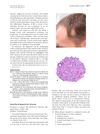
The man has Temporal Triangular Alopecia, a stable, non-scarring hair loss condition best treated with hair transplantation.
 1 citations
,
May 2019 in “Cytotherapy”
1 citations
,
May 2019 in “Cytotherapy” The new ddPCR method reliably detects unwanted viruses in CAR-T cell products, ensuring their safety for patients.
 6 citations
,
August 2022 in “Science immunology”
6 citations
,
August 2022 in “Science immunology” Foxn1 gene regulation is crucial for thymus development but not for hair growth.
22 citations
,
August 2020 in “Cells” TGM3 is important for skin and hair structure and may help diagnose cancer.
1 citations
,
January 2010 in “Endocrine abstracts”  1 citations
,
January 1995 in “Skin Cancer”
1 citations
,
January 1995 in “Skin Cancer” Immunohistochemistry helps accurately identify and differentiate malignant trichilemmoma.
 November 2024 in “Journal of the European Academy of Dermatology and Venereology”
 Cryotherapy with precise temperature control is a promising treatment for alopecia areata.
 January 2024 in “Frontiers in plant science”
 The zinc finger protein 3 in Arabidopsis thaliana reduces plant growth and root hair development.
 January 2026 in “Immune Network”
 Regulatory T cells adapt to different environments to control inflammation and support tissue repair.
 11 citations
,
January 2012 in “Journal of cell science”
11 citations
,
January 2012 in “Journal of cell science” Rac1 is essential for proper hair structure and color.
 April 2017 in “Journal of Investigative Dermatology”
 Deep phenotyping helps distinguish between xeroderma pigmentosum and trichothiodystrophy, aiding in diagnosis and treatment.
 April 2026 in “Diagnostics”
 PRP treatment improves chronic tendinopathy, and imaging biomarkers can track tendon changes.