14 citations
,
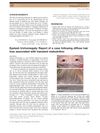
January 1995 in “Archives of Physical Medicine and Rehabilitation” A patient developed excess hair and skin issues on the same side after wearing a cast.
September 2001 in “Swiss Medical Forum ‒ Schweizerisches Medizin-Forum” 6 citations
,
January 2011 in “European Journal of Dermatology” It's important to consider genetic hair disorders when diagnosing hair loss.
8 citations
,
January 2011 in “International journal of trichology” Accurate diagnosis of APL is crucial to avoid unnecessary treatments.
July 2025 in “Clinical Case Reports” A new genetic mutation in the TRPS1 gene causes Trichorhinophalangeal Syndrome, leading to specific hair, dental, and bone issues.
 4 citations
,
July 2013 in “Journal of dermatology”
4 citations
,
July 2013 in “Journal of dermatology” Malnutrition can cause unusual eyelash growth and hair loss.
 4 citations
,
January 2014 in “Indian dermatology online journal”
4 citations
,
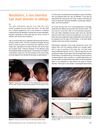
January 2014 in “Indian dermatology online journal” Monilethrix is a genetic hair disorder causing fragile, beaded hair with no effective treatment.
1 citations
,
January 2018 in “International Journal of Trichology” Circle hairs are harmless, spiral-shaped body hairs that don't need medical treatment.
December 2020 in “Dermatology practical & conceptual” Trichoscopy helped diagnose a teenage girl's hair loss as monilethrix.
November 2021 in “Skin appendage disorders” Self-induced hair loss should be considered in patients with androgenetic alopecia.
35 citations
,
September 2003 in “Archives of dermatology” Tiger tail bands in hair are caused by wavy hair fibers with melanin, unlike straight fibers in normal hair.
1 citations
,
June 2011 in “Journal of Dermatological Case Reports” Shaving and applying erythromycin cream and clotrimazole powder effectively treated trichomycosis axillaris.
8 citations
,
January 2014 in “Indian Dermatology Online Journal” Trichostasis spinulosa is a common but often unnoticed skin condition involving bundled vellus hairs, especially in people with darker skin or UV exposure.
10 citations
,
July 2015 in “Clinical and Experimental Dermatology” Etanercept may cause hair fragility and breakage.
Trichoscopic examination is crucial for diagnosing congenital triangular alopecia.
4 citations
,
November 2016 in “The Journal of Dermatology” Pili torti hair is fragile due to loose keratin filaments and weak disulfide bonds.
September 2021 in “CRC Press eBooks” Traumatic alopecia causes hair loss from pulling or rubbing, leading to broken hairs and changes in the scalp.
187 citations
,
May 1988 in “Differentiation” Trichocytic cytokeratins are found in hair, nails, tongue, and thymus cells, showing complex regulation in tissue development.
 9 citations
,
January 2013 in “Acta dermato-venereologica”
9 citations
,
January 2013 in “Acta dermato-venereologica” The conclusion is that "trichoknesis" should be recognized as a separate condition from trichodynia, characterized by itching instead of pain.
December 2025 in “Clinical Case Reports” Netherton syndrome causes skin and hair issues, confirmed by "bamboo hair" under dermoscopy, with no cure but managed with topical treatments.
 December 2025 in “IP Indian Journal of Clinical and Experimental Dermatology”
 Hair shaft disorders often indicate genetic or systemic issues and are managed by minimizing damage.
March 2025 in “International Journal of Trichology” Trichodaganomania involves biting one's hair and needs combined psychological and medical treatment.
 4 citations
,
June 2014 in “The Journal of Dermatology”
4 citations
,
June 2014 in “The Journal of Dermatology” Elkonyxis, a rare nail condition, improved when patients stopped their nail-picking habits.
 December 2023 in “Portuguese journal of dermatology and venereology”
 Trichoscopy can reliably distinguish between alopecia areata and trichotillomania.
 February 2022 in “International journal of research in dermatology”
 The document concludes that proper diagnosis and treatment of hair shaft disorders require understanding their unique causes and avoiding hair-damaging practices.
18 citations
,
April 2016 in “American Journal of Dermatopathology” Larger nail cavity sizes suggest benign tumors, while smaller ones may need further biopsy to rule out cancer.
January 2016 in “Dermatology online journal” A 15-year-old girl has a benign skin tumor on her neck.
1 citations
,
January 2017 in “International Journal of Trichology” A new mutation caused a rare hair disorder in a Polish girl, not inherited from her family.
 6 citations
,
August 2012 in “The Journal of Pediatrics”
6 citations
,
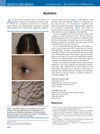
August 2012 in “The Journal of Pediatrics” A 12-year-old girl was diagnosed with monilethrix, a genetic condition causing fragile, beaded hair that breaks easily, with no effective treatment available.
5 citations
,
July 1996 in “Journal of Cutaneous Medicine and Surgery” TTD patients don't have a higher skin cancer risk because their main issue is with transcription, not DNA repair.