7 citations
,
March 2017 in “Experimental and Therapeutic Medicine” Hair follicle cells can help keep embryonic stem cells undifferentiated.
1 citations
,
August 2015 in “Experimental Dermatology” KIT's role in skin cells is not entirely independent, as other cells can influence its function.
 551 citations
,
November 2013 in “Nature”
551 citations
,
November 2013 in “Nature” Certain mature cells in mouse lungs can turn back into stem cells to aid in tissue repair.
52 citations
,
May 1997 in “Journal of Biological Chemistry” High ornithine decarboxylase levels may lead to hair loss and cancer by increasing CK2 activity in the nucleus.
43 citations
,
April 2010 in “Developmental Biology” Sebaceous glands can form new hair follicles when activated, but hair follicle bulges cannot.
 4 citations
,
July 2012 in “Genesis”
4 citations
,
July 2012 in “Genesis” The Megsin-Cre transgene is a new tool for genetic manipulation in the skin and upper digestive tract.
 September 2023 in “bioRxiv (Cold Spring Harbor Laboratory)”
 The mTurq2-Col4a1 mouse model shows that cells can divide while attached to stable basement membranes during development.
 276 citations
,
December 2017 in “Journal of Dermatological Science”
276 citations
,
December 2017 in “Journal of Dermatological Science” The document concludes that mouse models are helpful but have limitations for skin wound healing research, and suggests using larger animals and genetically modified mice for better human application.
212 citations
,
August 2004 in “Proceedings of the National Academy of Sciences” Hair follicle cells can create new blood vessels in the skin.
76 citations
,
March 2005 in “Cancer Research” Doxorubicin can block blood vessels from hair follicles, reducing skin tumor growth.
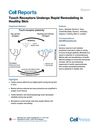 31 citations
,
November 2016 in “Cell Reports”
31 citations
,
November 2016 in “Cell Reports” Touch sensitivity in mouse skin decreases during hair growth due to changes in touch receptors.
8 citations
,
November 2019 in “Clinical Science” High DHA levels delay wound healing and worsen skin repair quality.
 1 citations
,
August 2023 in “bioRxiv (Cold Spring Harbor Laboratory)”
1 citations
,
August 2023 in “bioRxiv (Cold Spring Harbor Laboratory)” Certain cells in the adult mouse ear come from cranial neural crest cells, but muscle and hair cells do not.
 November 2023 in “bioRxiv (Cold Spring Harbor Laboratory)”
 Scientists made a mouse that shows how a specific protein in the skin changes and affects hair growth and shape.
 3 citations
,
July 2021 in “Life science alliance”
3 citations
,
July 2021 in “Life science alliance” PNKP is essential for keeping adult mouse progenitor cells healthy and growing normally.
 33 citations
,
May 2006 in “Journal of Investigative Dermatology”
33 citations
,
May 2006 in “Journal of Investigative Dermatology” PTHrP and its receptor can control blood vessel growth and hair development in mouse skin.
 16 citations
,
September 2016 in “Experimental Dermatology”
16 citations
,
September 2016 in “Experimental Dermatology” Two-photon microscopy effectively tracks live stem cell activity in mouse skin with minimal harm and clear images.
 145 citations
,
November 2018 in “Nature Communications”
145 citations
,
November 2018 in “Nature Communications” The Sonic hedgehog pathway is crucial for new hair growth during mouse skin healing.
 835 citations
,
October 2008 in “Nature Genetics”
835 citations
,
October 2008 in “Nature Genetics” Lgr5 is a marker for active, long-lasting stem cells in mouse hair follicles.
 25 citations
,
May 1994 in “Journal of Investigative Dermatology”
25 citations
,
May 1994 in “Journal of Investigative Dermatology” Researchers found a new gene, hacl-1, that is active in mouse hair follicles during hair growth and may be important for hair biology.
949 citations
,
January 2001 in “Cell” Adult mouse skin contains stem cells that can create new hair, skin, and oil glands.
2 citations
,
May 2023 in “Biology” New mouse models of Pemphigus show severe symptoms and need better treatments.
 6 citations
,
February 2022 in “The journal of neuroscience/The Journal of neuroscience”
6 citations
,
February 2022 in “The journal of neuroscience/The Journal of neuroscience” Deleting the PTEN gene in mice causes nerve cells to grow larger and heal better after injury, but may cause overgrowth and hair loss in older mice.
1 citations
,
January 2024 in “Animal Research and One Health” Mouse models are essential for studying and improving genetic traits in agriculture.
14 citations
,
February 2022 in “The Journal of clinical investigation/The journal of clinical investigation” Scientists made a mouse model of a serious skin cancer by changing skin cells with a virus and a specific gene, which is similar to the disease in humans.
 34 citations
,
April 2018 in “EMBO journal”
34 citations
,
April 2018 in “EMBO journal” The protein SLC1A3 is important for activating skin stem cells and is necessary for normal hair and skin growth in mice.
 7 citations
,
January 2013 in “The journal of investigative dermatology/Journal of investigative dermatology”
7 citations
,
January 2013 in “The journal of investigative dermatology/Journal of investigative dermatology” T-cell reconstitution after thymus transplantation can cause hair whitening and loss.
Four transcription factors can convert mouse cells into hair cell-like cells, aiding hearing loss research and treatment.
 34 citations
,
December 2009 in “The International Journal of Developmental Biology”
34 citations
,
December 2009 in “The International Journal of Developmental Biology” Too much thymosin beta4 causes weird teeth and more hair growth in mice.
 232 citations
,
January 2013 in “Nature Cell Biology”
232 citations
,
January 2013 in “Nature Cell Biology” Understanding where cancer cells come from helps create better prevention and treatment methods.