1 citations
,
May 2024 in “Pediatric Blood & Cancer” Trametinib can effectively treat severe kaposiform lymphangiomatosis when other treatments fail.
11 citations
,
March 2021 in “The journal of investigative dermatology/Journal of investigative dermatology” A gene mutation causes early keratinocyte maturation leading to hair loss in Olmsted syndrome.
January 2013 in “Kidney international” A man with kidney tumors and lung cysts was diagnosed with Birt–Hogg–Dubé syndrome and treated successfully, with genetic testing confirming the diagnosis.
71 citations
,
January 2011 in “Orphanet Journal of Rare Diseases” IFAP syndrome is a rare genetic disorder causing skin, hair, and eye issues, with limited treatment options.
48 citations
,
April 2008 in “Human Molecular Genetics” Progerin affects cell shape but not hair or skin in mice.
 8 citations
,
July 2014 in “Anais Brasileiros de Dermatologia”
8 citations
,
July 2014 in “Anais Brasileiros de Dermatologia” A man's scalp condition was misidentified as hair loss dots but was actually a common follicular disorder.
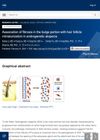 February 2021 in “Journal of The American Academy of Dermatology”
 Fibrosis in the bulge area of hair follicles can cause hair thinning in male pattern baldness, and drugs that inhibit fibrosis might help reverse this.
January 2025 in “International Journal of Trichology” Trichotillomania can occur in unusual patterns and sites, highlighting the need for awareness and treatment options.
2 citations
,
June 2013 in “Journal of Dermatological Case Reports” Olmsted syndrome is a rare skin disorder causing thickened skin and other symptoms.
33 citations
,
September 2017 in “Journal of Investigative Dermatology” A mutation in the KRT25 gene causes woolly hair and hair loss.
1 citations
,
January 2007 in “The Internet Journal of Dermatology” A rare, harmless skin tumor was found on a man's nose.
15 citations
,
March 2021 in “EMBO Reports” PRSS35 enzyme may help start skin tumors and could be a target for cancer treatment.

A new syndrome, Teelwani Syndrome, combines features of two rare genetic disorders.
 April 2023 in “World Journal Of Advanced Research and Reviews”
 Cosmetic products or emotional factors might contribute to Frontal Fibrosing Alopecia, and trichoscopy is useful for diagnosis.
66 citations
,
December 1999 in “Journal of Investigative Dermatology” New mutations in the hairless gene may cause hair loss and affect bone development.
January 2026 in “Indian Journal of Paediatric Dermatology” A rare case shows a possible link between Neurofibromatosis type 1 and Becker nevus due to genetic mutations.
3 citations
,
January 2021 in “Veterinary dermatology” A litter of cats had a hair condition similar to a mouse mutation, leading to hair loss and abnormal hair and skin.
11 citations
,
May 2008 in “British journal of dermatology/British journal of dermatology, Supplement” Identical p53 gene mutations in different cancers suggest the need for careful treatment.
3 citations
,
January 2011 in “生物医学研究杂志:英文版” A new mutation in the KRT86 gene causes monilethrix in a Han family.
 3 citations
,
August 2010 in “Anais brasileiros de dermatologia/Anais Brasileiros de Dermatologia”
3 citations
,
August 2010 in “Anais brasileiros de dermatologia/Anais Brasileiros de Dermatologia” A rare genetic disease caused severe, worsening hair loss from early childhood with poor treatment results.
5 citations
,
July 2009 in “Clinical and experimental dermatology”  74 citations
,
January 2006 in “The journal of investigative dermatology/Journal of investigative dermatology”
74 citations
,
January 2006 in “The journal of investigative dermatology/Journal of investigative dermatology” Mutations in the DSG4 gene can cause a rare hair disorder similar to monilethrix.
47 citations
,
September 2012 in “Human molecular genetics online/Human molecular genetics” Folliculin deficiency causes problems with cell division and positioning due to disrupted RhoA signaling and interaction with p0071.
119 citations
,
November 2016 in “American journal of human genetics” Mutations in three genes cause Uncombable Hair Syndrome, leading to frizzy hair that can't be combed flat.
December 2020 in “Dermatology practical & conceptual” Trichoscopy helped diagnose a teenage girl's hair loss as monilethrix.
62 citations
,
March 2017 in “Journal of Investigative Dermatology” Mutations in the ACTB gene cause Becker’s nevi and may lead to muscle issues in Becker’s nevus syndrome.
January 2019 in “International Journal of Clinical & Medical Images” The patient showed signs of liver disease due to alcohol use but didn't need treatment for Dupuytren’s contracture.
10 citations
,
July 2015 in “Clinical and Experimental Dermatology” Etanercept may cause hair fragility and breakage.
3 citations
,
August 2017 in “Clinical case reports” A rare skin condition causes red and dark patches on the face and limbs.
3 citations
,
May 2017 in “BMJ Case Reports” A 15-year-old boy's skin and hair condition worsened due to improper treatment, leading to severe health issues.