27 citations
,
August 2021 in “Journal of Autoimmunity” Human dermal γδT-cells respond to stress in hair follicles, contributing to hair loss.
7 citations
,
January 2016 in “Dermatology online journal” Persistent pulling on hair can cause permanent hair loss.

The document concludes that severe trauma can cause temporary hair loss, known as Telogen Effluvium, which usually resolves without treatment.
 May 2022 in “Experimental dermatology”
 Trichothiodystrophy hair is structurally abnormal with protein and organization issues.
 7 citations
,
August 2016 in “Nursing for Women's Health”
7 citations
,
August 2016 in “Nursing for Women's Health” To prevent and treat Hair-thread tourniquet syndrome in infants, keep a close eye on their limbs, manage maternal hair loss, and educate parents and healthcare providers.
 125 citations
,
September 2001 in “The FASEB Journal”
125 citations
,
September 2001 in “The FASEB Journal” Stress can cause hair loss by negatively affecting hair follicles and this effect might be reversed with specific treatments.
12 citations
,
January 2001 in “Der Hautarzt” Trichorhinophalangeal syndrome causes hair, facial, and bone issues, with no specific treatment beyond gentle care.
 1 citations
,
January 2018 in “Acta dermato-venereologica”
1 citations
,
January 2018 in “Acta dermato-venereologica” A teenager's hair with alternating white and dark bands, known as Pili annulati, is a genetic condition that is usually harmless and often considered attractive.
 6 citations
,
November 2012 in “Hair transplant forum international”
6 citations
,
November 2012 in “Hair transplant forum international” The Laxometer helps make hair transplants with many grafts safer.
 September 2021 in “Mağallaẗ al-Muẖtar li-l-ʿulūm”
 Two sisters have rare hair disorders causing short, fragile, kinky hair.
December 2024 in “Skin Appendage Disorders” Traction alopecia reduces hair density and thickness; proper hair care can help prevent it.
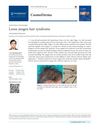 February 2023 in “Cosmoderma”
 Loose anagen hair syndrome causes easily shed hair but usually improves with time.
January 2006 in “International Journal of Dermatology and Venereology” Stress can cause and worsen hair loss, so managing stress is important for better hair health.
7 citations
,
July 2025 in “The Journal of Physiology” C-tactile nerves are sensitive to hair movement.
1 citations
,
June 2016 in “Medicina” Monilethrix is a genetic disorder causing brittle hair, diagnosed using tricoscopy.
 1 citations
,
March 1995 in “JAMA”
1 citations
,
March 1995 in “JAMA” The woman's hair loss is likely stress-related and should improve without treatment.
25 citations
,
September 1973 in “Archives of dermatology” Using tretinoin cream on the skin can get rid of hair plugs caused by Trichostasis spinulosa.
28 citations
,
October 2010 in “Targeted Oncology” Trastuzumab may cause tufted hair folliculitis as a side effect.
 April 2026 in “International Journal of Homoeopathic Sciences”
 Homeopathic treatment improved stress-induced hair loss in an 18-year-old female.
 September 2023 in “Ain Shams medical journal”
 31% of female high school students in Minia have hair loss from tight hairstyles, which can become permanent if not treated early.
January 2022 in “Clinical Cases in Dermatology” The girl's hair loss is due to trichotillomania, which may improve with behavioral therapy or a combination of treatments.
 3 citations
,
October 1982 in “Postgraduate Medicine”
3 citations
,
October 1982 in “Postgraduate Medicine” Most types of hair loss can regrow naturally, but there are no effective cures for male pattern or age-related hair loss, and only limited options for females.
10 citations
,
January 1995 in “Dermatology” Dermatologists should consider congenital syndromes like TRPS in young adults with early hair loss.
A new mutation in the TRPS1 gene caused Trichorhinophalangeal syndrome in a 17-year-old, highlighting the need for genetic testing.
 6 citations
,
August 2012 in “The Journal of Pediatrics”
6 citations
,
August 2012 in “The Journal of Pediatrics” A 12-year-old girl was diagnosed with monilethrix, a genetic condition causing fragile, beaded hair that breaks easily, with no effective treatment available.
 27 citations
,
January 1990 in “Child Psychiatry & Human Development”
27 citations
,
January 1990 in “Child Psychiatry & Human Development” The document concludes that supportive home environments and addressing parent-child interactions can effectively treat trichotillomania in children.
 July 2025 in “The Journal of Physiology”
 C-tactile afferents are linked to emotional touch and social bonding through hair movement.
April 2012 in “Informa Healthcare eBooks” Telogen effluvium is a condition that causes temporary hair loss.
 23 citations
,
January 2021 in “Journal of Dermatological Science”
23 citations
,
January 2021 in “Journal of Dermatological Science” The document concludes that we need more research to understand Telogen Effluvium and find effective treatments.
December 2015 in “European Journal of Pediatric Dermatology” Newborns can experience temporary hair loss in bands, unrelated to sleeping position.