3 citations
,
January 2020 in “International journal of trichology” Congenital triangular alopecia is a hair loss condition present from birth or early childhood with no effective treatment needed.
 January 2020 in “Przegla̧d dermatologiczny”
 A 5-year-old boy was diagnosed with congenital triangular alopecia, a type of hair loss without skin changes, usually starting between ages 2-5, with no specific treatment.
 January 2018 in “Springer eBooks”
 Congenital triangular alopecia is a harmless, non-spreading hair loss condition often seen in young children.
 122 citations
,
April 1995 in “Journal of Cutaneous Pathology”
122 citations
,
April 1995 in “Journal of Cutaneous Pathology” The document describes how to tell different types of non-scarring hair loss apart by looking at hair and scalp tissue under a microscope.
 May 2024 in “CRC Press eBooks”
 Children's hair loss can have various causes, including infections, autoimmune issues, physical stress, nutritional problems, and genetic factors.
 December 2014 in “PubMed”
 A scalp biopsy can help confirm hair loss types when other methods don't provide a clear diagnosis.

The man has Temporal Triangular Alopecia, a stable, non-scarring hair loss condition best treated with hair transplantation.
September 2009 in “Hair transplant forum international” A committee was formed to improve hair restoration for certain hair diseases by collecting and analyzing data.
 March 2012 in “Journal of The American Academy of Dermatology”
 Dermoscopy helps diagnose different hair loss conditions, and characteristics vary among ethnicities and individual cases.
 7 citations
,
December 2008 in “Expert Review of Dermatology”
7 citations
,
December 2008 in “Expert Review of Dermatology” The document concludes that various childhood hair and nail disorders exist, some may improve on their own, and advances in genetics and immunology could enhance treatment and counseling.
 1 citations
,
January 2019 in “Paediatrics and Child Health”
1 citations
,
January 2019 in “Paediatrics and Child Health” The document concludes that understanding hair biology and recognizing hair conditions are crucial for managing and treating hair loss in children.
 1 citations
,
July 2016 in “British Journal of Dermatology”
1 citations
,
July 2016 in “British Journal of Dermatology” Men with a certain type of hair loss often use facial moisturizers, and a specific antibiotic treatment may help another hair condition.
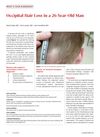 January 2022 in “Consultant”
 The man's occipital hair loss was due to temporal triangular alopecia, not alopecia areata.
 December 2019 in “Journal of pediatrics & neonatology”
 A 13-year-old boy had a rare, stable type of hair loss with little chance of regrowth, but treatment is available for looks.
 July 2018 in “Elsevier eBooks”
 The most common cause of hair loss in children is tinea capitis, followed by alopecia areata and telogen effluvium.
 April 2016 in “Journal of The American Academy of Dermatology”
 The study found that Temporal Triangular Alopecia often starts in early childhood, while Folliculitis Decalvans is characterized by tufted hairs and redness around hair follicles.
14 citations
,
January 2010 in “Dermatology” Some people with congenital triangular alopecia have a central tuft of hair in the bald patch, but the cause is unknown.
January 2022 in “Clinical Cases in Dermatology” A 12-year-old boy has a rare, harmless hair loss on his chin with no need for treatment.
 3 citations
,
April 2011 in “Dermatologic Surgery”
3 citations
,
April 2011 in “Dermatologic Surgery” Different women have various natural hairline shapes, and understanding this is important for designing hair transplants.
 34 citations
,
December 1995 in “Pediatric Dermatology”
34 citations
,
December 1995 in “Pediatric Dermatology” Congenital Triangular Alopecia is a rare, non-scarring hair loss that can be surgically treated in females for cosmetic reasons.
 5 citations
,
October 2018 in “Dermatologic therapy”
5 citations
,
October 2018 in “Dermatologic therapy” Recognizing congenital triangular alopecia is crucial to avoid unnecessary treatments.

A woman with a rare hair loss condition developed skin cancer in the bald area.
 May 2024 in “Clinical, cosmetic and investigational dermatology”
 5% topical minoxidil effectively treated a boy's congenital triangular alopecia without side effects.
 4 citations
,
February 1988 in “Journal of the American Academy of Dermatology”
4 citations
,
February 1988 in “Journal of the American Academy of Dermatology” Congenital triangular alopecia is more common than thought and some treatments can be beneficial for appearance concerns.
 January 2021 in “Skin appendage disorders”
 The report concludes that atypical Brauer nevus is more common in males, present at birth, and often misdiagnosed due to its unusual scalp locations.
 11 citations
,
January 2002 in “Dermatologic Surgery”
11 citations
,
January 2002 in “Dermatologic Surgery” Using minoxidil before and after facelift surgery can effectively prevent temporary hair loss without causing other complications.
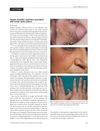 1 citations
,
February 2004 in “Journal of The European Academy of Dermatology and Venereology”
1 citations
,
February 2004 in “Journal of The European Academy of Dermatology and Venereology” Hair loss improved with treatment and successful transplant.
 January 2002 in “Dermatologic Surgery”
 Minoxidil is effective in preventing hair loss after facelift surgery.
Trichoscopic examination is crucial for diagnosing congenital triangular alopecia.
 January 2011 in “International Journal of Trichology”
 The document concludes that doctors should recognize congenital triangular alopecia to avoid unnecessary treatments, as it does not respond to steroids like alopecia areata does.