 13 citations
,
June 2012 in “Journal of Dermatological Case Reports”
13 citations
,
June 2012 in “Journal of Dermatological Case Reports” An 8-year-old boy with hair-pulling disorder had a bald patch that was confirmed not to be a fungal infection and was treated with therapy.
2 citations
,
January 2023 in “Skin Appendage Disorders” More research is needed to confirm initial findings on hair loss patterns from chemotherapy.
July 2021 in “Anais brasileiros de dermatologia/Anais Brasileiros de Dermatologia” Monilethrix causes different levels of hair loss in family members.
26 citations
,
April 2007 in “Journal of clinical oncology” 19 citations
,
January 2011 in “International journal of trichology” A 3-year-old boy had a rare hairball condition usually seen in teenage girls.
April 2016 in “The journal of investigative dermatology/Journal of investigative dermatology” Neoplasms hide in hair follicles to avoid the immune system.
5 citations
,
July 1996 in “Journal of Cutaneous Medicine and Surgery” TTD patients don't have a higher skin cancer risk because their main issue is with transcription, not DNA repair.
 13 citations
,
February 2006 in “Clinical and Experimental Dermatology”
13 citations
,
February 2006 in “Clinical and Experimental Dermatology” A benign tumor developed at a girl's BCG vaccination site, not previously linked to the vaccine.
 1 citations
,
April 2020 in “International Journal of Research in Dermatology”
1 citations
,
April 2020 in “International Journal of Research in Dermatology” Trichoscopy is a reliable method for diagnosing different types of hair loss.
 8 citations
,
November 2021 in “The Journal of Dermatology”
8 citations
,
November 2021 in “The Journal of Dermatology” The article simplifies trichoscopy terms and offers a new diagnostic flowchart.
 56 citations
,
March 2010 in “Journal of Dermatology”
56 citations
,
March 2010 in “Journal of Dermatology” Most cases of Temporal Triangular Alopecia are found in early childhood and may be related to genetic conditions.
2 citations
,
July 2019 in “Indian dermatology online journal” A 17-year-old girl and her brothers have a rare hair condition with long eyelashes, thick eyebrows, and easily pluckable hair.
 78 citations
,
June 2005 in “Annals of oncology”
78 citations
,
June 2005 in “Annals of oncology” Cetuximab can cause excessive eyelash growth.
6 citations
,
November 2001 in “Der Hautarzt” Photothermolysis is the best method for permanent hair removal.
12 citations
,
May 2009 in “Ophthalmic plastic and reconstructive surgery” Multiple pilomatrixoma may indicate Turner syndrome.
March 2009 in “Chinese Journal of Dermatology” Melanocytes in the outer root sheath are likely stem cells that grow fast but stay immature.
 4 citations
,
February 1988 in “Journal of the American Academy of Dermatology”
4 citations
,
February 1988 in “Journal of the American Academy of Dermatology” Congenital triangular alopecia is more common than thought and some treatments can be beneficial for appearance concerns.
January 2022 in “Skin appendage disorders” Trichoscopy effectively visualizes scalp micropigmentation without invasive methods.
28 citations
,
October 2010 in “Targeted Oncology” Trastuzumab may cause tufted hair folliculitis as a side effect.
 2 citations
,
July 2005 in “Baylor University Medical Center Proceedings”
2 citations
,
July 2005 in “Baylor University Medical Center Proceedings” A 4-year-old girl was diagnosed with trichotillomania, a condition where she pulls out her hair, which may resolve on its own or require therapy.
 19 citations
,
January 2014 in “International Journal of Medical Sciences”
19 citations
,
January 2014 in “International Journal of Medical Sciences” Abnormal activation of hair follicle stem cells and Wnt/β-catenin signaling contributes to sebaceous neoplasms.
 1 citations
,
January 2016 in “Journal of cosmetology & trichology”
1 citations
,
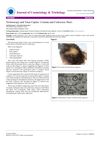
January 2016 in “Journal of cosmetology & trichology” Trichoscopy helped diagnose and treat a child's fungal scalp infection by spotting specific hair shapes.
 May 2021 in “Pakistan Journal of Medical and Health Sciences”
 Trichogram is useful for diagnosing hair disorders, but newer, non-invasive methods like trichoscopy are becoming more popular due to their sensitivity and ability to monitor treatment responses.
 6 citations
,
January 2015 in “Dermatology”
6 citations
,
January 2015 in “Dermatology” Trichoscopy helps diagnose hair and scalp problems but isn't always definitive and should be used with other methods.
 26 citations
,
December 2011 in “Journal of Investigative Dermatology”
26 citations
,
December 2011 in “Journal of Investigative Dermatology” New gene identification techniques have improved the understanding and classification of inherited hair disorders.
 6 citations
,
August 2012 in “The Journal of Pediatrics”
6 citations
,
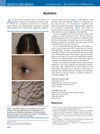
August 2012 in “The Journal of Pediatrics” A 12-year-old girl was diagnosed with monilethrix, a genetic condition causing fragile, beaded hair that breaks easily, with no effective treatment available.
 January 2019 in “The Egyptian Journal of Hospital Medicine”
 Trichoscopy helps effectively tell apart different types of patchy hair loss in Egyptian patients.
 10 citations
,
January 2011 in “Case reports in dermatological medicine”
10 citations
,
January 2011 in “Case reports in dermatological medicine” Hair transplant surgery effectively treated a specific type of hair loss and is recommended as a primary treatment option.
 December 2019 in “Дерматологія та венерологія”
 Trichoscopy is a useful tool for diagnosing hair and scalp disorders.
15 citations
,
September 2014 in “PloS one” The study found that analyzing certain cell signaling pathways is not a reliable method to tell apart two types of skin tumors.