April 2012 in “Journal of evolution of medical and dental sciences” No effective treatment exists to stimulate hair growth in atrichia with papular lesions.
64 citations
,
February 2008 in “Cancer Research” Inactivating both p53 and Rb genes in mice speeds up aggressive skin cancer development.
 April 2025 in “International Journal For Multidisciplinary Research”
 Hypertrichosis causes excessive hair growth and can be managed with treatments like laser, electrolysis, or new topical solutions.
 February 2026 in “Zenodo (CERN European Organization for Nuclear Research)”
 Trichoscopy is important for planning treatment of hair loss after burns.
13 citations
,
July 2012 in “International Journal of Trichology” TTD symptoms vary widely, requiring thorough evaluations.
 January 2016 in “Journal of Clinical Dermatology”
 Trichoscopy helps diagnose and assess the severity of two types of hair loss diseases, androgenetic alopecia and alopecia areata.
June 2001 in “European Journal of Dermatology” A 54-year-old woman experienced progressive hair loss starting in adolescence, leading to sparse scalp hair and almost no eyebrows or eyelashes.
 September 2024 in “Archiv Euromedica”
 Trichoscopy is a quick, accurate, and non-invasive method to diagnose and treat non-scarring hair loss.
83 citations
,
October 1998 in “The American Journal of Human Genetics” A specific gene mutation causes complete hair loss in an Irish Traveller family.
 January 2018 in “Springer eBooks”
 Trichotillomania is a condition where people repeatedly pull out their hair, which can be triggered by stress and has various physical signs.
June 2011 in “European Journal of Pediatric Dermatology” An 11-year-old girl with hair thinning was diagnosed with monilethrix and early androgenetic alopecia.
6 citations
,
October 1998 in “PubMed” Antifungal treatment can improve severe skin infections with cutaneous horns.
1 citations
,
September 2023 in “Portuguese Journal of Dermatology and Venereology” Trichoscopy can help diagnose and decide when to biopsy folliculotropic mycosis fungoides.
 16 citations
,
January 2010 in “American Journal of Neuroradiology”
16 citations
,
January 2010 in “American Journal of Neuroradiology” Specific brain and bone imaging findings can help diagnose Trichothiodystrophy.
12 citations
,
March 1981 in “International Journal of Dermatology” External factors like certain shampoos, bacterial infections, and parasites might cause hair defects similar to genetic conditions.
 32 citations
,
January 2014 in “Dermatology Research and Practice”
32 citations
,
January 2014 in “Dermatology Research and Practice” Trichoscopy can effectively tell apart tinea capitis and alopecia areata in children by looking for specific hair shapes.
April 2025 in “Pediatric Dermatology” Scalp biopsies are essential for diagnosing congenital alopecia areata.
2 citations
,
January 2006 in “Indian Journal of Veterinary Pathology” Trichophyton mentagrophytes causes skin issues and nutrient deficiencies in young sheep, especially in winter.
3 citations
,
April 1997 in “Developmental Dynamics” Trypsin slows hair growth and affects color by causing cell death in hair follicles.
 6 citations
,
August 2012 in “The Journal of Pediatrics”
6 citations
,
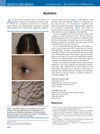
August 2012 in “The Journal of Pediatrics” A 12-year-old girl was diagnosed with monilethrix, a genetic condition causing fragile, beaded hair that breaks easily, with no effective treatment available.
 89 citations
,
December 2010 in “The Journal of Dermatology”
89 citations
,
December 2010 in “The Journal of Dermatology” The conclusion is that an algorithm using trichoscopy helps diagnose different types of hair loss but may need updates and a biopsy if results are unclear.
13 citations
,
March 2011 in “Acta Paediatrica” Tinea capitis needs systemic treatment to avoid severe outcomes.
 August 2018 in “Pediatric Dermatology”
 A baby had a unique skin condition with a pale patch and surrounding dark hairs, not linked to other health issues.
 November 2018 in “Skin appendage disorders”
 The document concludes that a woman has both Frontal Fibrosing Alopecia and Lichen Simplex Chronicus, a previously unreported combination of conditions.
 April 2023 in “Our Dermatology Online”
 Trichoscopy is effective in diagnosing trichotillomania by showing specific hair patterns.
24 citations
,
November 2003 in “Australasian Journal of Dermatology” A rare skin cancer caused hair loss and spread, needing multiple treatments.
1 citations
,
January 2016 in “Dermatology Online Journal” Triangular temporal alopecia can occur in adults and should be correctly identified to prevent misdiagnosis.
54 citations
,
September 1999 in “PubMed” K15 staining helps distinguish basal cell carcinoma from trichoepithelioma.
 January 2019 in “The Egyptian Journal of Hospital Medicine”
 Trichoscopy helps effectively tell apart different types of patchy hair loss in Egyptian patients.
 March 2021 in “CRC Press eBooks”
 Trichoscopy helps detect early complications in hair transplants and ensures quality in the procedure.