23 citations
,
February 2003 in “British Journal of Dermatology” A rare type of skin lymphoma was identified, affecting hair follicles and sweat glands.
 21 citations
,
October 2019 in “The journal of investigative dermatology/Journal of investigative dermatology”
21 citations
,
October 2019 in “The journal of investigative dermatology/Journal of investigative dermatology” A specific gene change plus an additional mutation in the same gene cause hereditary trichilemmal cysts.
 June 2018 in “The Medical Journal of Cairo University/The Medical Journal of Cairo University”
 Dermoscopy can quickly and reliably distinguish Tinea Capitis from Alopecia Areata by identifying specific hair patterns.
12 citations
,
January 2013 in “Acta Histochemica” Junctional proteins stabilize the inner root sheath and connect the companion layer in human hair.
20 citations
,
April 2009 in “Cell Biology International” Hair follicle stem cells can become corneal-like cells with the help of pax6.
January 2012 in “Infoscience (Ecole Polytechnique Fédérale de Lausanne)” Human thymus has stem cells that can self-renew and maintain their identity.
 November 2018 in “Skin appendage disorders”
 The document concludes that a woman has both Frontal Fibrosing Alopecia and Lichen Simplex Chronicus, a previously unreported combination of conditions.
 10 citations
,
January 2013 in “International Journal of Trichology”
10 citations
,
January 2013 in “International Journal of Trichology” Trichoscopy effectively diagnoses early female hair loss, but may need scalp biopsy for confirmation.
October 2021 in “Indian Journal of Plastic Surgery” Trichoscopy helps hair transplant surgeons diagnose hair loss types and assess donor hair quality.
32 citations
,
May 1986 in “Archives of Dermatology” The condition is likely inherited in an autosomal-dominant pattern.
18 citations
,
February 2001 in “Der Hautarzt” A woman with myotonic dystrophy had multiple skin tumors on her scalp, suggesting a genetic link.
21 citations
,
April 2000 in “Journal of Cutaneous Pathology” The hamartoma is an abnormal hair growth with limited development in the upper hair follicle.
 June 2022 in “IP Indian journal of clinical and experimental dermatology”
 A woman had a rare, non-cancerous skin growth on her face, which was removed and did not come back after a year.
June 2011 in “European Journal of Pediatric Dermatology” An 11-year-old girl with hair thinning was diagnosed with monilethrix and early androgenetic alopecia.
 19 citations
,
February 2016 in “Journal of The American Academy of Dermatology”
19 citations
,
February 2016 in “Journal of The American Academy of Dermatology” CD3+ T-cell presence is a reliable marker to tell apart alopecia areata from pattern hair loss.
35 citations
,
March 2010 in “British journal of dermatology/British journal of dermatology, Supplement” The study showed that mouse eyelashes can be used to study eyelash growth and that bimatoprost makes them longer and more numerous.
5 citations
,
December 1996 in “Biochemical and Biophysical Research Communications” Mouse hair keratins mHa1 and mHb4 can't form a strong network on their own in cells.
 6 citations
,
August 2012 in “The Journal of Pediatrics”
6 citations
,
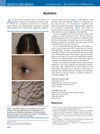
August 2012 in “The Journal of Pediatrics” A 12-year-old girl was diagnosed with monilethrix, a genetic condition causing fragile, beaded hair that breaks easily, with no effective treatment available.
 April 2018 in “Journal of Investigative Dermatology”
 The conclusion introduces a new way to classify skin cysts using their shape and genetic markers.

Trichoriboside treatment helps maintain scalp hair by increasing cAMP levels in hair follicles of men with hair loss.
18 citations
,
August 2015 in “International Journal of Molecular Sciences” Ovine hair follicle stem cells can regenerate haired skin and may improve wool production.
2 citations
,
September 2017 in “Biotechniques/BioTechniques” Researchers created a mouse cell line to study hair growth and test hair growth drugs.
2 citations
,
January 2006 in “Indian Journal of Veterinary Pathology” Trichophyton mentagrophytes causes skin issues and nutrient deficiencies in young sheep, especially in winter.
80 citations
,
September 2007 in “Cell Cycle” Stem cells in hair follicles can become various cell types, including neurons.
 March 2025 in “The Open Dermatology Journal”
 Trichorrhexis nodosa is common hair breakage, often due to styling, and new treatments are being explored.
 19 citations
,
July 2011 in “Microscopy and Microanalysis”
19 citations
,
July 2011 in “Microscopy and Microanalysis” The hair follicle bulge is an important area for adult stem cells involved in hair growth and repair, with potential for medical use needing more research.
November 2012 in “Transplantation” Large corneum layer cells can cover wounds effectively.
Trichopigmentation is a non-invasive, reversible treatment for hair loss that offers natural-looking results for both men and women.
 9 citations
,
February 2018 in “Journal of The American Academy of Dermatology”
9 citations
,
February 2018 in “Journal of The American Academy of Dermatology” Researchers developed a new method using methylene blue staining to more accurately identify the growth stage of human hair follicles.
 56 citations
,
June 2015 in “Nature Protocols”
56 citations
,
June 2015 in “Nature Protocols” Two-photon microscopy helps observe hair follicle stem cell behaviors in mice.