 September 2017 in “Journal of Investigative Dermatology”
 Hair follicle cells change their DNA packaging during growth cycles and when grown in the lab.
 5 citations
,
January 2017 in “Molecular Medicine Reports”
5 citations
,
January 2017 in “Molecular Medicine Reports” Human hair follicle cells can be turned into neural stem cell-like cells, which might help treat brain diseases.
1 citations
,
January 2022 in “Clinical dermatology review” A young man's cheek papule was identified as a benign hair follicle tumor using a skin surface microscope.
 96 citations
,
January 2013 in “International Journal of Trichology”
96 citations
,
January 2013 in “International Journal of Trichology” Trichoscopy is a useful, non-invasive way to diagnose different types of hair loss.
 November 2022 in “Journal of Investigative Dermatology”
 The medicine Cyclosporin A might cause excessive hair growth by reducing a protein that controls hair growth.
 November 2015 in “Hair transplant forum international”
 Early attempts at using cloned cells for hair transplants failed, but 3D cell growth showed some promise.
59 citations
,
August 1981 in “PubMed” Trichilemmal keratinization is a unique process in hair follicles where the outer root sheath turns into keratin without a specific layer.
Trichoscopic examination is crucial for diagnosing congenital triangular alopecia.
 September 2016 in “Journal of The American Academy of Dermatology”
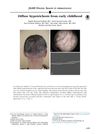
 The girl has a genetic hair condition causing thin hair since childhood.
38 citations
,
September 2017 in “Cancer Research” Boosting certain cell signals can prevent hair loss from cancer treatments.

Trichoscopy is a valuable tool for accurately diagnosing scalp conditions without invasive procedures.
September 2025 in “Journal of Veterinary and Animal Sciences” Nine hair follicle tumors were found in dogs.
 January 2016 in “Journal of Clinical Dermatology”
 Trichoscopy helps diagnose and assess the severity of two types of hair loss diseases, androgenetic alopecia and alopecia areata.
25 citations
,
June 2017 in “Journal of Investigative Dermatology” HPV8 causes skin cancer by expanding specific skin stem cells.
 28 citations
,
August 2018 in “Dermatologic Clinics”
28 citations
,
August 2018 in “Dermatologic Clinics” Trichoscopy is a useful tool for diagnosing hair and scalp issues, but doctors must be careful to avoid mistakes.
July 2025 in “Journal of Investigative Dermatology” Wnt and SHH pathways help form hair follicles by coordinating cell processes.
344 citations
,
June 2006 in “American Journal Of Pathology” Human hair follicles can provide stem cells for regenerative medicine.
 1 citations
,
January 2021
1 citations
,
January 2021 CD4+ skin cells may be precursors to basal cell carcinoma.
161 citations
,
June 1993 in “Journal of Biological Chemistry” Trichohyalin helps in hair and skin cell structure and function by binding calcium and linking proteins.
 April 2024 in “Cellular signalling”
 Activating TRPMLs helps human cells important for hair growth and increases hair growth in mice.
 10 citations
,
December 2011 in “Cell Transplantation”
10 citations
,
December 2011 in “Cell Transplantation” Researchers successfully grew human hair follicle cells that could potentially lead to new hair loss treatments.
1 citations
,
September 2023 in “Portuguese Journal of Dermatology and Venereology” Trichoscopy can help diagnose and decide when to biopsy folliculotropic mycosis fungoides.
 14 citations
,
January 2018 in “Scientific reports”
14 citations
,
January 2018 in “Scientific reports” Bioluminescence imaging can track hair follicle cells and help study hair regrowth.
10 citations
,
January 1925 in “Archives of Dermatology” Trichostasis spinulosa is a rare skin condition with hair-filled plugs in hair follicles.
1 citations
,
July 2025 in “JCI Insight” Hair follicle stem cells help maintain skin health by moving to and supporting the skin's surface layers.
 June 2022 in “Research Square (Research Square)”
 Nestin-expressing cells turn into a specific type of skin cell in hair follicles during development and in adults.
 January 2015 in “Journal of Cytology and Histology”
 Hair loss in Androgenetic Alopecia is not caused by damage to follicular stem cells.
November 2022 in “bioRxiv (Cold Spring Harbor Laboratory)” Researchers identified new cell types and genes in early hair follicle development.
13 citations
,
January 1985 in “International Journal of Dermatology” The document found differences in lesion distribution and microscopic features among trichostasis spinulosa and similar skin conditions.
January 2006 in “Chinese Journal of Dermatology” Cultured dermal papilla cells can regenerate hair follicles and sustain hair growth.