 January 2006 in “Journal of Rural Medicine”
 Trichotillomania is more common than previously thought, with increasing diagnosed cases.
 September 2023 in “Skin Research and Technology”
 The paper suggests a way to diagnose male hair loss and check treatment results using a dermoscope at four specific scalp points.
January 2022 in “Skin appendage disorders” Trichoscopy effectively visualizes scalp micropigmentation without invasive methods.
 September 2016 in “Journal of The American Academy of Dermatology”
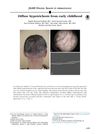
 The girl has a genetic hair condition causing thin hair since childhood.
January 2026 in “Diagnostics” Large language models are less accurate than dermatologists in diagnosing trichoscopic images.
2 citations
,
June 1994 in “Der Hautarzt” DNA-flowcytometry is a reliable method to evaluate hair growth in androgenetic alopecia.
1 citations
,
January 2012 in “CINECA IRIS Institutial research information system (University of Pisa)”  1 citations
,
July 2021 in “Anais Brasileiros de Dermatologia”
1 citations
,
July 2021 in “Anais Brasileiros de Dermatologia” The conclusion is that three signs can help diagnose hair loss after it happens, potentially avoiding more invasive tests.
36 citations
,
March 2007 in “Journal of Chromatography B” Hair analysis can detect testosterone in horses after drug administration.
January 2011 in “Yearbook of Dermatology and Dermatologic Surgery” September 2024 in “Actas Dermo-Sifiliográficas” Trichodynia is a painful scalp condition linked to hair loss and mental health issues, with limited treatment options.

The new method can tell how hair fibers react to moisture after treatments.
 1 citations
,
October 2024 in “Dermatology Practical & Conceptual”
1 citations
,
October 2024 in “Dermatology Practical & Conceptual” Reflectance confocal microscopy is a promising non-invasive tool for diagnosing alopecia areata incognita.
The product made from plant extracts was tested for treating hair loss caused by genetics.
 July 2023 in “International journal of trichology”
 The research found no clear link between the severity of male baldness and the scalp examination findings in Indonesian men.
 6 citations
,
October 2020 in “Journal of the European Academy of Dermatology and Venereology”
6 citations
,
October 2020 in “Journal of the European Academy of Dermatology and Venereology” Teletrichoscopy is a promising method for diagnosing hair disorders remotely during the COVID-19 pandemic.
 10 citations
,
January 2012 in “Journal of biomedical optics”
10 citations
,
January 2012 in “Journal of biomedical optics” Melanin density affects hair color, and this method can help in cosmetic assessments and diagnosing hair diseases.
4 citations
,
April 2014 in “Lasers in Surgery and Medicine” TRASER effectively targets blood vessels and hair follicles for potential use in vascular and hair removal treatments.
The tool accurately measures hair count and size on scalps with 79.45% and 68.19% accuracy, respectively.
 1 citations
,
June 2020 in “IP Indian journal of clinical and experimental dermatology”
1 citations
,
June 2020 in “IP Indian journal of clinical and experimental dermatology” Yellow dots were the most common sign of alopecia areata found using trichoscopy.
 1 citations
,
November 2014 in “Journal of Biomedical Optics”
1 citations
,
November 2014 in “Journal of Biomedical Optics” Reflectance spectroscopy can noninvasively track hair growth stages by measuring skin reflectance and melanin changes.
 30 citations
,
March 2015 in “Journal of Dermatology”
30 citations
,
March 2015 in “Journal of Dermatology” Hair thickness differences help diagnose hair loss severity.
 63 citations
,
October 2005 in “Archives of Dermatology”
63 citations
,
October 2005 in “Archives of Dermatology” Shorter, thinner hairs indicate AGA, while longer, thicker hairs suggest CTE; counting and measuring shed hairs helps diagnose hair loss type.
 March 2014 in “Journal of The American Academy of Dermatology”
 Azathioprine may help with severe hair loss, a new topical treatment could counteract hair thinning, and trichoscopy can diagnose hair-pulling disorder effectively.
26 citations
,
June 2016 in “Frontiers in Plant Science” Autofluorescence can sort plant cells without labeling.
 3 citations
,
January 2021 in “Skin appendage disorders”
3 citations
,
January 2021 in “Skin appendage disorders” Trichoscopy is useful for correctly diagnosing tinea capitis in adults with unexplained hair loss.
13 citations
,
January 2018 in “Skin Appendage Disorders” Dermoscopy improves diagnosis and treatment planning for trichostasis spinulosa.
175 citations
,
December 1980 in “Archives of Dermatology” Trichothiodystrophy is a condition with brittle hair and various physical and mental issues due to low sulfur in proteins.
1 citations
,
January 2010 in “Biological and medical physics series” Human hair's structure and properties were studied using advanced microscopes and mechanical tests.
October 2025 in “Pediatric Dermatology” UVFD helps quickly diagnose hair loss conditions in children.