1 citations
,
September 2024 in “Veterinary Dermatology” Trichography is important for diagnosing hair fragility in Pomeranian dogs with hair cycle issues.
 13 citations
,
September 2005 in “Eclética Química”
13 citations
,
September 2005 in “Eclética Química” Quick, accurate minoxidil measurement in hair loss products using photometric flow titration.
 February 2026 in “Medical Science and Discovery”
 Early diagnosis and comprehensive treatment can significantly improve trichotillomania in children.
31 citations
,
December 2017 in “Skin Appendage Disorders” Caucasians have the highest hair density, followed by Hispanics, with the lowest in individuals of African descent.
1 citations
,
July 2022 in “International journal of trichology” Type 3 hair oil strengthens hair more than coconut oil.
September 1998 in “Journal of the European Academy of Dermatology and Venereology” September 2024 in “Journal of the American Academy of Dermatology”  2 citations
,
December 2015 in “International Journal of Dermatology”
2 citations
,
December 2015 in “International Journal of Dermatology” Washing test helps identify hair loss type, low iron levels significant.
 17 citations
,
August 1979 in “Journal of The American Academy of Dermatology”
17 citations
,
August 1979 in “Journal of The American Academy of Dermatology” A new staining method helps tell growing from resting hairs to diagnose hair loss.
 July 2023 in “Al-Azhar Assiut Medical Journal”
 Trichoscopy helps diagnose and manage hair and scalp disorders in children.
 March 2015 in “Journal of Visualized Experiments”
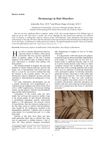
 A new method measures mouse hair loss using shades of gray.
 4 citations
,
September 2012 in “Journal of Nanoscience and Nanotechnology”
4 citations
,
September 2012 in “Journal of Nanoscience and Nanotechnology” Dermoscopy helps dermatologists diagnose different types of hair loss accurately without always needing a biopsy.
 16 citations
,
June 2017 in “PLoS ONE”
16 citations
,
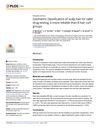
June 2017 in “PLoS ONE” A 6-group hair classification is more reliable for drug testing than an 8-group system.
56 citations
,
June 2010 in “Clinical and experimental dermatology” Coudability hairs are useful markers for alopecia areata activity.
 4 citations
,
January 2019 in “Clinical and Experimental Dermatology”
4 citations
,
January 2019 in “Clinical and Experimental Dermatology” The review found that individualized treatment and teamwork are important for trichotillomania, and patients who followed through with treatment often improved.
 12 citations
,
January 2014 in “Menoufia Medical Journal”
12 citations
,
January 2014 in “Menoufia Medical Journal” Dermoscopy improves diagnosis of hair and scalp disorders and can help avoid unnecessary biopsies.
 2 citations
,
January 2023 in “Journal of Education, Health and Sport”
2 citations
,
January 2023 in “Journal of Education, Health and Sport” Cognitive-behavioral therapy with habit reversal training is the most effective treatment for trichotillomania.
 1 citations
,
December 2022 in “Clinical, cosmetic and investigational dermatology”
1 citations
,
December 2022 in “Clinical, cosmetic and investigational dermatology” Arab hair is generally thicker but less dense compared to other ethnicities, affecting hair disorder diagnosis and treatment.
3 citations
,
October 2006 in “Journal of dermatology” X-ray microscopy can non-invasively show hair structure changes after treatments, but it's less detailed than TEM and needs improvement.
 7 citations
,
November 2007 in “PubMed”
7 citations
,
November 2007 in “PubMed” Turkish women with female pattern hair loss have lower hair density, and visual counting is more effective than digital image analysis for detecting this.
 5 citations
,
June 2019 in “Dermatopathology”
5 citations
,
June 2019 in “Dermatopathology” Histopathology is not reliable for detecting early fibrosis in traction alopecia or for showing how severe it is.
July 2025 in “International Journal of Cosmetic Science” A new 6-point scale reliably measures heat damage to hair from styling tools.
47 citations
,
November 1966 in “Archives of Dermatology” Trichorrhexis nodosa is mainly caused by hair trauma, not a metabolic defect.
2 citations
,
July 1994 in “Journal of Dermatological Science” Grafted human scalp samples on mice can produce human hair, useful for studying hair genetics.
October 2022 in “Hair Transplantation” Dermoscopy helps identify hair loss types for better hair transplant evaluation.

A 14-year-old girl with a condition that makes her hair easy to pull out also has a hair-pulling disorder, and treatment helped but she relapsed after a year.
 January 2025 in “Clinical Dermatology Review”
 Trichoscopy helps accurately diagnose Netherton syndrome, often mistaken for atopic dermatitis.
 February 2019 in “PubMed”
 The research found that twisting hair fibers can show changes in stiffness and damage, and help tell apart different hair treatments.
5 citations
,
December 2023 in “Journal of the European Academy of Dermatology and Venereology” November 2024 in “Journal of Microscopy” Human hair varies in structure based on curl type, with high curl hair showing the most differences.