 June 2026 in “EXPERIMENTAL & CLINICAL MEDICINE GEORGIA”
 Trichoscopy is useful for assessing androgenetic alopecia severity but can't determine hair loss stage alone.
 March 2021 in “CRC Press eBooks”
 Physical exams are important in hair loss diagnosis, considering cosmetic history, systemic diseases, and classifying alopecia types.
 24 citations
,
September 2014 in “Journal of the European Academy of Dermatology and Venereology”
24 citations
,
September 2014 in “Journal of the European Academy of Dermatology and Venereology” Trichoscopy is reliable for diagnosing Temporal Triangular Alopecia and can prevent unnecessary biopsies and wrong treatments.
 43 citations
,
August 2013 in “Pediatric Dermatology”
43 citations
,
August 2013 in “Pediatric Dermatology” Trichoscopy is good for diagnosing and monitoring hair and scalp problems in children but needs more research for certain conditions.
April 2023 in “Al-Azhar International Medical Journal /Al-Azhar International Medical Journal” Trichoscopy is easier and quicker than folliscopy for diagnosing telogen effluvium.
 April 2026 in “Research Square”
 Trichoscopy is reliable for diagnosing different types of frontal non-scarring hair loss.
4 citations
,
November 2018 in “Postgraduate Medical Journal” Trichoscopy is a useful, quick, and non-invasive way to diagnose tinea capitis.
26 citations
,
November 2005 in “Journal of Investigative Dermatology Symposium Proceedings” TrichoScan effectively measures hair growth improvements in people using minoxidil.
Trichoscopy is a valuable tool for diagnosing hair loss accurately and non-invasively.
 178 citations
,
December 2011 in “Journal of Dermatological Case Reports”
178 citations
,
December 2011 in “Journal of Dermatological Case Reports” Trichoscopy is a useful tool for diagnosing different hair and scalp diseases by their unique visual features.
11 citations
,
August 2016 in “Journal of the European Academy of Dermatology and Venereology” Serial trichoscopy is more reliable than the modified hair pull test for tracking alopecia areata.
 24 citations
,
January 2011 in “International Journal of Trichology”
24 citations
,
January 2011 in “International Journal of Trichology” Light microscopy is useful for diagnosing different hair disorders.
35 citations
,
September 2011 in “The Journal of Dermatology” Trichoscopy helps accurately diagnose temporal triangular alopecia.

Both trichoscopy and folliscopy accurately diagnose telogen effluvium, but trichoscopy is easier and faster.
August 2003 in “Special report” TrichoScan offers a painless way to analyze and manage hair loss.
 September 2010 in “Advances in Dermatology and Allergology/Postępy Dermatologii i Alergologii”
 TrichoScan is reliable for counting and measuring hair density but may not accurately assess hair types in women with hair loss.
 37 citations
,
January 2017 in “International Journal of Dermatology”
37 citations
,
January 2017 in “International Journal of Dermatology” Trichoscopy helps tell apart alopecia areata and trichotillomania in Asians by looking at specific hair and scalp features.
May 2025 in “Apollo Medicine” Trichoscopy is a useful tool for diagnosing and assessing the severity of alopecia areata.
6 citations
,
January 2019 in “Indian Journal of Dermatology, Venereology and Leprology” Low-cost dermoscopes can effectively diagnose early female pattern hair loss.
October 2019 in “Journal of Face Aesthetics” Trichoscopy helps diagnose female hair loss easily.
 November 2023 in “International Journal of Dermatology”
 Trichoscopy helps tell apart other hair loss conditions from common hair loss.
October 2021 in “DOAJ (DOAJ: Directory of Open Access Journals)” Trichoscopy effectively distinguishes between severe and mild male pattern hair loss.
1 citations
,
January 2016 in “Klinicheskaya dermatologiya i venerologiya”  August 2017 in “Journal of evolution of medical and dental sciences”
 Trichoscopy is effective for diagnosing different types of non-scarring hair loss.
 December 2022 in “Skin Pharmacology and Physiology”
 Special scalp and hair examination techniques can identify hair problems.
 38 citations
,
January 2016 in “Indian Journal of Dermatology, Venereology and Leprology”
38 citations
,
January 2016 in “Indian Journal of Dermatology, Venereology and Leprology” Trichoscopy is useful for diagnosing different types of hair loss.
 2 citations
,
January 2014 in “Turkish Journal of Medical Sciences”
2 citations
,
January 2014 in “Turkish Journal of Medical Sciences” TrichoScan effectively diagnoses different types of hair loss and is linked to low iron stores in patients.
December 2025 in “Al-Azhar International Medical Journal /Al-Azhar International Medical Journal” Using both trichoscopy and folliscopy together improves hair loss diagnosis in men.
 March 2021 in “CRC Press eBooks”
 The document concludes that different patterns of hair thickness and scalp changes can help diagnose types of non-scarring hair loss.
 January 2018 in “Indian Dermatology Online Journal”
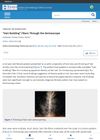
 Trichoscopy can help tell the difference between artificial hair fibers and other scalp artifacts.