 1 citations
,
October 2013 in “Expert Review of Dermatology”
1 citations
,
October 2013 in “Expert Review of Dermatology” Diagnosing alopecia areata is challenging and requires careful examination and various tests to distinguish it from other hair loss types.
 1 citations
,
December 2010 in “InnovAiT”
1 citations
,
December 2010 in “InnovAiT” The document concludes that accurate diagnosis and appropriate management are crucial for treating various hair disorders, which have significant psychological impacts.
 January 2025 in “International Journal of Pharmacognosy and Life Science”
 Herbal treatments like Aloe vera, Bhringraj, Neem, Tea tree oil, Amla, and Hibiscus are promising for safer, effective hair care.
 April 2024 in “Frontiers in physiology”
 Immune cells are crucial for hair growth and preventing hair loss.
 January 2018 in “Elsevier eBooks”
 The document concludes that alopecia has various forms, each with specific treatments, but no definitive cure for certain types like CCCA has been proven.
 September 2003 in “Clinics in Family Practice”
 Different hair diseases affect people during childbearing years, with treatments ranging from medication to psychological support.
 April 2021 in “Research Square (Research Square)”
 N-acetylcysteine improved symptoms of trichotillomania and bulimia.
87 citations
,
August 1974 in “Journal of Investigative Dermatology” January 2015 in “Elsevier eBooks” Targeting the endocannabinoid system might help reduce hair pulling in trichotillomania.
July 2025 in “Indian Dermatology Online Journal” Trichotillomania incognita can mimic hair loss patterns and requires careful diagnosis to avoid misdiagnosis.
 4 citations
,
January 2021 in “Skin appendage disorders”
4 citations
,
January 2021 in “Skin appendage disorders” Trichodynia is a painful scalp condition not directly linked to the amount or type of hair loss and may involve psychological factors, with treatments showing mixed results.
14 citations
,
May 1979 in “International Journal of Dermatology” Trichostasis spinulosa mainly affects the nose, with many tiny hairs in one follicle, possibly influenced by hormones and sunlight.
5 citations
,
March 1981 in “PubMed” A girl grew extra hair in areas where she had insect bites.
June 2010 in “Institutional Repositories DataBase (IRDB)” Self-induced vomiting in anorexia can lead to rare gout complications.
 4 citations
,
July 2013 in “Journal of dermatology”
4 citations
,
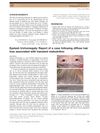
July 2013 in “Journal of dermatology” Malnutrition can cause unusual eyelash growth and hair loss.
 1 citations
,
May 2003 in “Archives of Pathology & Laboratory Medicine”
1 citations
,
May 2003 in “Archives of Pathology & Laboratory Medicine” The boy had trichotillomania, causing hair loss, and treatment focused on habit reversal and support.
40 citations
,
November 1966 in “Archives of Dermatology” Trichorrhexis nodosa is mainly caused by hair trauma and improves with gentler hair care.
37 citations
,
April 1977 in “Journal of Cutaneous Pathology” Skin biopsy can help diagnose hair loss from trichotillomania.
10 citations
,
January 1925 in “Archives of Dermatology” Trichostasis spinulosa is a rare skin condition with hair-filled plugs in hair follicles.
22 citations
,
May 2010 in “Journal of Pediatric Gastroenterology and Nutrition” Trichobezoars can cause serious health issues like biliary obstruction, and treatment includes surgery and therapy to prevent recurrence.
 3 citations
,
January 2016 in “International Journal of Contemporary Pediatrics”
3 citations
,
January 2016 in “International Journal of Contemporary Pediatrics” Children with trichotillomania often pull hair from their scalp and may have other mental health issues.
8 citations
,
October 2020 in “Clinical Psychopharmacology and Neuroscience” rTMS may help treat trichotillomania in some patients.
January 2015 in “The Encyclopedia of Clinical Psychology” Habit reversal training effectively treats hair-pulling disorder in both adults and children.
 May 2024 in “Actas dermo-sifiliográficas/Actas dermo-sifiliográficas”
 Effective treatments for trichotillomania include cognitive-behavioral therapy, certain medications, and alternative support tools.
13 citations
,
March 2014 in “Journal of the American Medical Directors Association” Trichotillomania was successfully treated with risperidone and naltrexone.
19 citations
,
January 2011 in “International journal of trichology” A 3-year-old boy had a rare hairball condition usually seen in teenage girls.
 December 2023 in “Portuguese journal of dermatology and venereology”
 Trichoscopy can reliably distinguish between alopecia areata and trichotillomania.
2 citations
,
October 2015 in “The Journal of Dermatology” Early treatment of hair-pulling disorder is crucial to prevent permanent hair loss and scarring.
17 citations
,
October 1981 in “American Journal of Clinical Nutrition” Malnourished people have weaker hair that is easier to pluck.
May 2005 in “Hair transplant forum international” Trichotemnomania causes hair loss due to compulsive hair cutting or shaving.