3 citations
,
April 1997 in “Developmental Dynamics” Trypsin slows hair growth and affects color by causing cell death in hair follicles.
 August 2018 in “Pediatric Dermatology”
 A baby had a unique skin condition with a pale patch and surrounding dark hairs, not linked to other health issues.
56 citations
,
December 1978 in “The Journal of Dermatologic Surgery and Oncology” Transplanting small skin grafts can successfully repigment leukoderma.
2 citations
,
July 1994 in “Journal of Dermatological Science” Grafted human scalp samples on mice can produce human hair, useful for studying hair genetics.
 April 2018 in “Journal of Investigative Dermatology”
 The research found that a specific skin cell type not only triggers hair growth but also controls hair color, and that aging can lead to hair loss and color changes.
1 citations
,
October 1978 in “The Journal of Pediatrics” July 2025 in “Dermatologic Surgery” September 2012 in “British Small Animal Veterinary Association eBooks” The document concludes that pigmentation disorders in animals involve complex interactions between melanocytes and keratinocytes.
March 2023 in “Journal of Cosmetic Dermatology” Trichoscopy is effective for diagnosing scalp ACC in darker skin tones.
 12 citations
,
November 1945 in “Archives of dermatology”
12 citations
,
November 1945 in “Archives of dermatology” Transplanted skin on hooded rats often grows white hair instead of black.
 8 citations
,
July 2014 in “Anais Brasileiros de Dermatologia”
8 citations
,
July 2014 in “Anais Brasileiros de Dermatologia” A man's scalp condition was misidentified as hair loss dots but was actually a common follicular disorder.
1 citations
,
March 2022 in “Anais brasileiros de dermatologia/Anais Brasileiros de Dermatologia” Trichoscopy helps tell apart hair loss due to alopecia areata from trichotillomania in eyebrows.
86 citations
,
August 2000 in “Pigment cell research” Melanocyte activity in hair follicles is linked to the hair growth cycle, being active in growth phases and inactive in rest phases.

Hair turning darker can be a sign of skin cancer.
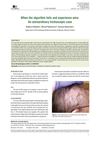 January 2026 in “Forum Dermatologicum”
 Thorough hair examination is crucial for accurate diagnosis and treatment.
 23 citations
,
April 2002 in “Journal of the American Academy of Dermatology”
23 citations
,
April 2002 in “Journal of the American Academy of Dermatology” Depigmented hair regrowth after alopecia areata can be permanent.
 24 citations
,
September 2014 in “Journal of the European Academy of Dermatology and Venereology”
24 citations
,
September 2014 in “Journal of the European Academy of Dermatology and Venereology” Trichoscopy is reliable for diagnosing Temporal Triangular Alopecia and can prevent unnecessary biopsies and wrong treatments.
18 citations
,
January 2013 in “Dermatology Online Journal” Trichofolliculoma is a rare skin bump on the face or scalp.
6 citations
,
January 2011 in “European Journal of Dermatology” It's important to consider genetic hair disorders when diagnosing hair loss.
35 citations
,
September 2003 in “Archives of dermatology” Tiger tail bands in hair are caused by wavy hair fibers with melanin, unlike straight fibers in normal hair.
17 citations
,
December 2013 in “Dermatologic Surgery” The treatment improved hair color in most vitiligo patients without major side effects.
 1 citations
,
January 2020 in “Indian Dermatology Online Journal”
1 citations
,
January 2020 in “Indian Dermatology Online Journal” Pigtail hair is a sign of new hair growth and should be recognized in hair loss conditions like acute telogen effluvium.
 5 citations
,
December 2018 in “Journal of The American Academy of Dermatology”
5 citations
,
December 2018 in “Journal of The American Academy of Dermatology” Some hair products can create false signs on scalp examinations, leading to wrong diagnoses.
1 citations
,
June 2016 in “Medicina” Monilethrix is a genetic disorder causing brittle hair, diagnosed using tricoscopy.
 January 2018 in “Jaypee Brothers Medical Publishers (P) Ltd. eBooks”
 Scalp micropigmentation is a process where tiny dots of pigment are tattooed onto the scalp to create the appearance of a shaved head or fuller hair.
 May 2020 in “JOJ Dermatology & Cosmetics”
 A rare skin condition usually on the face was found on a man's heel.
 7 citations
,
March 2003 in “PubMed”
7 citations
,
March 2003 in “PubMed” The scalp has a natural speckled pattern of increased pigment around hair follicles, possibly linked to local hormone production.
 6 citations
,
January 2020 in “Postepy Dermatologii I Alergologii”
6 citations
,
January 2020 in “Postepy Dermatologii I Alergologii” Trichoscopy is useful for diagnosing hair-pulling disorder.
October 2015 in “CRC Press eBooks” Trichoscopy is a useful tool for examining and monitoring hair and scalp conditions.
5 citations
,
July 2009 in “Clinical and experimental dermatology”