1 citations
,
August 2023 in “Clinical Cosmetic and Investigational Dermatology” Exclamation mark hairs help distinguish syphilitic alopecia from alopecia areata.
 July 2021 in “Indian journal of dermatopathology and diagnostic dermatology”
 Trichoscopy is a reliable method for diagnosing hair and scalp disorders quickly and non-invasively.
 96 citations
,
January 2013 in “International Journal of Trichology”
96 citations
,
January 2013 in “International Journal of Trichology” Trichoscopy is a useful, non-invasive way to diagnose different types of hair loss.
 September 2021 in “CRC Press eBooks”
 The document explains how trichoscopy can improve hair transplant results for patients with hair loss.
July 2026 in “Cosmoderma” Trichoscopy can identify specific hair patterns in tinea capitis before and after treatment.
 January 1995 in “Skin Cancer”
 The outer root sheath in hair follicles changes during growth, with different keratinization processes in its layers.
 33 citations
,
January 2005 in “Dermatology”
33 citations
,
January 2005 in “Dermatology” Trichoscan is a reliable method for measuring hair growth and monitoring treatment effectiveness in hair loss.
50 citations
,
October 2007 in “Archives of Dermatological Research”  January 2008 in “Journal of The American Academy of Dermatology”
 Trichoscopy is a helpful and quick method to identify different types of hair loss in women.

A neck lesion misdiagnosed as benign was later treated successfully with Mohs Micrographic Surgery.
4 citations
,
January 2017 in “Journal of veterinary medical science” A dog had a rare skin tumor called desmoplastic tricholemmoma.
19 citations
,
January 2011 in “International journal of trichology” A 3-year-old boy had a rare hairball condition usually seen in teenage girls.
 30 citations
,
August 2018 in “Dermatology and Therapy”
30 citations
,
August 2018 in “Dermatology and Therapy” Better-designed, long-term studies are needed to optimize treatment for trichotillomania and trichophagia.
December 2021 in “Pathologica” Trichogerminoma is a rare, benign skin tumor from hair cells, with a small risk of becoming cancerous.
 January 2026 in “Indian Journal of Dermatopathology and Diagnostic Dermatology”
 Corkscrew hairs can help diagnose trichotillomania.
6 citations
,
September 2024 in “Plant Cell & Environment” Chitosan affects root hair growth and callose deposition based on its concentration.
 April 2024 in “Indian dermatology online journal”
 A rare hair follicle disorder can cause itchy, bluish-black bumps on the body.
 7 citations
,
July 2019 in “The Journal of Dermatology”
7 citations
,
July 2019 in “The Journal of Dermatology” Terbinafine effectively treated kerion celsi despite disrupted immune responses.
3 citations
,
June 1979 in “The Journal of Dermatology” Glycosaminoglycan levels peak early in hair growth and decrease as the cycle progresses.
January 2016 in “Dermatology online journal” A 15-year-old girl has a benign skin tumor on her neck.
 January 2024 in “Diagnostic cytopathology”
 Trichilemmal carcinoma can spread to the parotid gland and be diagnosed using fine-needle aspiration cytology.
73 citations
,
January 2004 in “Journal of the American Academy of Dermatology” Immunocompromised patients can develop skin and hair issues due to a virus.
 February 2021 in “IP Indian journal of clinical and experimental dermatology”
 A rare non-cancerous tumor that grows like hair was found in an unusual spot, the vulva.
 July 2023 in “bioRxiv (Cold Spring Harbor Laboratory)”
 Chitosan slows root hair growth and causes a buildup of callose at low concentrations, but at high concentrations, it only inhibits growth without callose buildup.
 19 citations
,
September 2016 in “Journal of the European Academy of Dermatology and Venereology”
19 citations
,
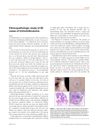
September 2016 in “Journal of the European Academy of Dermatology and Venereology” Trichofolliculoma is a unique benign tumor mainly affecting middle-aged adults' faces, often misdiagnosed without histopathology.
 July 2025 in “JOURNAL OF CLINICAL AND DIAGNOSTIC RESEARCH”
 Trichofolliculoma should be considered in children with scalp nodules for accurate diagnosis and treatment.
 July 2025 in “Clinical Dermatology Review”
 A rare family case of multiple benign hair follicle tumors was identified, highlighting the need to distinguish them from similar conditions.
4 citations
,
May 2014 in “Pharmaceutical Biology” Glycyrrhizic acid from sweet licorice can effectively remove hair without skin irritation.
March 2023 in “Reactions Weekly” October 2025 in “The American Journal of Gastroenterology” Early diagnosis and treatment of hair ingestion in children can prevent serious health issues.