
Personalized care and evidence-based treatments are crucial for managing skin and hair conditions.
 3 citations
,
January 2020 in “Skin appendage disorders”
3 citations
,
January 2020 in “Skin appendage disorders” In Spain, dermatologists most commonly prescribe topical minoxidil and oral finasteride for male hair loss, and topical minoxidil and oral contraceptives for female hair loss. The use of oral dutasteride and oral minoxidil has significantly increased over the past three years.
 15 citations
,
February 2014 in “BMC Research Notes”
15 citations
,
February 2014 in “BMC Research Notes” The X5 Hairlaser might help treat male hair loss, but more research is needed.
 9 citations
,
September 2019 in “Journal of Cosmetic Dermatology”
9 citations
,
September 2019 in “Journal of Cosmetic Dermatology” PRP injections improve hair density in male hair loss.
 December 2025 in “Cureus”
 Higher IL-17A and IL-23 levels are linked to alopecia areata severity and could help in tracking and treating the disease.
 December 2024 in “Australian Journal of General Practice”
 The woman's hair loss pattern doesn't match typical conditions like alopecia areata or female pattern hair loss.
December 2025 in “JURNAL ILMU KEDOKTERAN DAN KESEHATAN” Plum blossom acupuncture and electroacupuncture improved hair growth and quality of life in a woman with chronic hair loss.
 3 citations
,
January 2020 in “Clinical dermatology review”
3 citations
,
January 2020 in “Clinical dermatology review” Trichoscopy is useful for diagnosing hair and scalp disorders in people with darker skin.
 43 citations
,
November 2019 in “American Journal of Clinical Dermatology”
43 citations
,
November 2019 in “American Journal of Clinical Dermatology” FAGA diagnosis uses blood tests and trichoscopy, with treatments like topical minoxidil, oral anti-androgens, and hormone-modulating drugs.
 24 citations
,
January 2015 in “Current problems in dermatology”
24 citations
,
January 2015 in “Current problems in dermatology” The document concludes that accurate diagnosis of hair loss in children is crucial due to limited treatment options and the condition's psychological impact.
3 citations
,
September 2019 in “European Medical Journal” Scalp sarcoidosis can cause hair loss and needs accurate diagnosis and treatment with specific medications.

Non-invasive methods can effectively diagnose and manage alopecia areata.
 April 2023 in “Journal of Investigative Dermatology”
 The study suggests fibrosing alopecia in a pattern distribution has distinct features and may vary by race.
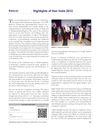 1 citations
,
January 2012 in “International Journal of Trichology”
1 citations
,
January 2012 in “International Journal of Trichology” Hair India 2012 was a successful international event focused on combating fake trichology practices and discussing various hair health topics.
4 citations
,
January 2022 in “Dermatology Research and Practice” Methotrexate alone is as effective and safe as combining it with prednisolone for treating Lichen planopilaris.

Microneedling with exosome therapy may effectively regrow hair without side effects.
 March 2025 in “Archives of Dermatological Research”
 Combining stem cell secretome and minoxidil leads to the best hair growth in androgenetic alopecia.
 March 2025 in “Plastic & Reconstructive Surgery Global Open”
 Human Platelet Extract hair serum improves hair health and growth safely.

Cetosomal minoxidil is safer and as effective as alcohol-based minoxidil for male hair loss treatment.
 May 2021 in “Pakistan Journal of Medical and Health Sciences”
 Trichogram is useful for diagnosing hair disorders, but newer, non-invasive methods like trichoscopy are becoming more popular due to their sensitivity and ability to monitor treatment responses.
November 2022 in “Research Square (Research Square)” Topical minoxidil 5% is better for treating female pattern hair loss than topical sildenafil 1%.
1 citations
,
July 2025 in “Indian Dermatology Online Journal” Certain hair and scalp features indicate a worse outcome in alopecia areata.
 69 citations
,
August 2014 in “Journal of The American Academy of Dermatology”
69 citations
,
August 2014 in “Journal of The American Academy of Dermatology” Trichoscopy is a quick, cost-effective tool for diagnosing different hair loss conditions.
 46 citations
,
June 2018 in “American Journal of Clinical Dermatology”
46 citations
,
June 2018 in “American Journal of Clinical Dermatology” Hair loss is common in lupus patients and can be permanent or reversible, depending on the type, with various treatments available.
 30 citations
,
December 2017 in “Journal of The American Academy of Dermatology”
30 citations
,
December 2017 in “Journal of The American Academy of Dermatology” New criteria for diagnosing frontal fibrosing alopecia include specific scalp and eyebrow hair loss as major factors and other hair loss areas and hair analysis as minor factors.
 17 citations
,
October 2017 in “Journal of Cutaneous Medicine and Surgery”
17 citations
,
October 2017 in “Journal of Cutaneous Medicine and Surgery” No treatment has been proven to effectively stop hair loss or regrow hair in Frontal Fibrosing Alopecia, and more research is needed.
6 citations
,
April 2022 in “Journal of The American Academy of Dermatology” Low-dose oral minoxidil improved hair growth in most pediatric patients with mild side effects.
 3 citations
,
October 2021 in “Journal of Cosmetic Dermatology”
3 citations
,
October 2021 in “Journal of Cosmetic Dermatology” Trichoscopy helps tell apart Frontal Fibrosing Alopecia and Lichen planopilaris by showing different hair and scalp features.
2 citations
,
December 2023 in “International Journal of Dermatology” A unique type of hair loss mimics another condition but has minimal inflammation and specific immune cells present.
 1 citations
,
April 2025 in “Dermatology Practical & Conceptual”
1 citations
,
April 2025 in “Dermatology Practical & Conceptual” Trichoscopy helps understand and manage traction alopecia in Black patients.