October 2022 in “Hair Transplantation” New FUE systems have greatly improved hair restoration surgery.
 January 2024 in “Lecture notes in networks and systems”
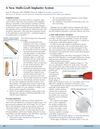
 "TRICHOASSIST" is a system that analyzes hair and scalp images to help diagnose scalp diseases.
 2 citations
,
May 2018 in “International Society of Hair Restoration Surgery”
2 citations
,
May 2018 in “International Society of Hair Restoration Surgery” The new system makes hair transplants faster and more precise.
 1 citations
,
December 2015 in “Dermatologic Surgery”
1 citations
,
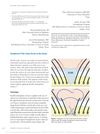
December 2015 in “Dermatologic Surgery” Double trichophytic closure effectively treats thin scalp scars and reduces patient costs.
A wavy two-layer closure in hair transplants makes scars nearly invisible for most patients.
 March 2025 in “International Journal of Trichology”
 3D printing can greatly improve hair restoration and scalp treatments but faces challenges in clinical use.
 2 citations
,
July 2008 in “Dermatologic Surgery”
2 citations
,
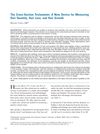
July 2008 in “Dermatologic Surgery” The Cross-section Trichometer is a promising tool for measuring hair characteristics without cutting the hair and may have various clinical uses.
 December 2015 in “Dermatologic Surgery”
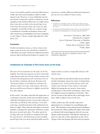
 Double trichophytic closure effectively repairs thin scalp scars, reducing financial burden.
 44 citations
,
August 2008 in “Archives of Dermatology”
44 citations
,
August 2008 in “Archives of Dermatology” Trichoscopy is a non-invasive way to diagnose hair and scalp problems without needing hair samples.
June 2023 in “Zenodo (CERN European Organization for Nuclear Research)” June 2023 in “Zenodo (CERN European Organization for Nuclear Research)” 
The TrichoConcept™ line is effective for personalized hair loss treatments.
 April 2025 in “Dermatology Practical & Conceptual”
 UV-enhanced trichoscopy helps diagnose hair shaft disorders like pili annulati.
 July 2014 in “Journal of the Portuguese Society of Dermatology and Venereology”
 Trichoscopy is useful for diagnosing and monitoring hair and scalp conditions.
 36 citations
,
August 2018 in “Dermatologic Clinics”
36 citations
,
August 2018 in “Dermatologic Clinics” Trichoscopy is a useful tool for diagnosing hair disorders without pulling out hair.
 74 citations
,
July 2008 in “Journal of Dermatological Case Reports”
74 citations
,
July 2008 in “Journal of Dermatological Case Reports” Trichoscopy is a quick and easy way to diagnose most genetic hair problems without invasive methods.
 4 citations
,
March 2015 in “Skin Research and Technology”
4 citations
,
March 2015 in “Skin Research and Technology” Trichotillometry is a reliable method to measure hair strength and assess hair loss treatments.
1 citations
,
June 2016 in “Medicina” Monilethrix is a genetic disorder causing brittle hair, diagnosed using tricoscopy.
 December 2017 in “Journal of the Portuguese Society of Dermatology and Venereology”
 A sutura tricofítica melhora a aparência de cicatrizes em transplantes de cabelo e outras áreas pilosas.
 40 citations
,
April 2006 in “Journal of the European Academy of Dermatology and Venereology”
40 citations
,
April 2006 in “Journal of the European Academy of Dermatology and Venereology” The Trichoscan system was found to be inaccurate for measuring hair growth, needing better software to be useful.
July 2024 in “Journal of Investigative Dermatology”  29 citations
,
March 2008 in “Dermatologic Surgery”
29 citations
,
March 2008 in “Dermatologic Surgery” The Cross-section Trichometer is a new tool that can measure hair quantity and detect hair loss and growth.
May 2026 in “Skin Appendage Disorders” 3D bioprinting could help treat hair loss, but it needs more work and cost reduction for real-world use.
 31 citations
,
August 2001 in “PubMed”
31 citations
,
August 2001 in “PubMed” TrichoScan accurately measures hair growth and showed improved hair counts and thickness after finasteride treatment.
March 1996 in “The American Journal of Cosmetic Surgery” The technique offers natural-looking hair transplants with minimal bleeding.
19 citations
,
July 1997 in “British Journal of Dermatology” LHTric-1 is a specific antibody useful for studying hair and nail formation.
 9 citations
,
January 2011 in “Skin Research and Technology”
9 citations
,
January 2011 in “Skin Research and Technology” The new automatic tool accurately measures hair thickness and is reliable.
7 citations
,
May 1979 in “Medical & biological engineering & computing” The trichometer accurately measures hair growth and is easy to use.
August 2003 in “Special report” TrichoScan offers a painless way to analyze and manage hair loss.