478 citations
,
September 1996 in “Proceedings of the National Academy of Sciences” Overexpression of PTHrP in chondrocytes causes short-limbed dwarfism and delayed bone formation in mice.
 53 citations
,
August 2019 in “American journal of human genetics”
53 citations
,
August 2019 in “American journal of human genetics” FOXN1 gene variants cause low T cells and immune issues from birth.
Mutations in the hairless protein gene cause hair loss.
 4 citations
,
December 2013 in “British Journal of Dermatology”
4 citations
,
December 2013 in “British Journal of Dermatology” ESR2 gene linked to female-pattern hair loss.
1 citations
,
April 2025 in “Animals” The KRTAP13-3 gene affects wool fibre diameter variability in Chinese Tan sheep.
93 citations
,
May 2002 in “Journal of Investigative Dermatology” Overexpressing thrombospondin-1 in mice skin prevents UVB-induced skin damage.
 11 citations
,
March 2019 in “EMBO molecular medicine”
11 citations
,
March 2019 in “EMBO molecular medicine” A defective protein in progeria causes cell death and atherosclerosis, but a treatment targeting cell stress may reduce these effects.
 30 citations
,
February 2017 in “Histochemistry and Cell Biology”
30 citations
,
February 2017 in “Histochemistry and Cell Biology” TPA promotes hair growth by increasing stem cell activity and activating specific cell signals.
48 citations
,
April 2008 in “Human Molecular Genetics” Progerin affects cell shape but not hair or skin in mice.
17 citations
,
August 2015 in “Journal of Animal Science” The MTR gene affects wool quality and production in Chinese Merino sheep.
2 citations
,
January 1989 Tay syndrome is a unique genetic disorder causing skin, hair, and developmental issues.
31 citations
,
November 2015 in “PloS one” Reducing Tyrosinase prevents mature color pigment cells from forming in mouse hair.
 April 2023 in “The journal of investigative dermatology/Journal of investigative dermatology”
 SETDB1 is essential for controlling DNA methylation, silencing retrotransposons, and maintaining skin cell health, with its absence leading to skin inflammation and hair loss.
 29 citations
,
January 2021 in “Translational Psychiatry”
29 citations
,
January 2021 in “Translational Psychiatry” The research suggests that Tourette syndrome is linked to both brain signaling and immune system pathways.
 80 citations
,
March 2008 in “Contact Dermatitis”
80 citations
,
March 2008 in “Contact Dermatitis” Nearly half of the French individuals surveyed reported having a sensitive scalp, more common in women, often linked to hair loss and symptoms like itching, and triggered by factors including shampoos and pollution.
 11 citations
,
May 2011 in “World Journal of Pediatrics”
11 citations
,
May 2011 in “World Journal of Pediatrics” The document emphasizes the importance of correctly identifying and classifying genetic hair disorders to help diagnose related health conditions.
 January 2022 in “Clinical dermatology open access journal”
 Certain cannabinoids may help increase hair growth and could be useful for treating hair loss.
 September 2016 in “Journal of Dermatological Science”
 A gene mutation worsens skin irritation in mice due to a lack of certain fats.
 January 2012 in “heiDOK (Heidelberg University)”
 Dormant melanoma cells in mice interact minimally with memory T cells due to a suppressive tumor environment.
 5 citations
,
September 2013 in “The Journal of Dermatology”
5 citations
,
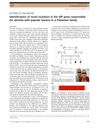
September 2013 in “The Journal of Dermatology” Researchers found a new mutation in the HR gene causing hair loss and skin bumps in a Pakistani family.
July 2026 in “Journal of Enzyme Inhibition and Medicinal Chemistry” Improved CRBN ligands make protein degraders more effective and drug-like.
1 citations
,
July 2024 in “Journal of Investigative Dermatology” TAK-279 effectively reduces psoriasis symptoms and is safe.
 5 citations
,
October 2019 in “The journal of investigative dermatology/Journal of investigative dermatology”
5 citations
,
October 2019 in “The journal of investigative dermatology/Journal of investigative dermatology” The research linked PLCD1 gene variants to the development of trichilemmal cysts.
CRH causes hair loss by reducing autophagy and increasing cell death in hair cells.
7 citations
,
January 2025 in “Journal of Experimental & Clinical Cancer Research” PRMT5 inhibitors effectively fight adenoid cystic carcinoma in salivary glands.
17 citations
,
June 2003 in “The journal of investigative dermatology. Symposium proceedings/The Journal of investigative dermatology symposium proceedings” Mutations in hKAP1 genes may cause hereditary hair disorders.
15 citations
,
March 2021 in “EMBO Reports” PRSS35 enzyme may help start skin tumors and could be a target for cancer treatment.
 April 2015 in “Plastic and Reconstructive Surgery”
 TLR3 activation helps improve skin and hair follicle healing in mice.
 March 2026 in “Preprints.org”
 Plerixafor may help treat pigmentation disorders by promoting skin repigmentation.
January 2004 in “Linchuang pifuke zazhi” All-trans retinoic acid helps amelanotic melanocytes in hair follicles develop and produce pigment while reducing their growth.