 1 citations
,
February 2014 in “Hair therapy & transplantation”
1 citations
,
February 2014 in “Hair therapy & transplantation” A baby boy had two types of temporary hair loss at birth, which might be two forms of newborn hair loss combined.
Trichopigmentation is a non-invasive, reversible treatment for hair loss that offers natural-looking results for both men and women.
1 citations
,
October 2022 in “Hair Transplantation” Surgical correction of cicatricial alopecia requires careful planning, with excision preferred over hair transplantation, and surgery should be delayed for stable conditions.
 14 citations
,
January 2006 in “Australasian journal of dermatology”
14 citations
,
January 2006 in “Australasian journal of dermatology” Alopecia areata can look like frontal fibrosing alopecia, making diagnosis hard.
 February 2023 in “International Journal of Medical Arts”
 Trichloroacetic acid is a safe and effective treatment for hair loss in alopecia areata patients.
 January 2021 in “International journal of dermatology, venereology and leprosy sciences”
 Trichoscopy shows black dots, yellow dots, and empty follicles are common in Alopecia Areata, with broken and exclamation mark hair as typical patterns.
 January 2014 in “International Journal of Trichology”
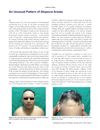
 A man had an unusual type of hair loss that didn't match known patterns and didn't improve with treatment.
 1 citations
,
January 2021 in “Our Dermatology Online”
1 citations
,
January 2021 in “Our Dermatology Online” A scalp infection can look like alopecia areata and get worse if treated incorrectly.
 September 2025 in “Ukrainian Journal of Dermatology Venerology Cosmetology”
 Early diagnosis and treatment can stop hair loss and prevent scalp damage in pseudopelade of Brocq.
April 2026 in “Academia Polonica.” Alopecia in women can signal broader health issues and requires a thorough diagnosis to tailor treatments.
 January 2024 in “Journal of Cosmetic Dermatology”
 Men's and women's pattern hair loss progress differently, with men showing more hair thinning and women having more widespread hair loss.
July 2026 in “Pathology - Research and Practice”  January 2025 in “International Journal of Trichology”
 Pattern hair loss is the most common type of alopecia.
3 citations
,
January 2021 in “Medicinski arhiv” Trichoscopy, a hair loss evaluation technique, found that people with Androgenetic Alopecia have more thin hairs, yellow dots, and perifollicular discoloration than healthy individuals.
11 citations
,
January 2020 in “Journal of Drugs in Dermatology” Intralesional triamcinolone acetonide is effective and safe for treating early to mid-stage traction alopecia.
March 2025 in “Revista Foco” Early diagnosis of Alopecia Frontal Fibrosante is crucial for effective treatment.
 June 2023 in “JAAD case reports”
 A rare scalp condition, cutis verticis gyrata, was found in a woman with primary scarring alopecia.
 16 citations
,
April 2011 in “Recent Patents on Inflammation & Allergy Drug Discovery”
16 citations
,
April 2011 in “Recent Patents on Inflammation & Allergy Drug Discovery” Alopecia Areata is an autoimmune disease causing hair loss in patches, often starting before age 20, and while some cases recover on their own, treatments include topical corticosteroids, minoxidil, and promising new methods like IL-31 antibodies and 308-nm Excimer laser therapy.
 1 citations
,
January 2017 in “International Journal of Dermoscopy”
1 citations
,
January 2017 in “International Journal of Dermoscopy” Dermoscopy is useful for identifying and tracking different types of hair loss without scarring.
 May 2024 in “Clinical, cosmetic and investigational dermatology”
 5% topical minoxidil effectively treated a boy's congenital triangular alopecia without side effects.
20 citations
,
August 2005 in “Journal of Cutaneous Medicine and Surgery” Hair transplant for eyebrow alopecia areata provided significant relief and improved treatment response.
June 2015 in “Turkish Journal of Dermatology” Trichoscopy helps diagnose different hair diseases effectively.
 1 citations
,
April 2020 in “Baylor University Medical Center Proceedings”
1 citations
,
April 2020 in “Baylor University Medical Center Proceedings” Microneedling with triamcinolone helps hair regrowth in ophiasis alopecia areata.
 September 2021 in “CRC Press eBooks”
 Alopecia areata incognita causes sudden hair thinning, responds well to steroids, and is more common in those with genetic hair loss conditions.
January 2020 in “Dermatology Online Journal” A young Caucasian man experienced a rare type of hair loss on the back of his head.
12 citations
,
January 2019 in “International Journal of Trichology” Trichoscopy is useful for detecting and monitoring androgenetic alopecia.
 February 2022 in “CRC Press eBooks”
 Hair disorders include hair loss, excessive hair growth, and ingrown hairs, with various treatments available depending on the cause.
 2 citations
,
January 2018 in “DOAJ (DOAJ: Directory of Open Access Journals)”
2 citations
,
January 2018 in “DOAJ (DOAJ: Directory of Open Access Journals)” The most effective way to diagnose non-scarring hair loss is by transverse sectioning, and some cases, particularly in males with inflammation around hair follicles, might be curable.
 155 citations
,
September 2008 in “British journal of dermatology/British journal of dermatology, Supplement”
155 citations
,
September 2008 in “British journal of dermatology/British journal of dermatology, Supplement” FFA is more common in postmenopausal women, can affect younger women, and may stabilize over time.
 January 2024 in “Lecture notes in networks and systems”
 "TRICHOASSIST" is a system that analyzes hair and scalp images to help diagnose scalp diseases.