8 citations
,
June 2010 in “Plastic & Reconstructive Surgery” Complete removal of scalp tumors is crucial, but malignant cases may recur or metastasize, requiring a multidisciplinary approach and close follow-up.
 September 2022 in “bioRxiv (Cold Spring Harbor Laboratory)”
 A parasite-derived molecule speeds up skin healing and affects immune cell behavior without increasing scarring.
January 2013 in “Tampere University Institutional Repository (Tampere University)” Tudor-SN is important for immune cells, and polyamines can promote hair growth.
70 citations
,
December 2008 in “Cancer Research” CXCR2 in skin cells promotes tumor growth.
5 citations
,
January 2016 in “European Journal of Dermatology” Suplatast tosilate successfully treated a woman's systemic sclerosis symptoms.
25 citations
,
March 2004 in “Regulatory Toxicology and Pharmacology” Using testosterone-stimulated weanling rats can effectively replace castrated rats for anti-androgen testing, reducing animal stress.
January 2005 in “Belarusian State Pedagogical University repository (Belarusian State Pedagogical University)” 0.5% TPGS boosts hair growth with minoxidil, but 2% TPGS increases minoxidil absorption.
13 citations
,
November 1985 in “International Journal of Dermatology” The study found clear differences in lesion distribution and microscopic features among trichostasis spinulosa, keratosis pilaris, and eruptive vellus hair cysts.
19 citations
,
August 2019 in “Journal of Cellular Biochemistry” ADSCs help protect skin from UV damage and aging.
 August 2024 in “RCMOS - Revista Científica Multidisciplinar O Saber”
 Barbershops should prioritize safe, responsible scalp care and refer clients to dermatologists when needed.
2 citations
,
August 2021 in “bioRxiv (Cold Spring Harbor Laboratory)” Skin stem cells help create protective immune cells during wound healing.
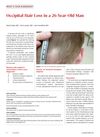 January 2022 in “Consultant”
 The man's occipital hair loss was due to temporal triangular alopecia, not alopecia areata.
March 2025 in “Journal of Investigative Dermatology” The program increased awareness of traction alopecia but didn't significantly change hairstyling habits.
 April 2020 in “Research Square (Research Square)”
 Trichilemmal carcinoma shares genetic traits with other skin cancers, suggesting similar treatment options.
1 citations
,
February 1991 in “Journal of Biological Chemistry”  1 citations
,
January 2004 in “Journal of Physiology & Pathology in Korean Medicine”
1 citations
,
January 2004 in “Journal of Physiology & Pathology in Korean Medicine” Thuja orientalis extract significantly promotes hair growth in mice with hair loss.
 10 citations
,
March 2015 in “Journal of dermatology”
10 citations
,
March 2015 in “Journal of dermatology” The boy's severe skin disorder is caused by two new mutations in his TGM1 gene.
7 citations
,
August 2023 in “Frontiers in Immunology” Targeting TRP channels may help reduce excessive scarring.
 86 citations
,
October 2013 in “Dermatologic Clinics”
86 citations
,
October 2013 in “Dermatologic Clinics” Trichoscopy is a useful non-invasive method for diagnosing different hair loss conditions.
 30 citations
,
December 2019 in “PLoS ONE”
30 citations
,
December 2019 in “PLoS ONE” The new delivery system improved raloxifene's skin absorption and effectiveness against cancer cells.
 May 2025 in “Orphanet Journal of Rare Diseases”
 TNF-α blockers and IL inhibitors improve symptoms in most patients with severe scalp condition, but more research is needed.
 5 citations
,
October 2014 in “Methods”
5 citations
,
October 2014 in “Methods” The document explains how to create detailed biological pathways using genomic data and tools, with examples of hair and breast development.
 7 citations
,
January 2013 in “Dermatology Research and Practice”
7 citations
,
January 2013 in “Dermatology Research and Practice” Trichoscopy is a valuable tool for diagnosing and managing hair and scalp disorders.
42 citations
,
June 2019 in “Aging” 3,4,5-tri-O-caffeoylquinic acid promotes hair growth by activating the β-catenin pathway.
October 2023 in “Cancers” Skin cancer in sun-exposed areas is more likely to come back.
Deleting the MAD2L1 gene in mice led to rapid tumor growth despite chromosomal instability.
April 2019 in “Journal of Investigative Dermatology” Researchers created a new mouse model for studying scleroderma.
 3 citations
,
June 2002 in “Transgenic Research”
3 citations
,
June 2002 in “Transgenic Research” Scientists made a mouse that can be made to lose hair and then grow it back.
December 2025 in “Toxicology and Applied Pharmacology” 6 citations
,
November 1977 in “Archives of Dermatology” A 6-year-old girl in the U.S. had a rare scalp infection caused by *Trichophyton soudanense*.