6 citations
,
January 2017 in “International Journal of Dermoscopy” Dermoscopy is useful for early diagnosis and monitoring of nail diseases.
21 citations
,
April 2004 in “Australasian Journal of Dermatology” A 3-year-old girl has a rare condition causing sparse hair and nail issues, with minimal improvement from treatment.
13 citations
,
February 2017 in “Clinical rheumatology” Tofacitinib may help treat nail dystrophy, especially when other treatments fail.
4 citations
,
March 2020 in “JAAD Case Reports” Vitamin B12 deficiency can cause darkening of all nails.
58 citations
,
November 1969 in “British Journal of Dermatology” Netherton's disease causes multiple hair defects.
A rare genetic mutation causes severe immune issues, hair loss, and nail problems.
 February 2010 in “Journal of The American Academy of Dermatology”
 A woman's nail separation was likely caused by poor blood flow, and a treatment for similar conditions might help.
13 citations
,
April 2009 in “Journal der Deutschen Dermatologischen Gesellschaft” Nail disorders not caused by infection are common and can look similar, with psoriasis being the most frequent and having specific nail symptoms.
 February 2025 in “Indian Dermatology Online Journal”
 Pincer nails are rare in lupus patients and may be managed conservatively.
November 2024 in “Journal of Investigative Dermatology” Genetic defects in the Wnt/PCP pathway may cause congenital yellow nail syndrome.
The nail immune system is similar to hair but different from skin, with fewer immune markers.
6 citations
,
October 2006 in “International Journal of Dermatology” Hair splitting and nail detachment are linked conditions.
 October 2022 in “Medičnì perspektivi”
 Darier-White disease causes skin and nail issues, starts around age 20, worsens until 40-50, and has poor treatment options.
47 citations
,
November 1966 in “Archives of Dermatology” Trichorrhexis nodosa is mainly caused by hair trauma, not a metabolic defect.
 January 2023 in “Indian dermatology online journal”
 A child with ectodermal dysplasia-syndactyly syndrome has a new mutation in the NECTIN4 gene.
40 citations
,
November 1966 in “Archives of Dermatology” Trichorrhexis nodosa is mainly caused by hair trauma and improves with gentler hair care.
26 citations
,
February 1991 in “PubMed” Trichotillomania can be identified by a "Friar Tuck sign" and nail-biting.
January 2006 in “Dianzi xianwei xuebao” Netherton syndrome causes specific skin and hair changes that help in early diagnosis.
 1 citations
,
April 2020 in “Asian Journal of Medicine and Biomedicine”
1 citations
,
April 2020 in “Asian Journal of Medicine and Biomedicine” A child's toe was saved from a rare condition where hair tightly wrapped around it by performing surgery.
 January 2025 in “International Journal of Dermatology Sciences”
 Nail changes in alopecia areata are common and may indicate severity and genetic risk.
175 citations
,
December 1980 in “Archives of Dermatology” Trichothiodystrophy is a condition with brittle hair and various physical and mental issues due to low sulfur in proteins.
 4 citations
,
December 2013 in “The Journal of Dermatology”
4 citations
,
December 2013 in “The Journal of Dermatology” A new mutation in the K6b gene caused a girl's late-appearing nail condition.
2 citations
,
January 2018 in “International Journal of Trichology” Two sisters had a rare hair condition without other usual symptoms.
 September 2022 in “JAAD case reports”
 The man has a genetic skin condition called pachyonychia congenita.
 August 2020 in “International Journal of Research in Dermatology”
 Clouston's syndrome is a rare disorder affecting nails, hair, teeth, and skin, caused by a gene mutation, and currently has no treatment, only supportive care.
 3 citations
,
August 2022 in “Cutis”
3 citations
,
August 2022 in “Cutis” Certain nail conditions can suggest thyroid problems, with different symptoms for underactive (slow, thin nails) and overactive (spoon-shaped, brittle nails) thyroid.
 41 citations
,
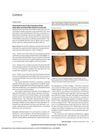
December 2015 in “JAMA Dermatology”
41 citations
,
December 2015 in “JAMA Dermatology” Tofacitinib citrate improved nail dystrophy and pain in patients with alopecia universalis without causing side effects.
March 2021 in “Annals of King Edward Medical University” Clouston syndrome causes issues with teeth, hair, nails, and skin, and has no cure, but recognition has improved.

Nail involvement is common in children with long-term alopecia areata, regardless of scalp severity.
33 citations
,
December 1982 in “Developmental Medicine & Child Neurology” Hair-shaft abnormalities can indicate neurological disorders, some of which are treatable.