 January 2023 in “Skin appendage disorders”
 Laser treatment for hair loss works equally well on different skin types, but more research is needed for very dark skin.
1 citations
,
January 2017 in “Journal of Dermatology and Venereology” The plant extract and minoxidil both reduce hair loss by lowering specific gene expressions.
 August 2025 in “ACS Omega”
 New compounds show promise as nonsteroidal treatments for hair loss.
August 2025 in “Bioactive Materials” Ac-GFFY-IGF peptide is a promising, safe, and effective treatment for hair loss, better than current options.
1 citations
,
January 2023 in “PubMed” Urtica dioica extract may help treat androgenic skin diseases by reducing a specific gene's activity.
February 2023 in “European Journal of Medical Research” Certain existing drugs, like glycopyrronium and botulinum toxin type A, may help treat excessive sweating.
 28 citations
,
March 2007 in “Journal of The European Academy of Dermatology and Venereology”
28 citations
,
March 2007 in “Journal of The European Academy of Dermatology and Venereology” At least 87% of Indian men experience hair loss, with type II being most common and severity increasing with age.
28 citations
,
June 2000 in “PubMed” Androgenetic alopecia is common hair loss due to genetics and DHT.
 18 citations
,
January 2013 in “Annals of Dermatology”
18 citations
,
January 2013 in “Annals of Dermatology” AGA increased yearly, type I most common, and family history and seborrheic dermatitis often linked.
2 citations
,
September 2021 in “Clinical, Cosmetic and Investigational Dermatology” Hospital staff have a higher rate of hair loss than the general population.
1 citations
,
January 2012 in “Human health handbooks” Male pattern baldness is mainly caused by genetics and hormones, treatable with minoxidil and finasteride.
September 2024 in “Journal of Ethnopharmacology” Terminalia bellirica extracts effectively promote hair regrowth and treat androgenetic alopecia.
 September 2024 in “Health Sciences”
 Androgenic alopecia can be treated with minoxidil, finasteride, and hormonal therapy.
 September 2023 in “Journal of The American Academy of Dermatology”
 Adolescents with hair loss show different hormone levels by sex and often have related metabolic issues.

Minoxidil and finasteride are the only FDA-approved treatments for hair loss caused by genetic and hormonal factors, but their effectiveness is often doubted, indicating a need for new treatments.
 34 citations
,
March 1999 in “Journal of The European Academy of Dermatology and Venereology”
34 citations
,
March 1999 in “Journal of The European Academy of Dermatology and Venereology” Bald men may have higher heart disease risk.
 27 citations
,
March 2008 in “Journal of The European Academy of Dermatology and Venereology”
27 citations
,
March 2008 in “Journal of The European Academy of Dermatology and Venereology” Men with a certain type of hair loss (AGA) have higher bad cholesterol and lower good cholesterol levels, making them more likely to get heart disease.
 11 citations
,
December 2018 in “Journal of Dermatology”
11 citations
,
December 2018 in “Journal of Dermatology” Finasteride effectively treats hair loss in Korean men for at least 5 years, with V type responding better.
 2 citations
,
January 2005
2 citations
,
January 2005 Men with a certain type of hair loss (vertex type AGA) may have higher levels of bad fats (triglycerides) and lower levels of good cholesterol (HDL), suggesting they could be at risk for high fat levels in the blood (hyperlipidemia).
 June 2023 in “Journal of General Procedural Dermatology and Venereology Indonesia”
 Older, overweight women with children and a family history of hair loss are more likely to experience female pattern hair loss.
 100 citations
,
September 2017 in “Molecular and Cellular Endocrinology”
100 citations
,
September 2017 in “Molecular and Cellular Endocrinology” Male hormones and their receptors play a key role in hair loss and skin health, with potential new treatments being explored.
 69 citations
,
April 2010 in “British Journal of Dermatology”
69 citations
,
April 2010 in “British Journal of Dermatology” Balding men, especially young ones, may have higher risk of heart issues and diabetes; check cholesterol levels.
67 citations
,
August 2005 in “Journal of Investigative Dermatology Symposium Proceedings” Androgens promote beard growth but cause hair loss in androgenetic alopecia, with TGF-β1 as a potential treatment target.
 66 citations
,
February 2009 in “British Journal of Dermatology”
66 citations
,
February 2009 in “British Journal of Dermatology” Chinese men have lower AGA rates than Caucasians, with type III vertex most common; family history is important.
 45 citations
,
December 2014 in “Journal of the European Academy of Dermatology and Venereology”
45 citations
,
December 2014 in “Journal of the European Academy of Dermatology and Venereology” Plasmacytoid dendritic cells are a key factor in causing hair loss in alopecia areata and could help differentiate it from other hair loss conditions.
 36 citations
,
April 2011 in “Journal of The American Academy of Dermatology”
36 citations
,
April 2011 in “Journal of The American Academy of Dermatology” People with hair loss have higher risk of high blood sugar and diabetes, and lower levels of a specific hormone.
 34 citations
,
January 2014 in “Indian Dermatology Online Journal”
34 citations
,
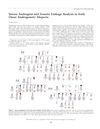
January 2014 in “Indian Dermatology Online Journal” Hair loss linked to metabolic issues and insulin resistance; early assessment may reduce future health risks.
 32 citations
,
August 1999 in “Journal of Investigative Dermatology”
32 citations
,
August 1999 in “Journal of Investigative Dermatology” Early onset hair loss linked to genetics and androgen levels.
 31 citations
,
January 2017 in “Advances in Experimental Medicine and Biology”
31 citations
,
January 2017 in “Advances in Experimental Medicine and Biology” Low testosterone and 5α-reductase inhibitors can harm men's metabolic and sexual health; testosterone therapy may help, but discussing 5α-RIs' side effects is important.
31 citations
,
August 2001 in “PubMed” Hair follicles convert androgens, affecting hair loss patterns.