3 citations
,
September 2013 in “Bioscience Biotechnology and Biochemistry” Type II porcine hair keratin supports cell growth but hinders cell differentiation.
 September 2025 in “International Journal of Cosmetic Science”
 Heat and UV exposure damage hair structure by altering keratins.
May 2010 in “Faculty Opinions – Post-Publication Peer Review of the Biomedical Literature” A mutation in the KRT74 gene causes woolly hair by affecting hair texture.
 19 citations
,
May 2012 in “The journal of investigative dermatology/Journal of investigative dermatology”
19 citations
,
May 2012 in “The journal of investigative dermatology/Journal of investigative dermatology” The type 3 IP3 receptor is important for controlling hair loss and growth.
January 2012 in “Zhongguo shouyi xuebao” Sheep breeds show different keratin gene expression in the groin, linked to hair follicle density.
41 citations
,
May 2012 in “Advanced Healthcare Materials” Human hair keratins improve cell adhesion and growth on culture surfaces.
 9 citations
,
February 2005 in “The journal of investigative dermatology/Journal of investigative dermatology”
9 citations
,
February 2005 in “The journal of investigative dermatology/Journal of investigative dermatology” The document concludes that the human keratin gene cluster is complex, with a need for updated naming to reflect over 50 functional genes important for hair and skin biology.
 6 citations
,
April 2022 in “Journal of diabetes research”
6 citations
,
April 2022 in “Journal of diabetes research” Type 2 diabetes slows down skin and hair renewal by blocking important stem cell activation in mice.
 6 citations
,
July 2012 in “Experimental Dermatology”
6 citations
,
July 2012 in “Experimental Dermatology” The substance from human hair root cells can help maintain hair growth and make skin cells more capable of growing hair.
Keratin peptide signatures in hair may help identify gender and ethnicity.
57 citations
,
January 1987 in “Journal of Biological Chemistry” Different keratins have unique expression patterns in mouse skin cells.
54 citations
,
January 1995 in “Human Molecular Genetics” Monilethrix is linked to a gene cluster on chromosome 12.
49 citations
,
October 1989 in “Genomics” Type I keratin genes are closely linked to the rex locus on mouse chromosome 11, affecting hair development.
 2 citations
,
August 2012 in “Journal of the American Academy of Dermatology”
2 citations
,
August 2012 in “Journal of the American Academy of Dermatology” Two patients with the same genetic mutation had both blistering skin and easily pulled out hair.
 April 2023 in “The journal of investigative dermatology/Journal of investigative dermatology”
 Tet2 and Tet3 enzymes are important for controlling hair growth and shape by affecting gene activity and DNA structure in hair follicles.
 April 2023 in “Journal of Investigative Dermatology”
 Type 2 cytokines IL-4 and IL-13 increase skin's vulnerability to Staphylococcus aureus, which could be important for treating atopic dermatitis.
 11 citations
,
June 2019 in “Tissue & Cell”
11 citations
,
June 2019 in “Tissue & Cell” Hair stem cells produce a protein called COL17A1 that plays a key role in their development and is linked to hair thinning and baldness.
11 citations
,
January 2016 in “Mycoses” Human black hair is best for distinguishing between T. mentagrophytes and T. verrucosum.
8 citations
,
September 2013 in “Molecular carcinogenesis” Rapamycin reduces skin cell growth and tumor development by affecting cell signaling in mice.
8 citations
,
December 2003 in “Experimental Dermatology” Altering the keratin 17 gene in mice hair follicles caused temporary hair issues, but changes were minimal and short-lived.
 4 citations
,
December 2017 in “PubMed”
4 citations
,
December 2017 in “PubMed” Minoxidil may help treat hair loss by reducing the activity of a specific enzyme linked to baldness.
40 citations
,
September 2004 in “Biomacromolecules” The Glu413Lys mutation in keratin affects hair stability, while Glu413Asp does not.
31 citations
,
April 2004 in “Journal of Investigative Dermatology” A new mouse gene, Keratin 17n, is mainly found in nail tissue and may explain why mice without Keratin 17 don't have nail issues.
15 citations
,
May 2014 in “Journal of Biological Chemistry” A chimeric keratin partially improved skin structure in mice lacking keratin 5, but didn't fully restore normal skin.
40 citations
,
September 2010 in “Journal of Biological Chemistry” Keratin K80 is an ancient protein found in various tissues, important for cell structure and tissue differentiation.
 33 citations
,
March 2006 in “Seminars in cutaneous medicine and surgery”
33 citations
,
March 2006 in “Seminars in cutaneous medicine and surgery” The document explains how to identify different hair problems using a microscope.
9 citations
,
February 2001 in “Journal of Dermatological Science” p21waf1/cip1 and p27kip1 help in hair follicle differentiation in rats.
 4 citations
,
January 2014 in “Indian dermatology online journal”
4 citations
,
January 2014 in “Indian dermatology online journal” Monilethrix is a genetic hair disorder causing fragile, beaded hair with no effective treatment.
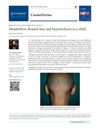 January 2026 in “Cosmoderma”
 A 9-year-old girl has a rare hair disorder causing beaded, sparse hair.
A specific gene mutation causes monilethrix in this family, and minoxidil treatment improves hair condition.