 April 2021 in “Journal of Investigative Dermatology”
 Stem cells control their future role by changing ERK signal timing, affecting tissue regeneration and cancer.
 April 2018 in “Journal of Investigative Dermatology”
 CENPV, a new partner of CYLD, helps regulate ciliary acetylated tubulin and is overexpressed in certain skin tumors.
March 2016 in “Experimental Dermatology” EGFR helps hair follicles transition properly by controlling Stathmin levels.
 14 citations
,
May 2019 in “Human gene therapy”
14 citations
,
May 2019 in “Human gene therapy” MC-DNA vector-based gene therapy can temporarily treat CBS deficiency in mice.
6 citations
,
October 1998 in “Experimental Dermatology” Normal skin results from interactions between EGF and the Tabby mutation.
CRH causes hair loss by reducing autophagy and increasing cell death in hair cells.
 1 citations
,
February 2022 in “bioRxiv (Cold Spring Harbor Laboratory)”
1 citations
,
February 2022 in “bioRxiv (Cold Spring Harbor Laboratory)” A peptide from hair follicle stem cells promotes hair growth by activating specific skin cells.
1 citations
,
July 2024 in “Journal of Investigative Dermatology” Immune cells boost stem cell activity in hairy moles, causing more hair growth.
6 citations
,
June 2023 in “Experimental Dermatology” Targeting mitophagy may help treat alopecia areata by reducing inflammasome activation.
 5 citations
,
June 2024 in “Developmental Cell”
5 citations
,
June 2024 in “Developmental Cell” Activating TRPV1 can boost hair growth by involving neurons, macrophages, and fibroblasts.
36 citations
,
March 2014 in “Annals of the Rheumatic Diseases” Activating liver X receptors can reduce fibrosis by stopping certain immune cells from releasing harmful proteins.
 3 citations
,
March 2016 in “Phytotherapy Research”
3 citations
,
March 2016 in “Phytotherapy Research” The new compound was more effective than finasteride in reducing markers of hair loss and prostate issues in cell tests.
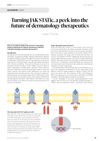 August 2024 in “New Zealand Medical Student Journal”
 JAK inhibitors show promise for treating skin diseases effectively and safely.
 29 citations
,
October 2016 in “Cell death and differentiation”
29 citations
,
October 2016 in “Cell death and differentiation” ΔNp63α stops TAp73β from working in skin cancer by blocking its access to specific genes, not by directly interacting with it.
24 citations
,
December 2013 in “Archives of Dermatological Research” 1 citations
,
November 2012 in “European Journal of Cell Biology” The authors clarified data overlap and corrected a figure error, apologizing for any confusion.
 February 2024 in “bioRxiv (Cold Spring Harbor Laboratory)”
 Activating TLR9 helps heal large wounds and regrow hair by involving a specific type of immune cell.
42 citations
,
June 2019 in “Aging” 3,4,5-tri-O-caffeoylquinic acid promotes hair growth by activating the β-catenin pathway.
42 citations
,
February 2019 in “Circulation” Targeting ATM could help manage heart cell enlargement due to pressure overload.
 14 citations
,
December 2010 in “Journal of human genetics”
14 citations
,
December 2010 in “Journal of human genetics” A Japanese patient with IFAP syndrome had a severe MBTPS2 gene mutation but showed milder symptoms than previously observed cases.
 April 2023 in “Journal of Investigative Dermatology”
 Autophagy is important for determining the protein makeup of hair.
40 citations
,
July 2023 in “Clinical Pharmacology & Therapeutics” Targeted protein degraders show promise in treating cancer but need to target more diverse proteins.
 April 2016 in “Journal of Investigative Dermatology”
 Decreasing MIG6 can increase the movement and invasiveness of MEK-inhibited mutant NRAS melanoma, particularly when stimulated by EGF.
 2 citations
,
April 2017 in “Journal of Investigative Dermatology”
2 citations
,
April 2017 in “Journal of Investigative Dermatology” Tofacitinib helped over half of the patients with severe hair loss regrow at least 50% of their hair.
 April 2026 in “Frontiers in Medicine”
 Farudodstat may help prevent hair loss in alopecia areata by stopping immune attacks on hair follicles.
November 2025 in “Journal of Investigative Dermatology” Alpha-MSH affects mitochondrial function, and MC1R mutations may increase skin aging.
 13 citations
,
March 2020 in “Frontiers in cell and developmental biology”
13 citations
,
March 2020 in “Frontiers in cell and developmental biology” A substance called TCQA could potentially darken hair by activating certain genes and increasing melanin.
 70 citations
,
April 2016 in “Experimental Dermatology”
70 citations
,
April 2016 in “Experimental Dermatology” A patient with alopecia areata regrew hair after taking tofacitinib and showed changes in certain blood and skin markers.
September 2018 in “Apollo (University of Cambridge)” Translation levels actively determine keratinocyte cell fate.
April 2012 in “Development” Rac1 is crucial for normal hair structure and pigmentation.