March 1997 in “Medical Molecular Morphology” Zinc deficiency causes early scalp hair damage that recovers slower than skin symptoms.
28 citations
,
September 1986 in “Pediatric dermatology” Zinc therapy improved hair health in a girl with acrodermatitis enteropathica.
 April 2018 in “Journal of Investigative Dermatology”
 The conclusion is that a new method combining magnetic tweezers and traction force microscopy may help understand skin cell interactions and diseases.
January 1992 in “Journal of Oriental Neuropsychiatry” People with schizophrenia have lower zinc, copper, and chromium in their hair.
3 citations
,
May 1964 in “Nature”  108 citations
,
March 2011 in “Archives of Dermatology”
108 citations
,
March 2011 in “Archives of Dermatology” Corkscrew hair may be a new sign for quickly diagnosing scalp fungus in black children.
 June 2024 in “ACTA SCIENTIAE VETERINARIAE”
 qPCR is effective for quickly diagnosing fungal infections in horses.
May 2020 in “The Journal of Pediatrics” Tinea capitis can be quickly diagnosed and treated using dermoscopy to prevent hair damage.
 1 citations
,
February 2018 in “British Journal of Dermatology”
1 citations
,
February 2018 in “British Journal of Dermatology” The CWARTS tool is a promising method for assessing warts and could improve treatment and research.
Copper levels in green hair decreased significantly after treatment.
36 citations
,
November 2005 in “Forensic Science International” BioPlex-11 improves DNA profiling from telogen hair roots in forensic work.
April 1946 in “Archives of Dermatology” One child resisted treatment, while the other was successfully treated for scalp ringworm.
10 citations
,
January 1985 in “PubMed” Trace elements like calcium, iron, and zinc are unevenly distributed in hair, while sulfur is even, and increased phosphorus and potassium levels are linked to skin reactions.
 January 2001 in “Clinical and Experimental Dermatology”
 A test for nail fungus was most accurate with PAS stain, low-dose spironolactone helped two-thirds of acne patients, metformin reduced symptoms of HIV-related fat distribution changes with some side effects, and skin examination with dermoscopy was better at detecting abnormal moles, while temporary tattoos can cause skin reactions.
 13 citations
,
October 2021 in “Anais Brasileiros de Dermatologia”
13 citations
,
October 2021 in “Anais Brasileiros de Dermatologia” Dermoscopy is effective for diagnosing various skin infestations and infections.
50 citations
,
February 2004 in “Journal of Investigative Dermatology” February 2026 in “British Journal of Dermatology” Tape-strip RNA sequencing can better detect inflammation in hair follicles for alopecia areata.
September 2016 in “Journal of Dermatological Science” Polarizing light microscopy can easily and reliably diagnose congenital keratinizing disorders like Netherton syndrome.
11 citations
,
January 2016 in “Mycoses” Human black hair is best for distinguishing between T. mentagrophytes and T. verrucosum.
 November 2023 in “Journal of Basic Microbiology”
 Green-synthesized zinc oxide nanoparticles effectively inhibit common fungi found on human scalp hair.
July 1999 in “Proceedings of SPIE, the International Society for Optical Engineering/Proceedings of SPIE” Hair analysis can reveal glucose levels in diabetic patients.
 April 2018 in “Journal of Investigative Dermatology”
 BLZ-100 is safe for use in skin cancer surgery and may help identify cancerous tissue.
1 citations
,
June 2016 in “Medicina” Monilethrix is a genetic disorder causing brittle hair, diagnosed using tricoscopy.
1 citations
,
September 2023 in “Portuguese Journal of Dermatology and Venereology” Trichoscopy can help diagnose and decide when to biopsy folliculotropic mycosis fungoides.
October 2014 in “Microscopy” The method using ionic liquid improves observation of cell structures with less damage.
4 citations
,
September 1993 in “Steroids” The method accurately measures testosterone metabolites with high sensitivity and low environmental impact.
October 2015 in “CRC Press eBooks” Trichoscopy is a useful tool for examining and monitoring hair and scalp conditions.
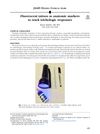 July 2018 in “Journal of The American Academy of Dermatology”
 Fluorescent tattoos are a good way to mark the scalp for hair treatments because they're accurate, invisible in normal light, and have low risk.
2 citations
,
October 2001 in “Mycoses” A cat had a rare fungal infection caused by Microsporum gypseum.