
Patients with lichen planus should be tested for hepatitis C.
 July 2011 in “British Journal of Dermatology”
 Dermatologists give better information on pathology forms, hypersensitivity vasculitis is a common skin issue, misdiagnoses can occur, and various skin conditions are linked to loss of elastin or genetic factors.
 January 2011 in “Yearbook of Dermatology and Dermatologic Surgery”
 Finding a positive nonsentinel lymph node in melanoma patients indicates a worse prognosis.
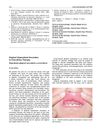 January 2010 in “Actas Dermo-Sifiliográficas”
 A woman developed thick gums from everolimus treatment after a kidney transplant.
 December 2004 in “Medicine”
 A thorough history and examination are crucial for diagnosing skin diseases, which affect up to a third of people. This includes details about skin lesions, medication, general health, lifestyle, family, and contacts, as well as examining the rash, hair, nails, and mucous membranes. Changes in hair and nails can also indicate other medical and skin disorders.
 September 1998 in “Journal of The European Academy of Dermatology and Venereology”
 Phototrichogram helps assess hair loss severity.
3 citations
,
November 2015 in “Jurnal Online Universitas Gadjah Mada (Universitas Gadjah Mada)” Mini punch grafts effectively healed a large ulcer in a child.
 5 citations
,
September 2017 in “Medicine”
5 citations
,
September 2017 in “Medicine” A patient with Cronkhite-Canada Syndrome developed colon cancer that spread to the liver, showing the need for regular cancer checks in such patients.
 3 citations
,
June 1987 in “British Journal of Dermatology”
3 citations
,
June 1987 in “British Journal of Dermatology” Nifedipine may help treat perniosis, improving symptoms and clearing lesions for some patients.
 May 2023 in “Frontiers in veterinary science”
 A young tapir with a rare skin condition improved after treatment with wound cleaning, cream, and oral medication.
 December 2014 in “Bangladesh Journal of Veterinary Medicine”
 Ectoparasites cause skin issues in Egyptian lesser blind mole rats, affecting their population.
 5 citations
,
February 2015 in “New England journal of medicine/The New England journal of medicine”
5 citations
,
February 2015 in “New England journal of medicine/The New England journal of medicine” The conclusion of the case is not provided in the summary.
 1160 citations
,
November 2018 in “Physiological Reviews”
1160 citations
,
November 2018 in “Physiological Reviews” The document concludes that better targeted treatments are needed for wound healing, and single-cell technologies may improve cell-based therapies.
 291 citations
,
January 2014 in “The Scientific World Journal”
291 citations
,
January 2014 in “The Scientific World Journal” Lichen Planus is a less common condition affecting skin and mucous membranes, with various types and associated risk factors, challenging to diagnose, significantly impacts life quality, and may have a risk of cancerous changes in oral lesions.
 284 citations
,
November 1999 in “Neurology”
284 citations
,
November 1999 in “Neurology” The article suggests managing interferon beta therapy side effects in MS with dose adjustments, medications, and patient education.
 280 citations
,
July 2018 in “Antioxidants”
280 citations
,
July 2018 in “Antioxidants” Treatments that reduce oxidative stress and fix mitochondrial problems may help heal chronic wounds.
 243 citations
,
September 2016 in “Dermatology and Therapy”
243 citations
,
September 2016 in “Dermatology and Therapy” Dermoscopy is a useful tool for identifying features of skin conditions, but more research is needed to define its role in dermatology.
 192 citations
,
January 2015 in “Journal of the American Academy of Dermatology”
192 citations
,
January 2015 in “Journal of the American Academy of Dermatology” Targeted cancer therapies often cause serious skin problems that need careful management.
 179 citations
,
October 2018 in “American Journal of Clinical Dermatology”
179 citations
,
October 2018 in “American Journal of Clinical Dermatology” Cancer treatments targeting specific cells and the immune system can cause skin, mouth, hair, and nail problems, affecting patients' quality of life and treatment adherence.
 172 citations
,
November 1983 in “Journal of The American Academy of Dermatology”
172 citations
,
November 1983 in “Journal of The American Academy of Dermatology” Chemotherapy can cause skin problems like hair loss, mouth sores, and skin darkening, and recognizing these can affect treatment decisions.
 165 citations
,
January 2014 in “Dermatology Research and Practice”
165 citations
,
January 2014 in “Dermatology Research and Practice” Zinc is effective for treating various skin conditions, including warts and acne.
 157 citations
,
August 2010 in “Lupus”
157 citations
,
August 2010 in “Lupus” The document concludes that recognizing and treating cutaneous lupus erythematosus early is crucial for managing the skin and potential systemic symptoms.
 149 citations
,
July 2002 in “Dermatologic clinics”
149 citations
,
July 2002 in “Dermatologic clinics” Patients with certain skin symptoms and high ANA titers should be monitored for potential systemic lupus.
 141 citations
,
September 2016 in “European Journal of Dermatology”
141 citations
,
September 2016 in “European Journal of Dermatology” Taxane chemotherapy can cause skin, hair, and nail side effects, which are often under-reported and can affect patient quality of life.
 137 citations
,
October 2009 in “The American journal of pathology”
137 citations
,
October 2009 in “The American journal of pathology” Matriptase is crucial for keeping epithelial tissues healthy and functioning properly.
 135 citations
,
December 2015 in “Expert Opinion on Biological Therapy”
135 citations
,
December 2015 in “Expert Opinion on Biological Therapy” Exosomes could potentially enhance tissue repair and regeneration with lower rejection risk and easier production than live cell therapies.
 132 citations
,
January 2017 in “International Journal of Molecular Sciences”
132 citations
,
January 2017 in “International Journal of Molecular Sciences” Fat-derived stem cells show promise for skin repair and reducing aging signs but need more research for consistent results.
 132 citations
,
July 2000 in “Lupus”
132 citations
,
July 2000 in “Lupus” In Italian patients with lupus, the most common skin issue was chronic cutaneous lupus, especially discoid lesions, and nonspecific skin problems occurred in about a third of those with systemic lupus, mainly during active disease.
 123 citations
,
September 1987 in “JAMA”
123 citations
,
September 1987 in “JAMA” IL-2 treatment causes skin eruptions and other reversible side effects, and may play a role in psoriasis.
 119 citations
,
June 2005 in “Journal of Molecular and Cellular Cardiology”
119 citations
,
June 2005 in “Journal of Molecular and Cellular Cardiology” Potassium channel openers are effective in treating heart conditions, high blood pressure, pulmonary diseases, bladder issues, and hair loss, but more selective drugs are needed.