December 2025 in “Asian Journal of Advanced Research and Reports” Hair growth pathways are a promising and simpler method for detecting chronic stress.
August 2023 in “Diagnostics” Ultra-high-frequency ultrasound effectively evaluates the impact of hyaluronic acid fillers in reducing nasolabial fold wrinkles over time.
Ultrasound and nanocarriers could make breast cancer treatment safer and more effective.
 13 citations
,
January 1963 in “Radiation Research”
13 citations
,
January 1963 in “Radiation Research” X-ray microbeams can mimic cosmic rays' effects on tissue, aiding wound healing and hair growth.
49 citations
,
June 2004 in “Philosophical Transactions of the Royal Society A Mathematical Physical and Engineering Sciences” Human hair becomes weaker and stretches more easily at higher temperatures.
 4 citations
,
March 2019 in “Journal of Pure and Applied Microbiology”
4 citations
,
March 2019 in “Journal of Pure and Applied Microbiology” A 940nm laser effectively reduces inflammation in rat joints.
1 citations
,
January 2003 in “Benjamins eBooks” Confinement in farrowing crates doesn't increase chronic stress in sows, but hair cortisol measurements may not reliably indicate stress due to hair growth variations.
 3 citations
,
December 2020 in “Polski merkuriusz lekarski : organ Polskiego Towarzystwa Lekarskiego”
3 citations
,
December 2020 in “Polski merkuriusz lekarski : organ Polskiego Towarzystwa Lekarskiego” People with androgenetic alopecia often experience high stress, but the stress doesn't affect how the disease progresses or how well different treatments work.
5 citations
,
April 2024 in “BMJ Open” Standardized ultrasound methods are needed for measuring scar thickness in clinical practice.
November 2025 in “Biocell” Balancing stress responses can improve stem cell health and aid in regenerative medicine and cancer treatment.
 125 citations
,
September 2001 in “The FASEB Journal”
125 citations
,
September 2001 in “The FASEB Journal” Stress can cause hair loss by negatively affecting hair follicles and this effect might be reversed with specific treatments.
 10 citations
,
January 2017 in “Skin appendage disorders”
10 citations
,
January 2017 in “Skin appendage disorders” Emotional stress can trigger intermittent hair loss in chronic telogen effluvium, which may not improve with treatment if stress continues.
January 2026 in “Open MIND” 
The model explains how mammal ear hair cells respond to sound and adapt.
10 citations
,
January 2015 in “International Journal of Trichology” Mechanical stress contributes to hair loss in androgenetic alopecia.
January 2026 in “Open Science Framework”  115 citations
,
November 2004 in “Brain Behavior and Immunity”
115 citations
,
November 2004 in “Brain Behavior and Immunity” Stress increases nerve fibers and immune cell activity in mouse skin, possibly worsening skin conditions.
June 2023 in “Zenodo (CERN European Organization for Nuclear Research)” August 2022 in “Frontiers in Pharmacology” Ultrasound can improve targeted drug delivery, making treatments more effective with fewer side effects.
1 citations
,
June 2003 in “CRC Press eBooks” Stress can worsen some skin diseases like psoriasis and eczema.
Mechanical stress causes ligament thickening through WISP-1 and Hedgehog signaling.
1 citations
,
April 2024 in “Lasers in Surgery and Medicine” The model helps improve medical devices by showing how skin deforms under pressure.
16 citations
,
January 2021 in “Frontiers in veterinary science” Pigs in farrowing crates and loose-housing systems showed no difference in chronic stress levels as measured by hair cortisol.
 2 citations
,
April 2022 in “PLoS ONE”
2 citations
,
April 2022 in “PLoS ONE” Vibration treatment may reduce migraine pain by changing cell structures.
 5 citations
,
October 2021 in “Signal Transduction and Targeted Therapy”
5 citations
,
October 2021 in “Signal Transduction and Targeted Therapy” Stress hormone corticosterone suppresses hair growth by affecting stem cell activity and Gas6 protein expression.
 November 2014 in “ACTUALIDAD MEDICA”
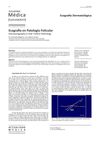
 Ultrasonography can help diagnose and monitor hair loss conditions.
1 citations
,
September 2016 in “Brain Behavior and Immunity” Hair cortisol levels can indicate stress and are affected by washing frequency, not cosmetic treatments.
July 2024 in “Journal of Investigative Dermatology” Mechanical tension worsens keloid scars by activating inflammation and fibrosis pathways.
 June 2026 in “Scientific Reports”
 Open-label placebos can reduce stress and improve exam performance.
1 citations
,
January 1987 Low-output laser irradiation can stimulate or inhibit biological processes depending on the dose.