 November 2014 in “British Journal of Dermatology”
 Male hair loss is mainly due to thinner hair, not less hair.
 5 citations
,
October 1984 in “The BMJ”
5 citations
,
October 1984 in “The BMJ” Up to 50% of scalp hair can be lost before it appears thin, and treatment is only needed for hair loss caused by diseases or deficiencies.
 November 2014 in “Prescriber”
 The 16-year-old girl with hair loss was successfully treated for alopecia areata, leading to significant hair regrowth.
17 citations
,
June 1997 in “Baillière's clinical obstetrics and gynaecology” Scientists now better understand how human hair growth is controlled, including the roles of specific genes and proteins.
11 citations
,
January 2019 in “Dermatologic Surgery” Hair follicle transplants help heal wounds, but scar quality and hair growth vary by location.
January 2010 in “Journal of Yangzhou University” Sulfated fucans promote hair growth in mice by speeding up the growth phase and delaying the rest phase.
67 citations
,
August 2005 in “Journal of Investigative Dermatology Symposium Proceedings” Androgens promote beard growth but cause hair loss in androgenetic alopecia, with TGF-β1 as a potential treatment target.
April 2017 in “Journal of Dermatological Science” Asymmetric hair follicle differentiation causes the unique shape of kinky hair.
Some plants may help with hair growth but need more scientific evidence.
114 citations
,
October 1996 in “Dermatologic clinics” Hair loss is mainly caused by hormones, autoimmune issues, and chemotherapy, and needs more research for treatments.
 April 2021 in “Advances in Cosmetic Surgery”
 Hair restoration can be achieved through non-surgical treatments like minoxidil, antiandrogens, phototherapy, and PRP procedures, or through surgical methods like hair transplantation. Continued treatment is needed to maintain results, and full results are visible after 12-18 months.
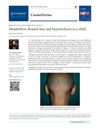 January 2026 in “Cosmoderma”
 A 9-year-old girl has a rare hair disorder causing beaded, sparse hair.
 March 2009 in “Journal of Biomedical Research”
 Herbal extract mixtures may speed up hair growth and could help treat baldness.
 22 citations
,
February 2002 in “Journal of theoretical biology”
22 citations
,
February 2002 in “Journal of theoretical biology” The model showed that randomness accurately describes individual hair growth cycles and that synchronization can cause large fluctuations not seen in humans.
 21 citations
,
May 2022 in “Frontiers in Cell and Developmental Biology”
21 citations
,
May 2022 in “Frontiers in Cell and Developmental Biology” Hair growth and health are influenced by factors like age, environment, and nutrition, and are controlled by various molecular pathways. Red light can promote hair growth, and understanding these processes can help treat hair-related diseases.
 3 citations
,
August 2020 in “International Journal of Molecular Sciences”
3 citations
,
August 2020 in “International Journal of Molecular Sciences” Blocking Rab27a slows hair growth, while blocking Rab27b encourages it.
 January 2001 in “Nishi Nihon hifuka”
 The document concluded that there are differences in hair growth cycles and skin cell turnover rates, which can be measured with electronic equipment.
38 citations
,
January 1988 Different thymic peptides affect hair growth in various ways.
13 citations
,
May 1987 in “PubMed” Topical minoxidil can help regrow hair with regular use, but results vary and side effects may occur.
 4 citations
,
April 1999 in “Dermatologic Clinics”
4 citations
,
April 1999 in “Dermatologic Clinics” Androgens, like DHT, affect hair growth and treatments like finasteride may help.
 9 citations
,
April 1986 in “Postgraduate Medicine”
9 citations
,
April 1986 in “Postgraduate Medicine” Hair loss has many causes and treatments, and losing some hair daily is normal; proper diagnosis is key, and minoxidil can help treat it.
1 citations
,
December 1965 in “PubMed” May 2026 in “Journal of Investigative Dermatology”  25 citations
,
June 2022 in “Developmental cell”
25 citations
,
June 2022 in “Developmental cell” Overactivating Hedgehog signaling makes hair follicle cells in mice grow hair faster and create more follicles.
28 citations
,
March 2014 in “Biological reviews/Biological reviews of the Cambridge Philosophical Society” The document concludes that hair curvature can be explained by the growth patterns caused by the shape and separation of cells in the hair follicle and is affected by specific molecular pathways.
 September 1984 in “Journal of Biological Education”
 Human hair growth involves active, resting, and intermediate phases, and examining plucked hairs can teach students about hair biology and diseases.
 June 2007 in “DOAJ (DOAJ: Directory of Open Access Journals)”
 Female pattern hair loss, common in women, can be treated with oral antiandrogens and topical minoxidil, but these are more effective at preventing further loss than regrowing hair. Other helpful methods include counseling, cosmetic camouflage, and hair transplantation. Treatment must continue for effects to last and it may take up to 2 years to see results.
January 2022 in “Springer eBooks” January 2010 in “Springer eBooks”