 June 2023 in “Dermatology and therapy”
 Doctors in the Middle East need better treatments and more knowledge about new therapies for hair loss condition Alopecia Areata.
 June 2023 in “Dermatology and therapy”
 The Middle East and Africa need better data, treatment consensus, and support for Alopecia Areata.
 April 2023 in “Medizinische Genetik”
 New research has found 14 genes linked to the risk of developing alopecia areata, improving understanding and treatment options.
Liquid nitrogen cryotherapy worked well for many patients with stubborn alopecia areata.
 January 2023 in “Annals of Dermatology”
 Patients with a specific genetic variant have more severe alopecia areata and higher recurrence rates.
 January 2023 in “Malaysian Journal of Medical Research”
 Early and proper treatment is crucial for children with allergic conjunctivitis to avoid complications.
 January 2023 in “International Journal of Zoological Investigations”
 Certain genetic variations in IL-16 may increase the risk of alopecia areata.
 December 2022 in “Rossijskij žurnal kožnyh i veneričeskih boleznej”
 New treatments for child hair loss due to immune issues are effective but not yet officially approved.
 November 2022 in “SAS journal of medicine”
 There's no link between low iron levels and the hair loss condition, alopecia areata.
Screening for iron levels in patients with hair loss may help find a genetic iron overload condition early.
 October 2022 in “The Egyptian Journal of Hospital Medicine”
 Topical corticosteroids are the preferred first treatment for children with Alopecia Areata.
 September 2022 in “Intisasi sains media”
 A young child with complete hair loss improved significantly with a combination of hair growth treatments and laser therapy.
 April 2022 in “Research Square (Research Square)”
 The combination of laser and topical steroids is more effective for treating alopecia areata than topical steroids alone.
 December 2021 in “Research Square (Research Square)”
 M-CSF-stimulated myeloid cells can cause alopecia areata in mice.
 July 2021 in “International journal of homoeopathic sciences”
 Homeopathic treatment can help manage alopecia areata in children.
 April 2021 in “Anatolian current medical journal :”
 A patient developed hair loss after hepatitis C treatment with sofosbuvir and ribavirin.
 April 2021 in “Sohag Medical Journal”
 Alopecia areata is an autoimmune condition causing hair loss, linked to genetic factors and immune system issues, with no cure yet.
A man with four autoimmune diseases suggests a new category for multiple autoimmune syndrome.
 January 2021 in “Turkiye Klinikleri Journal of Dermatology”
 The MPV/PC ratio can help assess disease activity in alopecia areata.
 January 2021 in “Online Publication Service of Würzburg University (Würzburg University)”
 Diphenylcyclopropenon treatment for Alopecia areata is effective and safe, improving patients' quality of life.
 July 2018 in “International journal of research - granthaalayah”
 Croton tiglium application significantly improved hair regrowth in alopecia areata patients.
 July 2018 in “Our Dermatology Online”
 Alopecia areata does not affect areas with psoriasis plaques.
 June 2018 in “The Medical Journal of Cairo University/The Medical Journal of Cairo University”
 Dermoscopy can quickly and reliably distinguish Tinea Capitis from Alopecia Areata by identifying specific hair patterns.
 January 2018 in “SOJ microbiology & infectious diseases”
 Etanercept, a psoriasis treatment, caused hair loss in a patient.
 June 2017 in “Journal of clinical and investigative dermatology”
 Red blood cell folate levels are reliable indicators of long-term folate status in alopecia areata patients.
 May 2017 in “Journal of The American Academy of Dermatology”
 Certain factors like patchy hair loss at the back of the head, being female, and younger age at diagnosis can lead to a worse outcome for alopecia areata.
 December 2016 in “Springer eBooks”
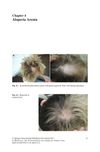
 A 45-year-old woman with autoimmune diseases experienced patchy hair loss due to alopecia areata, which has no cure but can be treated, with varying success.
 January 2015 in “Journal of evolution of medical and dental sciences”
 Topical tacrolimus is effective and safe for treating alopecia areata.

Alopecia areata is an autoimmune disease affecting hair follicles and may harm heart health.
 January 2015 in “Przegla̧d dermatologiczny”
 Intralesional triamcinolone is the most effective treatment for alopecia areata, followed by excimer light therapy, and then topical minoxidil. The scalp responds better to treatment than the beard area.