
A runner developed tangled armpit hairs from shirt friction, preventable by shaving or wearing smooth shirts.
 January 2025 in “Hospital Pharmacology - International Multidisciplinary Journal”
 Medications can cause eye problems, so regular eye check-ups are important.
 January 2025 in “American Journal of Medical and Clinical Research & Reviews”
 Cosmetics can contain harmful chemicals that may cause health issues.
 September 2024 in “World Journal of Advanced Research and Reviews”
 COVID-19 can harm many body parts, not just the lungs.
 March 2024 in “Sudan Journal of Medical Sciences”
 Many doctors lack knowledge about COVID-19 skin symptoms and need better education and guidelines.
 January 2024 in “Open Journal of Veterinary Medicine”
 The treatment effectively reduces yeast and improves skin in dogs.
 August 2023 in “Natural Resources for Human Health”
 Vegetarians should take B vitamin supplements to avoid health issues.
 January 2023 in “Revista da Associação Médica Brasileira”
 Brazilian patients with inflammatory bowel disease have a high rate of skin problems compared to healthy people.
 August 2022 in “International Journal of Health Sciences”
 Elderly in rural areas have many skin issues needing targeted healthcare.
 July 2022 in “International Journal of Research in Dermatology”
 Some children with COVID-19 develop skin symptoms linked to a severe inflammatory condition.
 November 2021 in “Chattagram Maa-O-Shishu Hospital Medical College Journal”
 Most patients with Cutaneous Lupus Erythematosus are young females, and dermatologists play a key role in diagnosis.
 July 2020 in “Scholarly Journal of Psychology and Behavioral Sciences”
 The pandemic highlighted the need for accurate information, vaccine development, and adapting to new routines while managing stress and misinformation.

 November 2017 in “Research Journal of Health Sciences”
 Skin infections and eczema were most common in all ages, acne in teens and young adults, and nutritional skin problems and infestations in children.
 November 2016 in “Journal of Evolution of Medical and Dental Sciences”
 Elderly people often have skin issues like wrinkles, dryness, and benign tumors, needing special dermatology care.

Skin changes throughout life, from development before birth to aging effects like wrinkles, influenced by both genetics and environment.
 February 2014 in “Journal of The American Academy of Dermatology”
  July 2011 in “British Journal of Dermatology”
 Dermatologists give better information on pathology forms, hypersensitivity vasculitis is a common skin issue, misdiagnoses can occur, and various skin conditions are linked to loss of elastin or genetic factors.
 September 2009 in “Pediatric Dermatology”
 UVB is good for a skin condition in Asian kids, a lotion works for head lice, a drug helps with a skin blistering disorder, a foam reduces itchiness in skin inflammation, birthmarks can be more widespread, and criteria for a neurocutaneous disorder were agreed upon.
 February 2009 in “Journal of The American Academy of Dermatology”
 Certain immune system genes are linked to a higher risk of psoriasis and psoriatic arthritis, while others may offer protection.
 February 2009 in “Journal of The American Academy of Dermatology”
 Atopic dermatitis significantly lowers the quality of life for infants and their families.
 June 2008 in “British Journal of Dermatology”
 UK medical students lack dermatology education, liver biopsy patients with risk factors show more fibrosis, and certain fungi resist drugs due to melanin; genetics may influence female hair loss.
 June 2006 in “British Journal of Dermatology”
 The document reports unique growth lines in a child after Stevens-Johnson syndrome, skin reaction from parsnips and sun in a girl, and itchy skin with xanthomas in a boy with Alagille syndrome.
 May 2002 in “British Journal of Dermatology”
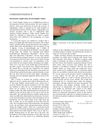
 A pregnant woman's skin condition improved after giving birth, possibly due to high estrogen levels during pregnancy.
 October 2001 in “WORLD SCIENTIFIC eBooks”
 Many substances, including chemicals and metals, can cause skin reactions; careful handling and identification of allergens are crucial to prevent dermatitis.
 January 1987 in “Side effects of drugs annual”
 Some cosmetics and dermatological drugs can cause allergic reactions and side effects, like skin irritation and systemic issues.
 January 1983 in “Side effects of drugs annual”
 Beta-blockers and anti-anginal medications have various side effects and interactions that require careful monitoring and individualized treatment.
 February 2009 in “Journal of The American Academy of Dermatology”
 Female hair loss can be diagnosed using specific trichoscopy criteria.
 July 2008 in “British Journal of Dermatology”
 Cyclosporin doesn't stop hair loss.
 May 2002 in “British Journal of Dermatology”
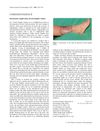
 Hair loss caused by longer latent hair cycle and sudden miniaturization, not gradual follicle size reduction.