Search
for
Sort by
Research
30 / 1000+ results
research Emerging pharmacotherapies and regenerative solutions for promoting hair growth for androgenetic alopecia
New treatments for hair loss show promise but need more testing for effectiveness and safety.
research Diphencyprone Induced Vitiligo: A Case Report
Diphencyprone can cause unexpected and possibly permanent vitiligo.

research The use of diphencyprone in dermatology: A retospective audit
Diphencyprone treatment protocols could be simplified as no harm occurred despite not fully following them.

research DSP c.6310delA p.(Thr2104Glnfs*12) associates with arrhythmogenic cardiomyopathy, increased trabeculation, curly hair, and palmoplantar keratoderma
A specific gene variant is linked to heart disease, increased heart muscle, curly hair, and thick skin on palms and soles.
research Vitiligo complicating diphencyprone sensitization therapy for alopecia universalis
Diphencyprone therapy for hair loss can cause vitiligo.

research Diphenylcyclopropenone-Induced Vitiligo in a Patient with Alopecia Universalis
A patient with total hair loss developed vitiligo after using a treatment called DCP.
research Vitamin D Receptor gene polymorphisms taq-1 and cdx-1 in female pattern hair loss
Certain gene variations in the Vitamin D Receptor are linked to higher risk of female hair loss.
research P113 Therapeutic efficacy of 1,927-nm fractionated thulium laser and polydeoxyribonucleotide on pattern hair loss
The thulium laser and PDRN injections effectively improved hair thickness in patients with pattern hair loss.
research Phase II Evaluation of VDC‐1101 in Canine Cutaneous T‐Cell Lymphoma
VDC-1101 shows potential as a treatment for canine cutaneous T-cell lymphoma.

research Allergic contact dermatitis from dyes in wigs following diphencyprone treatment
Avoiding dyed wigs and clothing improved severe allergic reactions in a woman treated with diphencyprone.
research Pharmacological Activity and Clinical Use of PDRN
PDRN helps repair tissue and improve wound healing with a high safety profile.
research The use of dihydroxyacetone for photoprotection in variegate porphyria
Dihydroxyacetone in self-tanning lotion helped reduce sun-related skin issues in a woman with variegate porphyria.
research Hereditary 1,25-dihydroxyvitamin D-resistant rickets (HVDRR): clinical heterogeneity and long-term efficacious management of eight patients from four unrelated Arab families with a loss of function VDR mutation
Patients with the same genetic mutation for vitamin D-resistant rickets showed different symptoms but all improved with treatment except for hair loss.
research Differential Regulation of Vitamin D Receptor (VDR) By P53, P63 and P73
p63 and p73 regulate the vitamin D receptor, affecting cancer cell behavior and vitamin D sensitivity.
research Vitiligo as a Reaction to Topical Treatment with Diphencyprone
Diphencyprone treatment for alopecia areata can cause vitiligo in some patients.
research Five‐year experience in the treatment of alopecia areata with DPC
Diphencyprone (DPC) is an effective and safe long-term treatment for alopecia areata, especially with maintenance therapy.
research Hereditary vitamin D-resistant rickets (HVDRR) owing to a heterozygous mutation in the vitamin D receptor
A girl had rickets due to a gene mutation affecting vitamin D response.

research Alopecia in a Viable Phospholipase C Delta 1 and Phospholipase C Delta 3 Double Mutant
Mutations in Plcd1 and Plcd3 together cause severe hair loss in mice.
research 10.1063/5.0132123.1

research Cloning of a Functional Vitamin D Receptor from the Lamprey (Petromyzon marinus), an Ancient Vertebrate Lacking a Calcified Skeleton and Teeth
Lampreys have a functional vitamin D receptor that may help detoxify harmful substances.
research Plasma Diaphanous Related Formin 1 Levels Are Associated with Altered Glucose Metabolism and Insulin Resistance in Patients with Polycystic Ovary Syndrome: A Case Control Study
Women with Polycystic Ovary Syndrome (PCOS) have lower levels of a substance called DIAPH1 in their blood, which is linked to changes in sugar metabolism and insulin resistance.
research SnapshotDx Quiz: May 2020
BIVV009 is a safe treatment for bullous pemphigoid that reduces C3 deposition without harmful side effects.
research Incidence of Vitamin D Deficiency in Patients with Female Pattern Hair Loss (FPHL)
Most women with female pattern hair loss have low vitamin D levels.
research Expression of vascular endothelial growth factor, apoptosis inhibitors (survivin and p16) and CCL27 in alopecia areata before and after diphencyprone treatment: an immunohistochemical study
Diphenylcyclopropenone treatment helps hair growth in alopecia areata by promoting blood vessel growth and cell survival.
research 42008 Long Term Hematologic Laboratory Safety of Dupilumab in Patients Aged 6 Months to 5 Years With Moderate-to-Severe Atopic Dermatitis

research Changes in distribution pattern of CD8 lymphocytes in the scalp in alopecia areata during treatment with diphencyprone
Diphencyprone treatment increases CD8 lymphocytes in the scalp, which is associated with hair regrowth in alopecia areata patients.

research 15-Hydroxyprostaglandin Dehydrogenase Inhibitor Restores Endothelial Function Under Dihydrotestosterone-Induced Stress in Human Dermal Microvascular Endothelial Cells
DPP may help hair regrowth by improving blood vessel function under stress.
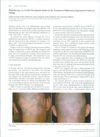
research Phototherapy as a Useful Therapeutic Option in the Treatment of Diphenylcyclopropenone-induced Vitiligo
Light therapy can effectively treat vitiligo and hair loss caused by a specific medication.

research The biphasic regulatory effect of diphencyprone on mouse hair growth and its relation to protein kinase C isoforms
Diphencyprone initially increases mouse hair growth, then slows it, possibly due to changes in specific protein levels.