April 2007 in “Linchuang pifuke zazhi” TGF-β1 and 2 may play a role in hair loss in AGA.
 12 citations
,
June 2017 in “Cell Cycle”
12 citations
,
June 2017 in “Cell Cycle” Minoxidil foam helps hair growth by increasing good proteins and decreasing bad pathways in men with hair loss.
30 citations
,
May 2008 in “International Journal of Dermatology” Lipedematous alopecia causes permanent hair loss due to increased scalp fat.
22 citations
,
January 1987 in “Dermatology” Hair loss is common, influenced by genetics and androgens, and can affect mental health.
 November 2024 in “Benha Journal of Applied Sciences”
 Reduced alpha smooth muscle actin may cause hair loss in androgenetic alopecia.
37 citations
,
September 2005 in “Australasian Journal of Dermatology” A man with scalp and neck skin issues improved after a year of oral isotretinoin.
 72 citations
,
July 2008 in “Dermatologic Therapy”
72 citations
,
July 2008 in “Dermatologic Therapy” CCCA is a scarring hair loss condition mainly in African descent women, possibly caused by genetics and hairstyling, treated with gentle hair care and medications.
 12 citations
,
June 2006 in “Anais Brasileiros de Dermatologia”
12 citations
,
June 2006 in “Anais Brasileiros de Dermatologia” The study found average numbers for different types of hair follicles in the scalp and observed differences between men and women, suggesting reasons for more common hair shedding in women.

Mesenchymal Stem Cell Conditioned Media can significantly regrow hair in alopecia areata patients.
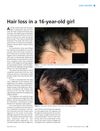 November 2014 in “Prescriber”
 The 16-year-old girl with hair loss was successfully treated for alopecia areata, leading to significant hair regrowth.
TGF-β1 and 2 in hair follicles may be linked to hair loss in AGA.
May 2022 in “Dermatology practical & conceptual” Trichoscopy is crucial for diagnosing and managing androgenetic alopecia, showing increased vellus hairs, empty follicles, and fibrosis with severity.
 November 2014 in “British Journal of Dermatology”
 Hair loss is due to thinner hairs, not less hairs; hair diameter indicates balding progression and treatment effectiveness.
 33 citations
,
August 1985 in “Archives of Dermatology”
33 citations
,
August 1985 in “Archives of Dermatology” Acquired Progressive Kinking of Hair is likely an early sign of male pattern baldness.

Minoxidil and finasteride are the only FDA-approved treatments for hair loss caused by genetic and hormonal factors, but their effectiveness is often doubted, indicating a need for new treatments.
 9 citations
,
November 1993 in “Journal of The American Academy of Dermatology”
9 citations
,
November 1993 in “Journal of The American Academy of Dermatology” Some men can have female pattern baldness without hormonal abnormalities or signs of feminization.
3 citations
,
June 2015 in “CRC Press eBooks” Male pattern hair loss affects up to 80% of men due to genetics and hormone sensitivity.
 January 2023 in “Springer eBooks”
 Most older adults experience pattern hair loss due to shrinking hair follicles, with men and women showing different balding patterns.
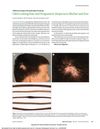 May 2014 in “JAMA Dermatology”
 Mother and son diagnosed with a rare genetic hair loss condition with no effective treatment.

Androgenetic alopecia is a common type of hair loss in men and women, caused by a testosterone byproduct affecting hair follicles, with sensitivity determined by genetics.
 3 citations
,
May 2020 in “Actas Dermo-Sifiliográficas”
3 citations
,
May 2020 in “Actas Dermo-Sifiliográficas” PRP injections increased hair density in men with hair loss but didn't work for everyone and more research is needed.
January 2009 in “Revista de Ciências Médicas” Male pattern baldness is a genetic condition causing hair loss, with limited but improving treatment options.
 1 citations
,
April 2016 in “Journal of The American Academy of Dermatology”
1 citations
,
April 2016 in “Journal of The American Academy of Dermatology” The study concludes that Loose Anagen Hair Syndrome is a benign condition that usually improves with age but can be hard to diagnose and stressful for the family.
 July 2019 in “Journal of Investigative Dermatology”
 The research found that male pattern hair loss is mostly genetic and involves hair thinning due to hormonal effects and changes in gene expression.
 May 2007 in “Dermatologic Therapy”
 Hair care practices like using relaxers and tight braiding can lead to permanent hair loss in black women.
 4 citations
,
January 2015 in “International Journal of Trichology”
4 citations
,
January 2015 in “International Journal of Trichology” Transplanted hair follicles can change and adapt to new areas of the body, with the immune system possibly playing a role in this adjustment.
 26 citations
,
May 2019 in “PLOS ONE”
26 citations
,
May 2019 in “PLOS ONE” Hair loss patients have different microbes in hair follicles, possibly affecting hair loss.
 1113 citations
,
August 1999 in “The New England Journal of Medicine”
1113 citations
,
August 1999 in “The New England Journal of Medicine” Hair follicle biology advancements may lead to better hair growth disorder treatments.
 26 citations
,
June 2000 in “Journal of The American Academy of Dermatology”
26 citations
,
June 2000 in “Journal of The American Academy of Dermatology” Men with balding at age 45 had higher IGF-1 and lower IGFBP-3, suggesting these factors might be important in male pattern baldness.
 23 citations
,
December 2013 in “Regenerative Medicine”
23 citations
,
December 2013 in “Regenerative Medicine” Hair follicle culture helps develop new treatments for hair loss.