 June 2021 in “bioRxiv (Cold Spring Harbor Laboratory)”
 KIF18B is important for correctly positioning cell division machinery in skin cells, affecting hair follicle development.
 May 2018 in “White Rose eTheses Online (University of Leeds, The University of Sheffield, University of York)”
 Alopecia areata may be treated by using EGCG to balance immune cells and reduce inflammation.

Proretinal nanoparticles are a safe and effective way to deliver retinal to the skin.
 January 2018 in “Stem cell biology and regenerative medicine”
 ATP-dependent chromatin remodeling is crucial for skin development and stem cell function.
 January 2017 in “Journal of Investigative Dermatology Symposium Proceedings”
 The 2015 Hair Research Congress concluded that stem cells, maraviroc, and simvastatin could potentially treat Alopecia Areata, topical minoxidil, finasteride, and steroids could treat Frontal Fibrosing Alopecia, and PTGDR2 antagonists could also treat alopecia. They also found that low-level light therapy could help with hair loss, a robotic device could assist in hair extraction, and nutrition could aid hair growth. They suggested that Alopecia Areata is an inflammatory disorder, not a single disease, indicating a need for personalized treatments.
 May 2009 in “Hair transplant forum international”
 Androgens affect hair growth and shedding, with genetic and non-genetic factors influencing baldness.
 September 1997 in “BioMed Research International”
 Female pattern hair loss often starts in teenage years, reduces hair density, and can impact quality of life.
 May 1993 in “Medical Clinics of North America”
 Surgical hair replacement is a viable option for male pattern baldness when done with proper planning and realistic expectations.
 February 2011 in “Expert Review of Dermatology”
 Researchers found potential new targets for treating melanoma and nonmelanoma skin cancers, and identified a possible cause and treatment for male pattern baldness and eczema.
 384 citations
,
June 2005 in “Genes & development”
384 citations
,
June 2005 in “Genes & development” β-catenin is essential for stem cell activation and proliferation in hair follicles.
 44 citations
,
April 2012 in “American Journal of Clinical Dermatology”
44 citations
,
April 2012 in “American Journal of Clinical Dermatology” Scarring alopecias are complex hair loss disorders that require early treatment to prevent permanent hair loss.
 17 citations
,
June 2019 in “BMC genomics”
17 citations
,
June 2019 in “BMC genomics” Non-coding RNAs help control hair growth in cashmere goats.
 1 citations
,
July 2010 in “Dermatologic Surgery”
1 citations
,
July 2010 in “Dermatologic Surgery” Splitting one hair follicle into two can help regrow hair with a 50% to 70% success rate, useful when donor hair is limited.
 April 2024 in “Frontiers in cellular and infection microbiology”
 Blue light might help treat skin conditions by affecting the skin's bacteria.
ISX9 helps regrow hair by activating a specific cell signaling pathway.
 September 2020 in “Acta Scientific Cancer Biology”
 Personalized treatment based on detailed tumor analysis successfully managed and reduced the patient's aggressive hair follicle cancer.
 April 2018 in “The journal of investigative dermatology/Journal of investigative dermatology”
 GATA6 is important for maintaining and differentiating cells in a key area of human skin.
 August 2015 in “MOJ proteomics & bioinformatics”
 ePUKs could be valuable for regenerative medicine due to their wound healing abilities.
 September 2014 in “Aktuelle Dermatologie”
 The symposium concluded that environmental factors significantly contribute to skin aging.
 February 2008 in “Experimental dermatology”
 Oxidative stress plays a significant role in vitiligo, and both skin and non-skin cells may be involved.
 32 citations
,
March 2021 in “Journal of cosmetic dermatology (Print)”
32 citations
,
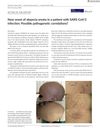
March 2021 in “Journal of cosmetic dermatology (Print)” COVID-19 infection may trigger alopecia areata in some patients.
 June 2006 in “The American Journal of Cosmetic Surgery”
 Advancements in cosmetic and reconstructive surgery improve techniques and patient satisfaction.
 August 2024 in “Journal Integration of Social Studies and Business Development”
 Sassle's haircare business is financially viable and profitable.
 January 2019 in “Springer eBooks”
 Transplanting skin cells is a safe, effective, and affordable treatment for vitiligo.
 29 citations
,
January 2016 in “Annals of dermatology/Annals of Dermatology”
29 citations
,
January 2016 in “Annals of dermatology/Annals of Dermatology” Arachidonic acid helps hair grow by increasing growth factors and improving follicle health.
14 citations
,
October 2017 in “Gene Expression Patterns” A new mouse model helps study melanocyte cells using GFP expression.
1 citations
,
July 2025 in “Stem Cell Research & Therapy” Stem cell technology may improve hair loss treatments by providing more effective and personalized options.
54 citations
,
March 1991 in “Proceedings of the National Academy of Sciences” This model can replace animal testing for quick, cost-effective skin toxicity tests.
2 citations
,
May 2006 in “Archives of Pathology & Laboratory Medicine” Early recognition of skin lesions in Birt-Hogg-Dubé syndrome is crucial for detecting renal tumors early.
1 citations
,
January 2021 Non-invasive methods can effectively monitor skin inflammation and cancer biomarkers.