 May 2025 in “The Journal of Rheumatology”
 Antiphospholipid syndrome can severely damage adrenal glands, requiring early diagnosis and treatment.
 May 2025 in “The Journal of Rheumatology”
 SLE can cause unusual gastrointestinal symptoms, and immunosuppressive therapy can be effective.
 September 2024 in “Archives of Medical Science”
 Alopecia areata is linked to immune system differences, with specific biomarkers like CXCL9 and CXCL10 being key for diagnosis and potential treatment targets.
 August 2024 in “Bioscience of Microbiota Food and Health”
 Microbes might play a role in vitiligo.
 April 2024 in “Cell death and disease”
 Long COVID causes various long-term health issues and needs better awareness and treatment.
 January 2024 in “International journal of homoeopathic sciences”
 Early intervention and patient education are crucial for managing alopecia areata.
 December 2023 in “EPRA international journal of multidisciplinary research”
 Alopecia areata causes sudden hair loss, has genetic links, and can be managed but not cured.

Alopecia areata patients have higher levels of certain immune receptors, suggesting new treatment possibilities.
 October 2023 in “Frontiers in medicine”
 Comprehensive screening for infections is crucial before starting JAK inhibitors in alopecia areata patients.
 September 2023 in “Cureus”
 Early recognition and treatment of atypical alopecia areata in infants are crucial.
 September 2023 in “Translational medicine reports”
 Minoxidil ingestion can raise liver enzyme levels.
 July 2023 in “International journal of advanced research in medical and pharmaceutical sciences”
 The gel combining minoxidil and Aloe vera could be an effective, non-irritating treatment for hair loss.
 May 2023 in “Frontiers in veterinary science”
 A young tapir with a rare skin condition improved after treatment with wound cleaning, cream, and oral medication.
 January 2023 in “Acta dermatovenerologica Alpina, Pannonica et Adriatica (Tiskana izd.)”
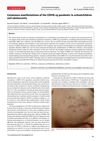
 The article concludes that schoolchildren and adolescents experienced various skin issues during the COVID-19 pandemic, including acne from masks and other skin reactions from the virus and vaccines.
March 2022 in “Biomedical Journal of Scientific & Technical Research” Improving mitochondrial health may help alleviate symptoms like chronic fatigue and depression.

 September 2018 in “International Journal of Advanced Community Medicine”
 The cream effectively treats acne and dermatitis without causing irritation.
 January 2018 in “SOJ microbiology & infectious diseases”
 Etanercept, a psoriasis treatment, caused hair loss in a patient.
 September 2017 in “Pediatric Dermatology”
 The document concludes that an experimental drug may help wound healing in Epidermolysis Bullosa, links Hydroa vacciniforme to EBV, discusses diagnosing hair loss disorders, finds many children with eczema have allergies, reviews the safety of a skin medication in children, notes side effects of a Duchenne's treatment, and identifies a marker for pediatric mastocytosis.
 April 2015 in “Journal of Evolution of Medical and Dental Sciences”
 People with autoimmune skin diseases often have hearing problems and should get their hearing checked early.
 January 2015 in “Indian Journal of Medical Biochemistry”
 Men with early balding should be checked for metabolic syndrome, as there's a link between the two.
 March 2012 in “Journal of The American Academy of Dermatology”
 Hand-foot-mouth disease may cause nail loss in children.
 March 2012 in “Journal of The American Academy of Dermatology”
 Higher levels of certain nerve-related proteins are linked to hair loss in women with scalp pain.
 May 2009 in “The American Journal of Dermatopathology”
 Mast cells play a significant role in hair loss conditions like male pattern hair loss and alopecia areata.
 June 2008 in “Springer eBooks”
 The document concludes that permanent hair loss conditions are complex, require early specific treatments, and "secondary permanent alopecias" might be a more accurate term than "secondary cicatricial alopecia."
 February 2008 in “Expert Review of Dermatology”
 Seborrheic dermatitis significantly lowers quality of life, especially in young people, women, and those with higher education.
 September 2006 in “Plastic and Reconstructive Surgery”
 Hair transplant surgeries can be improved by preserving follicles in a special solution, and surgeries done at outpatient facilities are more profitable than those at hospitals.
 September 2006 in “Plastic and Reconstructive Surgery”
 Outpatient aesthetic and reconstructive surgeries are about equally profitable in Academic Health Centers and Ambulatory Surgery Centers when time is considered, but dedicated surgery centers are generally more profitable.
 September 2006 in “Plastic and Reconstructive Surgery”
 The SGAP flap effectively treats large sacral pressure sores with good results and minimal complications.
 January 2006 in “Journal of Rural Medicine”
 Trichotillomania is more common than previously thought, with increasing diagnosed cases.