 16 citations
,
January 2007 in “Actas dermo-sifiliográficas/Actas dermo-sifiliográficas”
16 citations
,
January 2007 in “Actas dermo-sifiliográficas/Actas dermo-sifiliográficas” The document concludes that there are no reliable treatments for frontal fibrosing alopecia, with only temporary benefits from current options.
 10 citations
,
January 2013 in “Actas Dermo-Sifiliográficas”
10 citations
,
January 2013 in “Actas Dermo-Sifiliográficas” Most white Spanish women have a widow's peak, and their hairline measurements could help in hair restoration surgery.
 April 2016 in “Journal of The American Academy of Dermatology”
 The study found that Temporal Triangular Alopecia often starts in early childhood, mainly affects the left side of the scalp, and has no effective treatment except surgery.
 April 2016 in “Journal of The American Academy of Dermatology”
 The study found that Temporal Triangular Alopecia often starts in early childhood, while Folliculitis Decalvans is characterized by tufted hairs and redness around hair follicles.
 27 citations
,
September 2017 in “Journal of Investigative Dermatology Symposium Proceedings”
27 citations
,
September 2017 in “Journal of Investigative Dermatology Symposium Proceedings” Hair loss in black women needs more research, early intervention, and community education.
 16 citations
,
October 2003 in “Journal of applied polymer science”
16 citations
,
October 2003 in “Journal of applied polymer science” 2-iminothiorane hydrochloride improves hair waving permanence without damage.
7 citations
,
October 2019 in “Frontiers in bioengineering and biotechnology” Fusion proteins can protect hair from heat damage.

A natural, eco-friendly treatment using casein and tannic acid strengthens hair by 21% while keeping it elastic.
May 2025 in “Journal of Photochemistry and Photobiology B Biology” Blue LED light improves hair treatments for Caucasian and Asian hair but not for African hair.
2 citations
,
July 2019 in “Cosmetics” Beautiful hair is flexible and elastic due to its unique double-layered structure and can be enhanced with succinic acid treatment.
 February 2025 in “Brazilian Journal of Hair Health”
 The Brazilian candle flame technique can damage hair by melting the cuticle and exposing the cortex.
7 citations
,
September 2006 in “Molecular Carcinogenesis” Homozygous K5Cre transgenic mice have wavy hair and faster cancer progression.
 3 citations
,
July 2019 in “Case Reports in Obstetrics and Gynecology”
3 citations
,
July 2019 in “Case Reports in Obstetrics and Gynecology” A young woman's rare ovarian tumor was successfully removed, improving her hormonal symptoms.
 2 citations
,
July 2022 in “PubMed”
2 citations
,
July 2022 in “PubMed” Coconut oil helps with brittle hair and infestations, castor oil may improve hair shine, and argan oil lacks evidence for hair benefits.
 August 2025 in “Tropical Journal of Natural Product Research”
 LEON gel significantly boosts hair growth without irritation.
 14 citations
,
November 2020 in “International Journal of Molecular Sciences”
14 citations
,
November 2020 in “International Journal of Molecular Sciences” Advanced therapies like gene, cell, and tissue engineering show promise for hair regrowth in alopecia, but their safety and effectiveness need more verification.
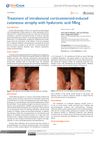 1 citations
,
July 2018 in “Journal of dermatology & cosmetology”
1 citations
,
July 2018 in “Journal of dermatology & cosmetology” Hyaluronic acid successfully treated skin atrophy caused by corticosteroid injections.
 1 citations
,
May 2015 in “Journal of The American Academy of Dermatology”
1 citations
,
May 2015 in “Journal of The American Academy of Dermatology” Oral clindamycin and rifampicin are the most effective treatments for Folliculitis decalvans.
 1 citations
,
May 2015 in “Journal of The American Academy of Dermatology”
1 citations
,
May 2015 in “Journal of The American Academy of Dermatology” Both azathioprine and betamethasone treatments effectively regrow hair in alopecia areata, but azathioprine may be safer.
 April 2016 in “Journal of The American Academy of Dermatology”
 Both atopy and eosinophilia are linked to more severe hair loss in people with alopecia areata.
63 citations
,
February 2017 in “ACS biomaterials science & engineering” Polydopamine is a safe, effective, and permanent hair dye that turns gray hair black in one hour.
53 citations
,
July 2016 in “Cosmetics” Future hair cosmetics will be safer and more effective.
 30 citations
,
January 2014 in “Dermatologic Clinics”
30 citations
,
January 2014 in “Dermatologic Clinics” Tight hairstyles, especially on chemically treated hair, can cause reversible hair loss if caught early but may become permanent if not addressed.
24 citations
,
April 2016 in “Experimental Dermatology” Chemical treatments like dyeing, perming, and bleaching damage hair by altering amino acids and lipids.
15 citations
,
August 2020 in “Analytical chemistry” Hair lipids do not protect against humidity.
 15 citations
,
November 2012 in “International Journal of Dermatology”
15 citations
,
November 2012 in “International Journal of Dermatology” The conclusion is that hair loss from CCCA may be genetic and not solely caused by hair grooming practices.
15 citations
,
October 2004 in “Colloids and surfaces. B, Biointerfaces” Holes in mature hair are likely caused by the removal of substances during hair care.
11 citations
,
January 2016 in “International Journal of Biological Macromolecules” Enzymatic phosphorylation of hair keratin improves the effectiveness of hair products with cationic ingredients.
7 citations
,
September 2020 in “International Journal of Cosmetic Science” Different sizes of keratin peptides can strengthen hair, with smaller ones possibly increasing volume and larger ones repairing damage.
7 citations
,
January 2020 in “International Journal of Trichology” Coconut oil reduces hair damage and breakage more effectively than shampoos and conditioners.