 2 citations
,
October 2020 in “Journal of The American Academy of Dermatology”
2 citations
,
October 2020 in “Journal of The American Academy of Dermatology” The authors suggest that scalp hair might protect against COVID-19 and call for more research on scalp health and the virus.
Arabidopsis Formin 2 stabilizes actin filaments, affecting cell-to-cell movement and virus susceptibility.
 December 2025 in “Biology Bulletin”
 Baikal seals' skin shows normal features for protection and some pathologies possibly linked to climate change or a virus.
 February 2024 in “International Journal of Scientific Research in Science and Technology”
 Pomegranates have many health benefits, including fighting bacteria, viruses, cancer, and diabetes.
 March 2023 in “Медицинский совет”
 COVID-19 may cause different types of hair loss, and the virus's effects on hair could help understand its impact on other body parts.

The document suggests using convalescent plasma to treat COVID-19 Long Hauler Syndromes because it may contain beneficial elements that target the virus.
 December 1992 in “Reviews in Medical Virology”
 The review concluded that restrictions on people with HIV/AIDS often violated their rights without proven effectiveness in stopping the virus, highlighting education as the best control method.
 101 citations
,
July 2020 in “Dermatologic therapy”
101 citations
,
July 2020 in “Dermatologic therapy” COVID-19 can cause skin issues like rashes and "COVID toes," and people with skin conditions should adjust their treatments if they get the virus.
 43 citations
,
July 2020 in “Dermatologic Therapy”
43 citations
,
July 2020 in “Dermatologic Therapy” During the COVID-19 pandemic, a clinic in Turkey saw fewer patients but more cases of certain skin conditions, possibly linked to the virus and stress.
 26 citations
,
October 2011 in “International Journal of Biological Macromolecules”
26 citations
,
October 2011 in “International Journal of Biological Macromolecules” Some newly made compounds are promising for treating enlarged prostate, hair loss, viruses, and prostate cancer, and might be better than current drugs.
 11 citations
,
March 2019 in “Journal of Medicinal Chemistry”
11 citations
,
March 2019 in “Journal of Medicinal Chemistry” Some synthetic carbohydrate receptors, especially compounds 3 and 15, show strong potential for treating Zika virus.
10 citations
,
February 2022 in “Epidemiologia” One-third of COVID-19 patients had long-term symptoms like hair loss and fatigue, with women, older individuals, blood group B, smokers, and those with more virus exposure at higher risk.
 9 citations
,
July 2021 in “Essays in Biochemistry”
9 citations
,
July 2021 in “Essays in Biochemistry” Sex hormones may influence COVID-19 severity, with males at higher risk, and certain hormone therapies could potentially treat the virus.
 7 citations
,
July 2020 in “Journal of The American Academy of Dermatology”
7 citations
,
July 2020 in “Journal of The American Academy of Dermatology” Skin symptoms linked to COVID-19 are hard to confirm, and more testing is needed to identify which are truly caused by the virus.
 5 citations
,
December 2021 in “Physiological Research”
5 citations
,
December 2021 in “Physiological Research” Men, particularly those with hair loss, are more likely to get the virus, and those with prostate cancer may have milder symptoms. Testosterone's role in the disease is unclear, and the virus doesn't seem to harm male fertility. Women with PCOS might be at higher risk. More research is needed.
 5 citations
,
January 2020 in “Current Pharmaceutical Design”
5 citations
,
January 2020 in “Current Pharmaceutical Design” Geranium plants have healing properties like fighting microbes, protecting the liver, reducing inflammation, and may help with viruses, stomach issues, and diabetes.
 1 citations
,
February 2022 in “The Journal of Urology”
1 citations
,
February 2022 in “The Journal of Urology” Certain drugs like Dutasteride and Finasteride might help fight SARS-CoV-2 by increasing levels of a steroid called DHEA, which can protect the heart and increase nitric oxide to counteract the virus.
 1 citations
,
January 2021 in “Research Square (Research Square)”
1 citations
,
January 2021 in “Research Square (Research Square)” Enzalutamide, a prostate cancer drug, may help prevent COVID-19 by blocking the virus from entering lung cells.
 July 2025 in “Cermin Dunia Kedokteran”
 Nasopharyngeal carcinoma is a common cancer in Indonesia, with risk factors including genetics, diet, and Epstein-Barr virus, and is treated with advanced radiotherapy.
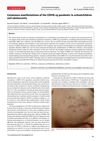 January 2023 in “Acta dermatovenerologica Alpina, Pannonica et Adriatica (Tiskana izd.)”
 The article concludes that schoolchildren and adolescents experienced various skin issues during the COVID-19 pandemic, including acne from masks and other skin reactions from the virus and vaccines.
 September 2022 in “Journal of The American Academy of Dermatology”
 Different types of hair loss are linked to COVID-19, with some types possibly increasing risk of getting the virus, while others may be triggered or worsened by the virus.
 October 2020 in “Проблемы эндокринологии”
 Men with higher androgen levels may have severe COVID-19 symptoms, but those on antiandrogen therapy are less likely to contract the virus and have milder symptoms. Anti-androgen drugs could potentially treat COVID-19, but more research is needed.
 December 2011 in “Asia-Pacific biotech news”
 In 2011, there were major scientific breakthroughs in cancer treatment, immunity, Parkinson's, virus simulation, schizophrenia, hair growth, lung cancer, and medical grafts.
 20 citations
,
June 2022 in “Molecules”
20 citations
,
June 2022 in “Molecules” Thiazole, a sulfur and nitrogen chemical, is useful in creating potential drugs for conditions like seizures, cancer, bacterial infections, tuberculosis, inflammation, malaria, viruses, Alzheimer's, diabetes, and A1-receptor issues.
3 citations
,
November 2024 in “Viruses” Cepharanthine may help treat Equid herpesvirus type 8 by reducing oxidative stress.
55 citations
,
April 2022 in “Frontiers in Immunology” Cholesterol affects coronavirus spread and could be a target for treatment.
October 2025 in “Influenza and Other Respiratory Viruses” Certain alkaloids could help create new coronavirus drugs.
 July 2024 in “Influenza and Other Respiratory Viruses”
 Analyzing both TE and AA together is crucial for understanding post-COVID-19 hair loss.
 October 2012 in “CRC Press eBooks”
 HIV can cause hair loss and changes in nails, which may indicate disease progression.
3 citations
,
March 2023 in “PubMed” The cat improved with treatment but had kidney issues from long-term allopurinol use.