July 2024 in “Journal of Investigative Dermatology” CRISPR/Cas9 and prime editing can potentially fix skin disorder genes safely and effectively.
 13 citations
,
August 2017 in “Scientific reports”
13 citations
,
August 2017 in “Scientific reports” Researchers developed a cost-effective 66 K SNP chip for cashmere goats that is accurate and useful for genetic studies.
 4 citations
,
November 2003 in “Hair transplant forum international”
4 citations
,
November 2003 in “Hair transplant forum international” Using an LCD monitor with video magnification is a cheap and comfortable method to enlarge the view of hair for transplant surgery.
 April 2021 in “Journal of Investigative Dermatology”
 The new skin-targeted COVID-19 vaccine creates strong immune responses and could improve vaccination methods.
VDAC2 promotes cell death in cashmere goat hair follicles through the P53 pathway.
June 2023 in “Zenodo (CERN European Organization for Nuclear Research)”  6 citations
,
June 2024 in “Scientific Reports”
6 citations
,
June 2024 in “Scientific Reports” RoPod helps study plant root cell changes and autophagy with minimal stress.
 3 citations
,
May 2025 in “Frontiers in Pharmacology”
3 citations
,
May 2025 in “Frontiers in Pharmacology” Vismodegib can cause muscle spasms, taste changes, hair loss, fatigue, weight loss, and possibly new issues like skin cancer, dehydration, and swallowing problems, needing close monitoring.
36 citations
,
February 1998 in “Journal of Anatomy” Fibre optic confocal imaging can visualize skin layers, blood vessels, and nerves in live mice.
The tool accurately measures hair count and size on scalps with 79.45% and 68.19% accuracy, respectively.
5 citations
,
February 2025 in “International Journal of Molecular Sciences” Vitisin A reduces triglycerides better than Cyanidin-3-O-glucoside.
January 1981 in “Elsevier eBooks” 1 citations
,
May 2023 in “bioRxiv (Cold Spring Harbor Laboratory)” A new tool allows easier long-term imaging of live skin cells, helping study diseases like skin cancer.
 1 citations
,
May 2019 in “Cytotherapy”
1 citations
,
May 2019 in “Cytotherapy” The new ddPCR method reliably detects unwanted viruses in CAR-T cell products, ensuring their safety for patients.
Medical Hair Restoration added a non-surgical hair therapy program to help people with early hair loss.
February 2023 in “Default Digital Object Group”  May 2023 in “Elsevier eBooks”
 The document's conclusion cannot be provided because the document is not readable or understandable.
 April 2019 in “Journal of Investigative Dermatology”
 The search scheme SMRI is faster and more secure for retrieving encrypted data from the cloud.
8 citations
,
January 1977 in “Acta Haematologica” The treatment was effective for advanced non-Hodgkin's lymphomas.
 July 2023 in “Biomolecules”
 The new "whisker follicle microinjection assay" can test how different biomolecules affect hair growth and color.
January 2004 in “Headache” Divalproex sodium significantly improved headaches in two-thirds of patients.
 1 citations
,
January 2022 in “Electronic Imaging”
1 citations
,
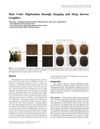
January 2022 in “Electronic Imaging” A new method accurately captures and renders hair color for virtual reality and hair dye use.
 February 2026 in “Indian Journal of Skin Allergy”
 Ruxolitinib cream effectively treats skin conditions like atopic dermatitis and vitiligo with minimal side effects.
 1 citations
,
June 2022 in “Jambura Journal of Mathematics”
1 citations
,
June 2022 in “Jambura Journal of Mathematics” The Vogel Total Difference Approach Method helps reduce shipping costs in production delivery.
13 citations
,
January 2022 in “Microvascular Research” LSCI-HR is reliable for monitoring blood flow in wound healing in mice.
July 2024 in “Journal of Investigative Dermatology” INTASYL is a promising, adaptable RNAi technology for treating skin cancers.
60 citations
,
January 2021 in “BMC Genomics” The study mapped genetic variations in sheep, linking them to traits like milk production and growth.
 April 2023 in “Journal of Investigative Dermatology”
 The improved EczemaNet more reliably and clearly identifies and assesses the severity of atopic dermatitis from photos.
 6 citations
,
August 2021 in “International Journal of Pharmaceutics”
6 citations
,
August 2021 in “International Journal of Pharmaceutics” A new device, IVL-PPF Microsphere®, was created to deliver a hair loss drug for up to 3 months with one injection, potentially replacing daily pills.

Long COVID symptoms are common and the new method will help test if remdesivir reduces them.