Different methods like wigs, extensions, and devices can help improve hair volume for thinning hair.
2 citations
,
March 2024 in “Pediatric Dermatology” Two siblings have a rare hair condition caused by a new genetic variant.
62 citations
,
December 2008 in “Journal of structural biology” Hair curvature in Japanese people is linked to specific cell types and filament arrangements in the hair cortex.
 1 citations
,
March 2005 in “International Journal of Cosmetic Science”
1 citations
,
March 2005 in “International Journal of Cosmetic Science” Twisting hair weakens it, but strength can be recovered at low twist levels.
 5 citations
,
January 1990 in “Journal of Society of Cosmetic Chemists of Japan”
5 citations
,
January 1990 in “Journal of Society of Cosmetic Chemists of Japan” Permanent wave lotion can extract proteins from hair, especially when pH is higher, and repeated treatments or bleaching can damage hair.
 1 citations
,
May 2019 in “Journal of The European Academy of Dermatology and Venereology”
1 citations
,
May 2019 in “Journal of The European Academy of Dermatology and Venereology” New method, hair distribution width (HDW), improves accuracy in diagnosing androgenetic alopecia (AGA).
July 2024 in “JAAD Case Reports” Autoimmune diseases can change hair texture, but treatment can restore it.
27 citations
,
September 1988 in “PubMed” Hair follicle shape determines hair type: curly, straight, or in-between.
 August 2003 in “Dermatologic Surgery”
 Craig Ziering created a system to classify scalp hair patterns, important for improving hair restoration surgery results.
 4 citations
,
June 2019 in “International Journal of Cosmetic Science”
4 citations
,
June 2019 in “International Journal of Cosmetic Science” Heat transfer in hair is slower in groups of hair, increasing the risk of damage from high-temperature styling tools.
 2 citations
,
March 2005 in “International Journal of Cosmetic Science”
2 citations
,
March 2005 in “International Journal of Cosmetic Science” Human hair structure varies by ethnicity, and certain treatments can improve hair condition and appearance.

Curly wool has more orthocortex than straight wool.
 May 2026 in “Zenodo (CERN European Organization for Nuclear Research)”
 Natural hair is a return to its original state, while modifications signal social pressures.
 December 2023 in “Journal of molecular structure”
 Hair treatments and dehydration affect hair's lipid and protein behavior, influencing its flexibility and appearance.
 3 citations
,
October 2020 in “Dermatology Practical & Conceptual”
3 citations
,
October 2020 in “Dermatology Practical & Conceptual” Bubble hair damage is caused by high heat from styling tools, and trichoscopy helps diagnose it.
 March 2005 in “International Journal of Cosmetic Science”
 A new method helps understand hair shine and various products improve hair care.
 May 2026 in “Zenodo (CERN European Organization for Nuclear Research)”
 Natural hair reflects identity and history, while modifications signal social pressures.
 12 citations
,
February 2019 in “Skin research and technology”
12 citations
,
February 2019 in “Skin research and technology” White hair has less lipid content and absorbs water differently than brown hair.
18 citations
,
August 2009 in “Skin Research and Technology” OCT can identify hair structures, but chemical treatments can damage them.
10 citations
,
January 1971 in “The American midland naturalist” A simple method can show hair's surface pattern.
 1 citations
,
April 2023 in “Langmuir”
1 citations
,
April 2023 in “Langmuir” Damaged hair allows water to penetrate more easily, and fatty acids from shampoos can deposit on hair surfaces.

Hair feels different when touched and rubs together in various ways.
16 citations
,
January 1977  5 citations
,
January 2010 in “The anatomical record”
5 citations
,
January 2010 in “The anatomical record” Most dogs have hair whorls on their chest and limbs, with shelter dogs and short-haired dogs having more chest whorls.
 4 citations
,
January 2007 in “Sen'i Gakkaishi”
4 citations
,
January 2007 in “Sen'i Gakkaishi” Permed hair degrades faster and shows more damage after protease treatment compared to untreated hair.
 10 citations
,
January 2002 in “Nihon Keshouhin Gijutsushakaishi/Journal of S C C./Nihon Keshouhin Gijutsushakai kaishi”
10 citations
,
January 2002 in “Nihon Keshouhin Gijutsushakaishi/Journal of S C C./Nihon Keshouhin Gijutsushakai kaishi” The cuticle significantly contributes to hair stiffness, making up about 60% of the total bending stress.
97 citations
,
January 2005 in “Wear” Human hair and skin friction vary by ethnicity, hair type, and environmental conditions.
October 2015 in “Cosmetic Dermatology” Hair styling products and tools help improve hair's look and manageability but can damage hair if used incorrectly.
22 citations
,
March 2019 in “The Journal of Cell Biology” The Wave complex controls skin growth by suppressing certain signals.
 13 citations
,
January 2007 in “Epilepsia”
13 citations
,
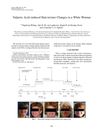
January 2007 in “Epilepsia” Valproic acid can cause reversible hair curling and persistent hair thinning.